
Sub-Total: $0.00
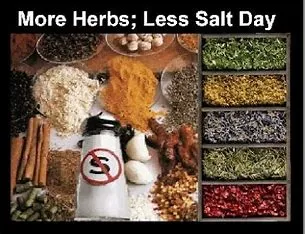
NATIONAL MORE HERBS LESS SALT DAY- AUG 29
HISTORY OF MORE HERBS, LESS SALT DAY
The origins of More Herbs, Less Salt Day are unknown, but the holiday was created in an effort to make people analyze their diets and reduce the amount of sodium in it. As one of the key ingredients in most meals, and shaken on top of food, the recommended daily amount of salt is exceeded without most people realizing it.
Salt isn’t exactly bad for us, but as with everything else, too much of a good thing can do more harm than good. Sodium is an important electrolyte needed by our bodies for nerve and muscle function. However, excessive intake of salt can have negative results like hypertension, heart disease, and bloating. Cardiovascular disease can lead to a stroke, heart attack, and even death. The renal function of kidneys can also be severely damaged, as blood flow to the kidney tissue is disrupted. Tests done on mice also show a linkage with dementia and Alzheimer’s disease due to high sodium intake,
The Dietary Reference Intakes (DRI) recommended daily consumption of salt less than 1500 milligrams. Fast food utilizes a lot of salt and is a large contributor to increasing the intake of salt in our bodies. Many one-time fast food meals contain 2000 milligrams or more of salt! This is why it is important to prepare meals at home and control the amount of salt going into our meals. More Herbs, Less Salt Day aims to encourage people to enhance the flavor of their food using herbs and spices instead of heaping large amounts of salt. This way the taste won’t be compromised, and may even turn out better.
This is why it is important to prepare meals at home. It gives us control over how much sodium goes into our meals.
EAting less salt is an excellent idea for everyone regardless of age or overall health. Most Americans eat more processed foods than they should, which is the #1 culprit of adding additional salt to our diet but reducing salt is obvious when you add more flavor with fresh herbs. If you don’t have an herb garden, the good news is most grocery stores stock fresh herbs in the produce section. This time of year is perfect for fresh basil, cilantro, and parsley, but you can also find fresh rosemary, dill, sage, and other several herbs. On the other hand, a diet low in sodium is linked to increased cognitive function and overall health.
MORE HERBS, LESS SALT DAY TIMELINE
6th CenturyThis is Gold!
Moorish merchants trade salt in exchange for gold In the Sub-Sahara,
1997 The DRI
The Dietary Reference Intake is introduced, broadening the existing Recommended Dietary Allowances guidelines.
2009 Around the World
The average consumption of sodium in 33 countries ranges from 2700 to 4900 milligrams per day.
2020 Revised Intake
The World Health Organization (WHO) recommends that adults consume no more than 5 grams (just under a teaspoon) of salt per day.
