
Sub-Total: $0.00
Aloe Plant to Aloe Vera Gel 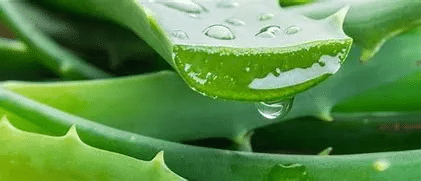
Barbadensis-miller Aloe
When it comes to Aloe vera, not all plants are the same. There are several hundred species of Aloe and many varieties within each species. Barbadensis-miller is well established as the best Aloe species, for both topical and internal consumption.
The aloe vera plant is a succulent that stores water in its leaves in the form of a gel. This gel is highly moisturizing and great for sunburns, bug bites, minor cuts or wounds, and other skin problems. However, many store-bought aloe vera products contain potentially harmful additives like dyes.
Aloe vera barbadensis miller is an anti-inflammatory, antiseptic and antibiotic plant. It also contains 20 amino acids (of the 22) and 7 essential amino acids (of the 8 your body needs). It contains 12 anthraquinones that are compounds that act as laxatives. Aloe vera contains emodin and aloin that work as antivirals, antibacterial and analgesics.
Scientific classification
Kingdom:Plantae
Clade:Tracheophytes
Clade:Angiosperms
Clade:Monocots
Order:Asparagales
Family:Asphodelaceae
Subfamily:Asphodeloidea
Genus: Aloe
Species: A. vera
Here’s what you need
Aloe vera gel is easy to make using either the leaves of an aloe plant you have at home, or ones you’ve purchased at a grocery store or farmer’s market.
To make aloe vera gel, you need:
- an aloe vera leaf
- a knife or vegetable peeler
- a small spoon
- a blender
- an airtight container for storage
- powdered vitamin C and/or vitamin E (optional)
It’s best to only use one or two leaves at a time, as the gel only lasts about 1 week without additional preservatives.
If you plan to keep it longer, you need to freeze it or add a preservative in the form of powdered vitamin C or E.
Directions
Once you have gathered all of the materials you need, it only takes about 30 minutes to make your aloe vera gel.
1. Prepare the aloe leaves
To use a fresh aloe leaf from a plant, first cut off one of the outer leaves from the base of the plant.
Wash it well, removing any dirt, and then stand it upright in a cup or bowl for 10–15 minutes. This allows the yellow-tinted resin to drain out of the leaf.
The resin contains latex, which can irritate your skin, so completing this step is important
After the resin has drained completely, wash off any remains on the leaf and peel off the thick skin using a small knife or vegetable peeler.
2. Make the gel
Once the leaf has been peeled, you will see the natural aloe vera gel.
Using a small spoon, scoop it into your blender. Be careful not to include any pieces of the aloe vera skin.
Blend the gel until it’s frothy and liquefied, which should only take a few seconds.
At this point, your gel is ready to use. However, if you plan on keeping it for more than 1 week, you should add preservatives.
3. Add preservatives (optional)
Vitamins C and E are excellent preservatives that can greatly extend the shelf life of your aloe vera gel.
Though the gel naturally contains some of these vitamins, it’s not enough to preserve the gel for longer than 1 week.
Still, you can add more of one or both of these vitamins to extend your gel’s shelf life.
Plus, both contain antioxidant and anti-aging properties, so these additions can help boost the skin-protecting power of your aloe vera gel
For every 1/4 cup (60 ml) of aloe vera gel you make, add 500 mg of powdered vitamin C or 400 International Units (IU) of powdered vitamin E — or both.
Simply add the powdered vitamins directly to the blender and mix the gel once more until the additives are fully incorporated.
Storage directions
Prepared aloe vera gel without added vitamin C or E can be stored in the refrigerator in an airtight container for up to 1 week.
However, adding one or both of the vitamins significantly increases the shelf life to up to 2 months in the refrigerator.
What’s more, you can freeze aloe gel in small batches — for instance, in an ice cube tray — to have small amounts at the ready. Frozen aloe gel can be stored in the freezer for up to 6 months
How to use aloe vera gel
Aloe vera gel can be applied directly to your skin to address immediate skincare needs, such as sunburn, minor cuts, and skin irritation.
It’s an excellent moisturizer for your face and hands and can provide a protective antibacterial barrier for minor wounds
Plus, it has antioxidant properties that may help protect your skin from the damaging effects of excessive sun exposure. Therefore, it’s commonly used to provide sunburn relief
Aloe vera gel is rich in unique polysaccharides, which are long chains of natural sugars that researchers believe give aloe its many skin-healing properties
What’s more, it’s rich in various vitamins and minerals, including vitamins A, C, and E, which can help promote wound healing and healthy skin
#aloe #aloevera #succulents #growaloe
