
Sub-Total: $0.00
Monopodial vs. Sympodial Orchids
Orchids may seem mysterious, but their care becomes much easier once you understand how they grow. The key difference lies in monopodial and sympodial growth habits- whether an orchid grows upward from a single stem or spreads outward through multiple shoots. This simple distinction explains how orchids develop, store water, and produce flowers, turning these exotic plants into fascinating and approachable plants for any grower. Read on to help your understanding.
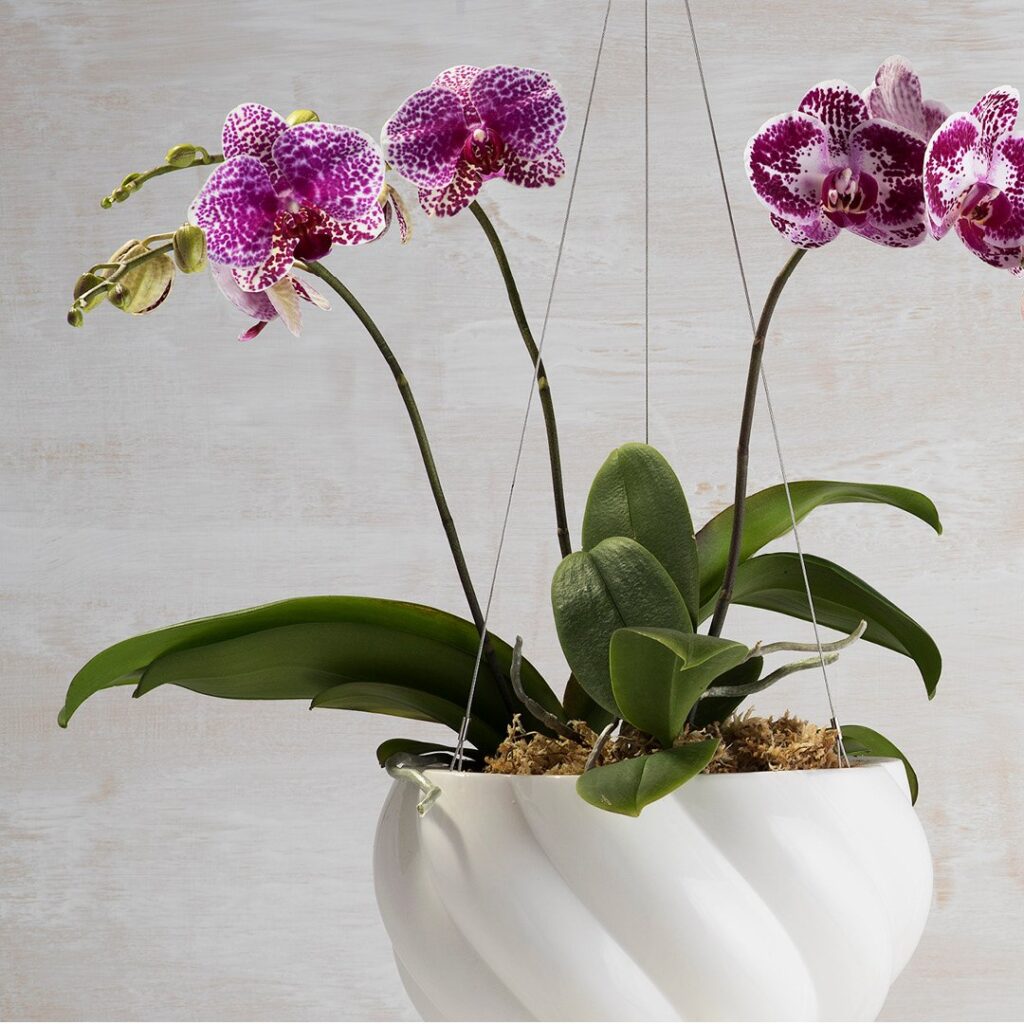
🌱 Monopodial Orchids
How they grow
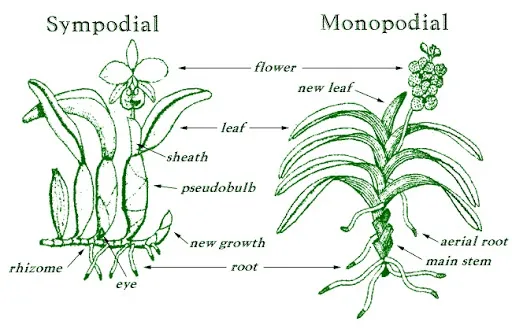
- Grow upward from a single central stem
- New growth comes from the top (apical tip), not the sides
- The plant gets taller over time, not wider
Structure
- One main stem
- Leaves grow alternately on either side of the stem
- No pseudobulbs
- Water and nutrients are stored in thick leaves and aerial roots
Roots & flowers
- Roots often grow along the stem and may hang in the air
- Flower spikes emerge from nodes between the leaves
Common examples
- Phalaenopsis (moth orchids)
- Vanda
- Paphiopedilum (lady slipper orchids)
Key takeaway
Monopodial orchids = one stem, growing straight up
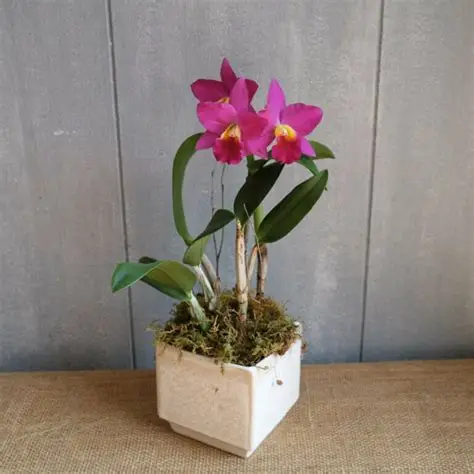
🌿 Sympodial Orchids
How they grow
- Grow horizontally, spreading outward
- Each growth has a limited lifespan
- New shoots emerge from the base of older ones
Structure
- Multiple stems connected by a rhizome (horizontal stem)
- Usually have pseudobulbs (thickened stems)
Pseudobulbs
- Store water and nutrients
- Help the plant survive dry periods
- Each pseudobulb typically flowers once
Roots & flowers
- Each new growth develops its own roots
- Flower spikes usually come from mature pseudobulbs
Common examples
- Cattleya
- Dendrobium
- Oncidium
- Cymbidium
Key takeaway
Sympodial orchids = many stems, growing sideways
🔍 Side-by-Side Comparison
| Feature | Monopodial | Sympodial |
| Growth direction | Vertical | Horizontal |
| Main stem | Single | Multiple |
| Pseudobulbs | Absent | Usually present |
| Water storage | Leaves & roots | Pseudobulbs |
| Plant shape over time | Taller | Wider |
| Division | Rare | Common |
Quick rule of thumb
If an orchid has pseudobulbs and spreads sideways, it is almost always sympodial.
Quick memory trick
Mono =one one stem growing up
Sym = many many stems spreading sideways
I hope this helps you understand orchids in some small way better.
