
Sub-Total: $0.00
Nitrogen Monitoring Techniques for Vegetable Crops
Growing healthy and bountiful vegetables in a home garden takes effort. If you want easy, stick to buying from your local Grocery store. But effort put in is worth the quality of produce. In the coming year I hope to do a series of articles about keeping your garden healthy.
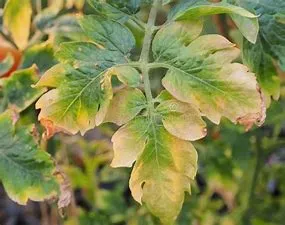
I found this interesting data and wanted to share it with you. Robert F. Bevacqua, Extension Vegetable Specialist, Department of Extension Plant Sciences Tanya R. Cardenas, Research Aide, Department of Extension Plant Sciences College of Agriculture, Consumer and Environmental Sciences New Mexico State University.
Preface
This circular is intended to serve as a practical guide for growers who want to use a nitrate meter or nitrate test strips to improve their nitrogen fertilizer management.
Introduction
Nitrogen (N) is the plant food most often applied to vegetable crops as a fertilizer. It is the nutrient responsible for green leafy growth. Insufficient nitrogen results in poor crop growth and low yields. Nitrogen fertilizer typically is dissolved in water and applied during irrigation.
Nitrogen also is the nutrient most likely to contaminate ground and surface waters. The nitrate form of nitrogen (NO3−) is especially prone to causing contamination when excessive amounts are applied to crops. This molecule is weakly held by soil particles and, therefore, is highly mobile in the soil. This allows excess nitrate to move readily into groundwater or with surface runoff. The result can be water pollution.
One strategy for pursuing profitable yields while avoiding water contamination is to only apply the amounts of nitrogen that will be used by the growing crop. This can be accomplished by using analytical techniques that monitor nitrogen levels and, thus, avoid insufficient or excessive nitrogen fertilizer applications.
This publication describes the procedures for using two techniques—a nitrate meter and nitrate test strips—for monitoring nitrogen in chile pepper and watermelon crops. The meter measures nitrate-nitrogen (NO3-N) in the plant’s petiole or leaf stem sap, and the test strip measures soil nitrate in the root zone. Both offer the advantage of giving immediate results.
Background
The value of nitrate meters and nitrate test strips as on-farm techniques for monitoring crop and soil nitrogen was established in California for broccoli, celery, sweet corn, lettuce, bell pepper, tomato and watermelon production. Currently, the nitrate meter is recommended as a management tool for a similar range of vegetable crops in Florida. The nitrate meter also is called an ion meter, Cardy meter or sap tester.
The procedures for monitoring nitrogen outlined in this publication were adapted from methods developed in California and Florida. The first year focused on developing the steps for using the nitrate meter on chile pepper. T In the second year, the study was expanded to include the nitrate meter and nitrate test strips, also called “Quick Tests.” The goal was to compare these two field techniques for measuring nitrogen with the current practice of submitting samples to an analytical laboratory.
Equipment and Supplies
Nitrate Meter
Various supplies and devices are needed to operate the nitrate meter (figs. 1 and 2). Of these supplies and devices, some can be purchased locally; others must be ordered through a catalog. Supplies that can be purchased locally include plastic sandwich bags, a sharp knife and cutting board, distilled water, a garlic press, a stopwatch or timer, paper towels, a pocket calculator and cooler. The Cardy nitrate meter kit by Horiba can be ordered through a catalog from Spectrum Technologies for approximately $360.
Spectrum Technologies 23839 W. Andrew Rd. Plainfield, IL 60544 Phone: (800) 248-8873 Internet: www.specmeters.com

Figure 1. Cardy nitrate meter.

Figure 2. Supplies and equipment.
Nitrate Test Strip
Various supplies also are needed to use the nitrate test strips (fig. 3). Most must be ordered through a catalog. Items available locally include plastic sandwich bags, stopwatch or timer and a pocket calculator. Catalogordered supplies include a soil sampler, centrifuge tubes, a tube rack, easy squeeze bottles, calcium chloride .01 M solution, and nitrate (NO3) test strips. EM Quant nitrate (NO3) test strips can be ordered through a catalog from Ben Meadows Company for approximately $40.
Ben Meadows Company P.O. Box 5277 Janesville, WI 53547-5277 Phone: (800) 628-2068 www.benmeadows.com

Figure 3. Nitrate test strips.
Procedure
Nitrate Meter
Collect 30-40 leaves that form a representative sample for the field in question. It is important that the petiole or stem be collected with the leaf (fig. 4). Select recently matured leaves from high on the plant that are free of disease and damage (fig. 5). Place the leaves in a paper or plastic bag and transport them on ice in a cooler where they are protected from the heat (fig. 6). The selected leaves can be stored for up to eight hours in a refrigerator or on ice. Rinse the leaves with distilled water and blot dry with a paper towel. It is best not to take readings in areas of direct sunlight or high temperatures (fig. 7). With a sharp knife and on a cutting board, chop or dice the leaf blade and the petiole (fig. 8). Before using, calibrate the meter with two standard solutions for nitratenitrogen, which are included in the nitrate kit. Load a sample of petiole in a garlic press (fig. 9) and squeeze three drops of sap onto the meter’s sensor (fig. 10). After the meter reading (ppm nitrate-nitrogen) has stabilized (30 to 45 seconds) record the value (fig. 11). After each use, rinse the sensor with distilled water (fig. 12) and blot dry (fig. 13). Repeat the procedure two or three times with the remaining sample if possible. Calculate the average of the readings for the samples

Figure 4. Representative sample.

Figure 5. Selection.

Figure 6. Storage and transporting.

Figure 7. Take reading out of direct sunlight.

Figure 8. Chop or dice.

Figure 9. Load sample in a garlic press.

Figure 10. Squeeze sap onto the sensor.

Figure 11. Record the value of the reading.

Figure 12. Rinse the sensor.

Figure 13. Blot dry.
Nitrate Test Strip
With a soil probe, collect 10-12 soil cores (fig. 16) from the root zone to form a composite sample that represents the area (fig. 17). Store the soil cores in a sealed plastic sandwich bag. When all soil cores have been collected, mix the soil into a homogenous sample. Fill a volumetrically marked centrifuge tube with 30 mL of .01 M calcium chloride (fig. 18). Add the soil sample to the tube until the solution level rises to 40 mL (fig. 19). Place a cap on the tube and shake the sample vigorously until all soil clumps are thoroughly dispersed. Let the sample sit until the soil particles settle and a clear zone of solution forms at the top of the tube (fig. 20). Sandy soil particles may separate in a matter of minutes. However, clay soils may take hours to settle. Dip a nitrate test strip into the clear zone. Shake off the excess solution and wait 60 seconds for color to develop. Compare the color with the color chart provided on the strip container (fig. 21).

Figure 16. Collect soil cores with a soil probe.

Figure 17. Soil cores.

Figure 18. Fill centrifuge tube with calcium chloride.

Figure 19. Add soil sample to the tube.

Figure 20. Let a clear zone form.

Figure 21. Compare with the color chart.
Interpretation
Nitrate Meter
Guidelines for interpreting readings from a nitrate meter are generally expressed as nitrate-nitrogen values. For this reason, it is important that the meter be calibrated and set to display readings in nitrate-nitrogen.
The readings are interpreted by using three classifications: deficient, sufficient and excess. The classification determines whether or not the grower should apply nitrogen fertilizer. “Deficient” indicates the crop may respond to immediate fertilization, so an application is recommended as soon as possible. “Sufficient” means enough nitrogen is present to meet short-term crop needs; no fertilizer application is recommended at the present time. “Excess” indicates fertilization should be postponed until retesting shows nitrate-nitrogen levels have declined. Therefore, no fertilizer is recommended.
For example, sap was squeezed from a sample of chile pepper petioles/leaves on June 14, during the crop’s flowering stage. The meter showed a reading of 700 ppm. This falls below the sufficient range of 800–1,200 ppm (table 1). Thus, 700 ppm is classified as deficient, and an immediate application of nitrogen fertilizer is recommended.
Table 1. Guidelines for interpreting nitrate meter results: sufficiency levels for nitrate-nitrogen in chile pepper petiole/leaf sap.
Continuing with chile pepper example, specific information is now presented on how monitoring techniques typically are used to make decisions about nitrogen fertilizer application. A common recommendation for drip-irrigated chile peppers grown for a green harvest in mid-August is to apply 200 lbs of nitrogen per acre during the growing season. First, 40 lbs of nitrogen per acre are applied to the seedbed in a preplant application. Second, beginning with the appearance of green flower buds in early June 20 lbs of nitrogen per acre are injected into the drip system per week for eight weeks. Thus, a total of 160 lbs of nitrogen per acre is injected in eight weekly increments. These increments represent eight opportunities for decision-making. When the nitrate meter readings, for example, are interpreted as being sufficient or in excess, a decision can be made not to apply the next 20 lbs of nitrogen. This reduces production costs, while assuring that the crop’s nitrogen requirements are met.
Readings can be graphed throughout the growing season to maintain nitrate-nitrogen levels in the sufficient zone. For example, with Chile pepper (fig. 22), the sufficient concentration of sap nitrogen decreases throughout the growing season. A sufficient concentration for vegetative growth is 900 to 1,400 parts per million (ppm), while it is 500 to 800 ppm for early fruiting (table 1).

Figure 22. Weekly nitrate meter readings (using the example of green chile pepper) can be graphed during the growing season to maintain nitrate-nitrogen levels in the sufficient zone.
Nitrate Test Strips
Test strips yield a result expressed in ppm nitrate. But guidelines for interpreting the results, such as for the meter, are expressed as nitrate-nitrogen. This initial result is converted to ppm nitrate-nitrogen by dividing the result by a correction factor based on soil texture and soil moisture (table 3.). For example, a damp loam soil gives an initial test strip reading of 30 ppm nitrate. Using a correction factor of 2.0 (table 3) for a moist loam soil, the initial reading is converted to 15 ppm nitrate-nitrogen. This result is interpreted by using guidelines (table 4) to assign the corrected reading into one of three classifications: deficient, sufficient or excess. This classification is similar to that of the meter results described above and determines whether or not a grower should apply nitrogen fertilizer. Continuing with this example and using the guidelines (table 4), a test strip reading of 15 ppm nitrate nitrogen would be interpreted as sufficient. This means there is adequate nitrogen in the root zone; no fertilizer application is recommended.
Table 3. Test strips yield a result expressed in ppm nitrate. This is converted to ppm nitrate nitrogen by dividing the result by a correction factor based on soil texture and moisture.
Correction Factor Soil Texture Moist Soil Dry SoilSand2.32.6Loam2.02.4Clay1.72.2
Table 4. Guidelines for interpreting nitrate test strips results: sufficiency levels for nitrate-nitrogen in root zone soil for all vegetable crops.
Concentration (ppm)Interpretation> 20Excess10 to 20Sufficient< 10Deficient
Summary
The nitrate meter and nitrate test strips enable growers to quickly measure nitrogen levels in the plant and in the soil, respectively. The results are interpreted by using guidelines to assign the readings into one of three classifications: deficient, sufficient and excess. The classifications indicate whether or not nitrogen fertilizer should be applied.
These nitrogen-monitoring techniques enable growers to apply nitrogen fertilizer at the right time, helping to ensure high yields without making unnecessary applications that could adversely affect the environment. This also can save farmers money.
The principal advantage to these techniques is the ability to get immediate results. Other advantages are that the equipment is portable and easily available through catalogs.
There are several disadvantages to using the meter and test strips. First, the results, though close, are not as accurate as measurements from an analytical laboratory. Second, the instruments are sensitive to heat and light. Also, the chile pepper petioles are very dry so many leaves are required to make a sample with enough sap for testing with a nitrate meter.
#NitrogenMonitoring #vegetablegrowing #Nitrates
