Sub-Total: $0.00
Cactus Landscaping: Part 4 Golden Ball Cactus
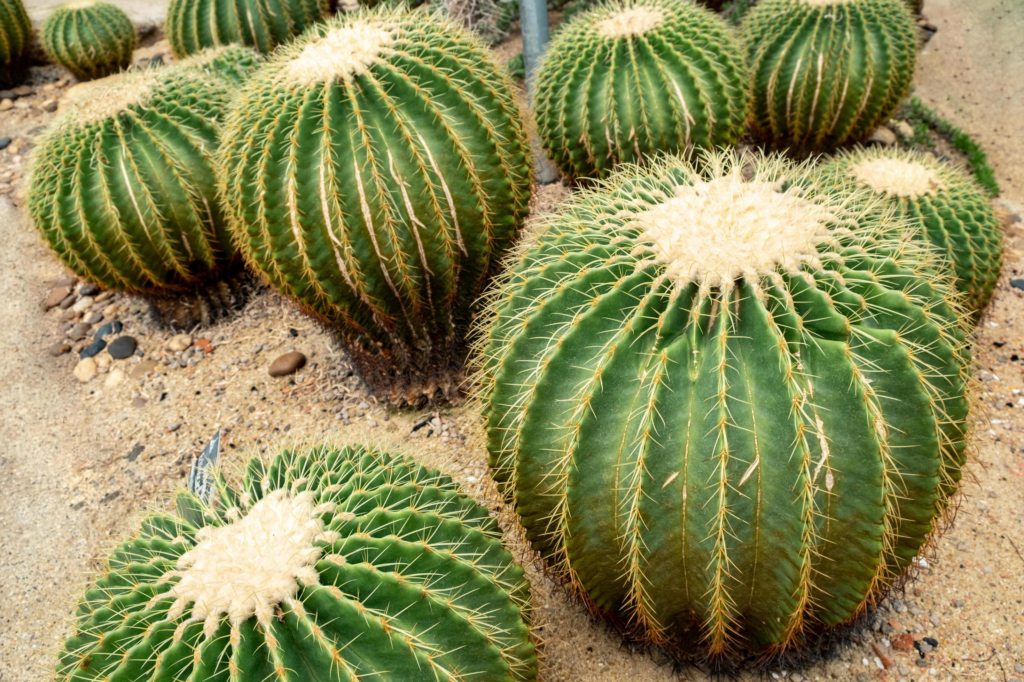
Golden ball cactus description
The golden ball cactus is native to Brazil and Paraguay. They grow in the Rio Grande do Sul in southern Brazil at elevations between 1,000 to 4,000 feet. They are most common in hilly grasslands in the shade of larger plants and can withstand a wide range of temperatures.
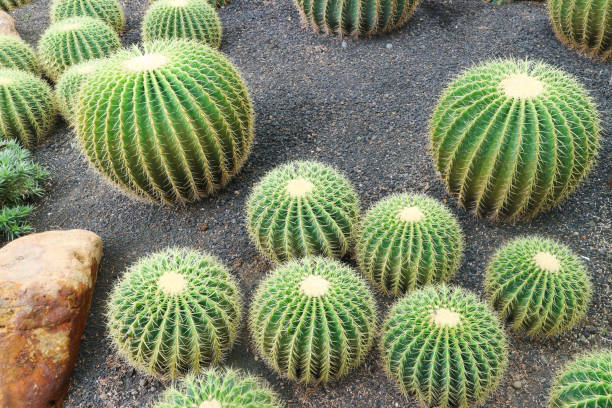
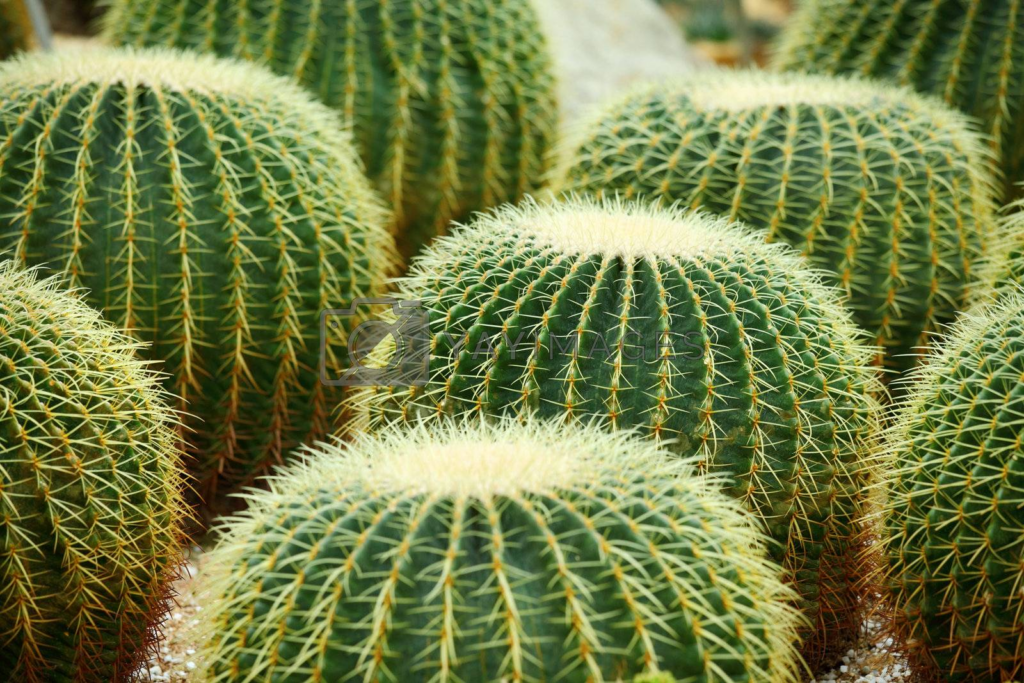
They have lots of soft, golden yellow spines. Young cacti look like golden balls (hence their name), but older specimens in their natural setting can grow into clusters of tall columns up to 3 feet in height (hence their other common name, yellow tower cactus).
Once the cactus is several inches tall it may flower with bright yellow blooms in spring or summer at the top of the plant. The flowers can be 2 inches across.
It was named after cactus collector Wilhelm Lenninghaus who left his German homeland in the 1880’s for Brazil, while working for the German grower Haage.
Since this plant does well inside, I will include information for making it a houseplant.
Quick Facts
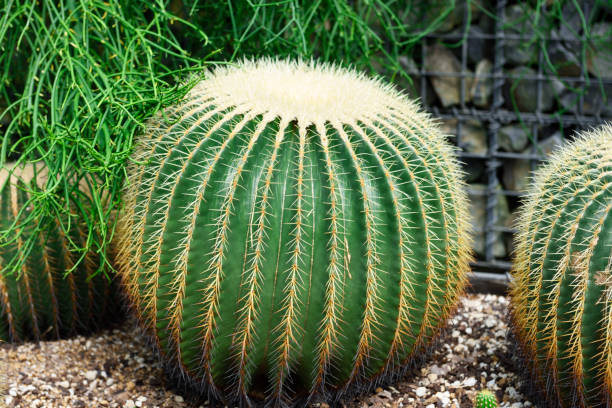
Common Name Golden barrel cactus, golden ball
Botanical Name Echinocactus grusonii
Plant Type Perennial, cactus
Mature Size 3.5 ft. tall, 2 ft. wide
Sun Exposure Full
Soil Type Sandy, well-drained soil
Soil pH Acidic, neutral, alkaline
Bloom Time Spring, summer
Flower Color Yellow
Hardiness Zones Zones 10-11 (USDA)
Native Area North America
The Planting Process
Withhold water for a few months before the growing season. A simulated drought mimics its natural growth cycle in the wild. To encourage blooms in the growing season, give it water once a week when grown inside. This plant needs well-draining soil since soggy soil leads to root rot, potentially killing the plant. It thrives in a pH range of 6.1 to 7.5. Use a cacti/succulent potting mix for best results.
Sunlight
A golden barrel cactus does best in a sunny location with southern exposure and at least six hours of bright sunlight. Plants that do not get enough sunlight will grow slowly and fail to thrive.
Temperature and Humidity
While the plant favors warm conditions, the cactus can tolerate temperatures down to 50 degrees Fahrenheit. It does best without humidity.
Watering
Golden barrel cactus are prone to root rot. From fall to spring, water infrequently (every month or two) and ensure that the soil drains completely.
In winter, simulate drought conditions, giving no water. In early spring, gradually provide some water, increasing water to once per week in spring and summer, ensuring the water drains completely.
Air Circulation
Golden barrel cactus require air flow around the plant and low to no humidity. Ensure the plant is not in an airless zone. Air flow prevents golden barrel cactus from accumulating moisture.
Fertilizer
Feed these plants every four weeks with a phosphorus-rich or low-nitrogen fertilizer. For the amount to use, follow product label instructions.
Pruning and Maintenance
Golden barrel cactus rarely need pruning. If your cactus produces flowers, remove withered flowers and stems.
Pollination
The golden barrel cactus does not require cross-pollination; it can self-pollinate to produce its flowers and seeds. However, if it cross-pollinates with other golden barrel cactus, it tends to be a more prolific bloomer.
Potting Soil and Drainage
When grown indoors, this plant needs dry, very well-drained soil. A fast-draining cactus soil mix is ideal. If you use a regular peat-based combination, add sand or extra perlite to enhance drainage. Repot the plant when the soil begins to break down. Encourage drainage by adding a few inches of gravel or small pebbles to the bottom of the pot. Ensure the pot has ample drainage holes.
Potting and Repotting Golden Barrel Cactus
It will need repotting when you notice roots starting to poke out of the drainage holes. When repotting, choose a new pot that is only an inch or so bigger than the old one. You should repot barrel cactus every few years.
It’s best to repot the plant at the beginning of the growing season or in summer. To repot a cactus, ensure the soil is dry, then gently extract the plant from the pot while wearing thick leather gloves for safety. Knock away the old dirt from the roots, removing any rotted or dead roots in the process. Treat any cuts with a fungicide.
Place the plant in its new pot and backfill it with a potting mix designed for cacti, spreading the roots out as you repot. Leave the plant dry for a week, then begin to water lightly to reduce the risk of root rot.
Moving Golden Barrel Cactus Outdoors for the Summer
Golden barrel cactus can be moved outdoors during the warm summer months.
Considerations
When night temperatures remain above 65 degrees Fahrenheit, it’s safe to bring a golden barrel cactus outdoors. If planning to move the plant outdoors, slowly acclimate it to the outdoor temperature and sun exposure.
Move the plant outdoors to a partially sunny location for two hours. Slowly ramp up to an additional two hours each day, giving the plant a sunnier location each time.
However, if the forecast suggests prolonged rainy weather or storms that will cause the soil to get drenched and remain wet, bring the plant indoors during the wet weather.
When to Bring Golden Barrel Cactus Inside
When the temperature drops to 65 degrees Fahrenheit at night, gradually transition the plant to moving back indoors in two-hour increments each day. Place it in the sunniest window to get as much sun as possible.