
Sub-Total: $0.00
Christmas Rose- Helleborus niger
Helleborus niger is also known as the Christmas rose since it flowers in winter; although it’s not in the rose family, it’s a buttercup. This evergreen plant is like a poinsettia, with leaves resembling petals. Its flowers last long, giving a barren winter landscape a beautiful gift. It prefers shade, and deer and rabbits avoid it as an extra perk.

Common Name: black hellebore
Type: Herbaceous perennial
Family: Ranunculaceae
Native Range: Europe
Zone: 3 to 8
Height: 0.75 to 1.00 feet
Spread: 1.00 to 1.50 feet
Bloom Time: February to March
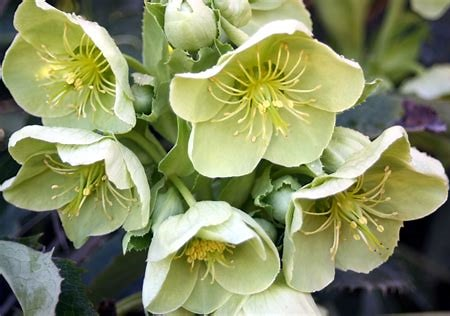
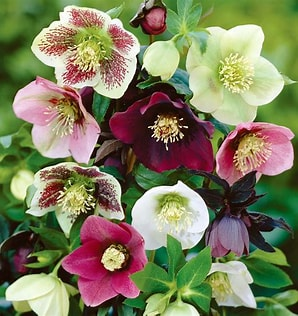
Bloom Description: White fading to blush pink with yellow stamens
Sun: Part shade to full shade
Water: Medium
Maintenance: Low
Flower: Showy, Good Cut
Leaf: Evergreen
Other: Winter Interest
Tolerate: Deer, Dry Soil
Culture
Best grown in moist, organically rich, humusy, neutral to alkaline, well-drained soils in part shade to full shade. Prefers light to moderate shade. Locate plants in sheltered locations in areas protected from cold winter winds. Plants usually take several years to establish. Clumps may be divided for propagation but clumps never require division and will form and grow best when left undisturbed. Plants may self-seed in optimum growing conditions. This species is considered to be more difficult to grow than the similar but later blooming Helleborus orientalis.

Noteworthy Characteristics
Helleborus niger, commonly called Christmas rose, is a winter-blooming evergreen perennial which blooms around Christmas time in warm winter regions, but later (February or March) in the cold northern parts of the growing range.
Bloom time can vary considerably based upon the degree of severity of the winter climate. It is native to alpine areas and open woodlands in southern and central Europe. This plant typically grows to 8-15″ tall and features large, cup-shaped, rose-like white flowers (to 3″ diameter) with crowns of conspicuously contrasting yellow stamens. Each flower has five large and showy petal-like sepals (petals are quite small and inconspicuous).
Flowers usually appear singly on thick stems which usually do not rise above the foliage. This is an acaulescent species (without stems) which produces only basal leaves, each being palmate, deeply lobed, somewhat waxy, and dark green with 7-9 leaflets. In the St. Louis area, leaves remain evergreen in moderate winters but may become somewhat tattered in extremely cold winter areas where temperatures dip below zero, particularly if foliage is not protected by snow cover. Flowers sometimes bloom in the snow and bloom can survive spurts of sub-zero temperatures.
Genus name comes from the Greek words bora meaning “food” and helein meaning “injures/destroys” in reference to the plant’s toxic leaves, stems and roots which are poisonous to humans if ingested.

Specific epithet comes from the Latin word niger meaning black in reference to the color of the roots.
Problems
No serious insect or disease problems. Crown rot and leaf spot are occasional problems. Watch for aphids and slugs.
Uses
Flowers that bloom in winter in St. Louis are quite special. Locate plants near a kitchen window, patio or walkway so that the winter bloom may be enjoyed to the fullest. Group in part shade locations under trees, large shrubs or in woodland gardens. May also be incorporated into naturalized areas where the clumps will slowly spread through self-seeding. Mass for an attractive year-round ground cover.
#christmasrose
