
Sub-Total: $0.00
NATIONAL CELERY DAY; MARCH 1
History and Origin of National Celery Month
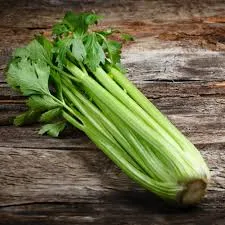
This special event seems to have started around 2015. There is very little written about it. We did not find the author or any information describing the origin, or reasons for establishing this special month.
It also seems strange to have National Celery Month in March. The gardening season has yet to begin, and the home garden harvest of long-growing celery is several months away. We did not find any historic event in March where celery had any involvement. We did not find any presidential proclamations or acts of Congress making this a true “National’ celebration.
NATIONAL CELERY MONTH TIMELINE
850 B.C.Celery is used in medicine.
Celery seed oils were believed to have healing properties.
5th Century B.C.Celery is discovered.
Celery was originally discovered in the Mediterranean area of Europe.
Unlike turkey, pumpkin, sweet potato and cranberry, celery is not native to the Americas and was not present at the first Thanksgiving feast. As a matter of fact, it was not until the early 1800’s that celery found its way into American gardens. Today, however, it ranks as one of our most popular vegetables and is used in many ways throughout the year.
Celery (Apium graveolens var. dulce) is a member of the Umbelliferae or parsley family. Additional familiar vegetables in this family include carrot, parsley and parsnip. Celery’s common name comes from the French word celeri and the Italian seleri. Both were derived from the Greek word selinon, meaning parsley. Indeed, in Homer’s Odyssey reference is made to selinon.
The parent to our modern celery is believed to have originated in the Mediterranean region of Europe and was used by early civilizations for the medicinal properties they thought it contained. Medieval books on herbal remedies suggested using celery for controlling hysteria, soothing nerves, and promoting restful sleep. Even though the presumed medicinal properties of celery have been disproven, it still is considered a “health food” (of sorts) because of its low caloric value and significant fiber content.
Celery was probably first used as a food by the French around 1623. For about the next century its use was confined to flavoring because of the pungency of early types. The late 17th and early 18th century saw improvements of the wild types of celery making its stalks (petioles) better for use in salads. Gardeners also found that growing celery during cooler parts of the year tended to reduce its pungency.
By the middle part of the 18th century celery stored in cellars was enjoyed by the more affluent people of northern Europe during the winter. Its use as a food spread rapidly after that time. It most likely was introduced to America by the colonists and, by 1806, four cultivated varieties were listed. In the United States today, the variety ‘Pascal’ dominates commercial production.
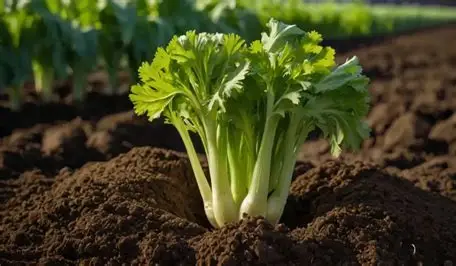
Celery is a biennial plant. This means it produces lush, leafy growth the first year, goes dormant during the winter, and flowers and bears seeds the second year. As a vegetable crop, it is grown for only the first year until plants are large enough to harvest.
#NATIONALCELERYDAY
