
Sub-Total: $0.00
Orchids 101
Your beginner’s guide to the beauty, ecology, and care of orchids.
Orchids facts:
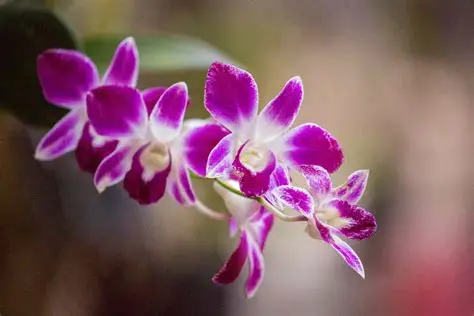
Orchids became a craze by the mid-19th century. Tons of orchids were shipped from tropical areas, and few survived.
Overzealous collecting and habitat destruction have made many species endangered.
Brought to England in the early 1700’s from China and the West Indies.
The Aztecs used vanilla flavoring, and this was introduced to Europe after the Spanish conquest of Mexico.
Orchids are:
- Mostly epiphytes that grow on branches, with roots in the air Most of the commercially available orchids are epiphytic.
- Terrestrial orchids grow in dirt like most other plants. Some grow wild in the US. They come in all sizes.
- Recognized by flowers with 3 sepals and 3 petals (one modified as a lip), and fused reproductive organs
- Over 27,000 recognized species worldwide
- Native everywhere except polar and desert regions (though they can be grown there)
Care of Orchids
Care varies by species. These are general guidelines:
Water: Do not overwater. Roots need to dry between waterings.
- Use room-temperature water; avoid ice cubes
- Alternate water and fertilizer; allow full drainage
- Too much water: leaves turn sickly green or yellow
- Too little water: leaves or pseudobulbs shrivel or wrinkle

Temperature
Most orchids require cooler nights. Needs vary by species.
- Daytime: 70–85°F
- Nighttime: 60–65°F
- Too cold: mottled yellow leaves
- Too hot: brown or dry leaves
Light
Orchids need more light than many people expect.
- Place near an east- or north-facing window
- Too much light: burned or brown patches (use sheer curtain to diffuse)
- Too little light: dark green, floppy leaves and no flowering
Humidity
Group orchids together or near other plants to increase humidity.
- Some (e.g., Vandas) require very high humidity; others need less
- Too much humidity: fungal growth
- Too little humidity: poor growth and dry appearance
- Use a gravel tray beneath pots
- Avoid hot, dry, or windy locations
Fertilizer
- 30-10-10 recommended for most indoor orchids; alternate with water
- Fish emulsion for outdoor orchids
- Cymbidiums benefit from 10-30-10 before and during flowering
Purchasing an Orchid
- Select plants with green, undamaged leaves and both buds and flowers
- Inspect for insects, scale, or mites before purchasing
- Isolate new orchids for 6 months to monitor pests
Popular Orchids
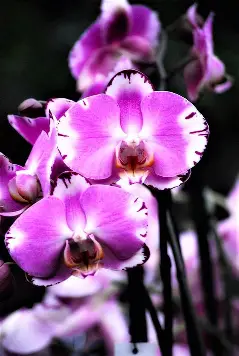
Phalaenopsis (Moth Orchid)
- Tolerates low light but needs 1,250–1,500 foot-candles daily to rebloom
- Prefers 65°F nights when resting
- Needs 55–60°F nights for 4–6 weeks to trigger rebloom
- Avoid water in crown to prevent rot
- Produces keikis (baby plants) on flower stems
- Most are tissue-cultured
Cattleyas
- Very showy flowers
- Need medium light (more than Phalaenopsis)
- Often hybridized with other species
Oncidium, Brassia, Miltonia
- Low to medium light
- Miltonias sensitive to high temperatures
- Require more water than Cattleyas or Phalaenopsis
Cymbidiums
- Often grown outdoors
- Can grow throughout San Luis Obispo County; protect from frost
- Provide shade in hot northern areas
- Mist leaves (not soil) during extreme heat
Repotting Orchids
- Most prefer slightly crowded pots
- Repot every 2–3 years
- Avoid repotting just before, during, or immediately after flowering
- Use pots with good drainage (plastic or glazed ceramic)
- Use orchid bark (small, medium, or large grade depending on plant size)
- Pre-wet bark before potting
- Place oldest growth at back of pot
- Label with name, bloom color, and date
Dividing Orchids
- Sterilize tools (1 part bleach to 9 parts water)
- Divide with clean scissors or pruning shears
- Aim for 2–3 strong divisions
- Re-sterilize tools between plants
Orchid Ailments
Isolate new plants for 6 months.
- Mites: cause brown or silvery patches and webbing
- Scale: small brown shell-like structures; remove manually or use insecticidal soap
- Aphids and mealybugs: produce honeydew; rinse or treat as needed
- Fungal issues: sooty mold from honeydew; remove infected tissue
