
Sub-Total: $0.00
Creating a Tea Garden: Part 4 Tea from Flowers
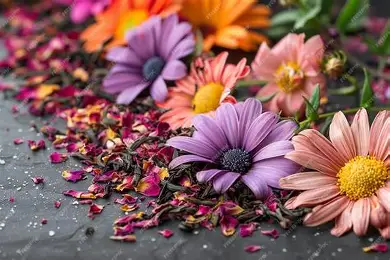
To make your own floral tea, use only healthy flowers that are free of chemical fertilizers, pesticides, or herbicides. You can use fresh or dried flowers for tea. Most people who make homemade tea prefer dried flowers because they are easier to store. If using fresh flowers, be sure to rinse them first. If drying the flowers, tie the flower stems and hang them upside-down in bunches in a well-ventilated, warm, dark place such as an attic. You can also spread them on a screen to dry or dry them in the oven. Keep the dried flowers in an airtight, labeled jar and store in a dark place; they will keep up to a year.
I am providing basic single directions for the flowers for space reasons since there is not that much variation in recipe.
It is easy to make a tea whether using dried or fresh flowers.
Use one tablespoon of fresh flowers or one teaspoon of dried flowers steeped in one cup of boiling water. You can use a tea bag or tea ball or just strain the tea with a cloth. Usually, the steeping time is three to ten minutes; the longer it brews, the stronger it will be.

Bee balm/ Bergamot
Botanical name- Citrus aurantium
Health benefit: may help lower cholesterol and blood pressure

Calendula
Botanical name-calendula officinalis
Health benefit: may help fight cancer
and protect against heart disease

Chrysanthemum
Botanical name-x morifolium
Health benefits: may help with bone health and inflammation

Cornflower
Botanical name-centaurea cyanus
Health benefits: may help with constipation and water retention

Roman Chamomile
Botanical name- chamaemelum nobile
Health benefits: may help with easing skin conditions like eczema or rashes

German Chamomile
Botanical name-matrricaria recutita
Health benefits: may slow or prevent osteoporosis and aid with diabetes issues

Hibiscus
Botanical name- hibiscus moscheutos
Health benefits: May boost liver health and lower blood fat levels

Honeysuckle
Botanical name- lanicera
Health benefits: may prevent infections and regulate bood sugar levels

Jasmine
Botanical name- jasminum officinale
Health benefits: May boost brain function and aid with Alzheimers and parkinsons

Lavender
Botanical name- lavandula augustifolia
Health benefits: may aid respiratory health and detoxify the body

Milk Thistle
Botanical name- silybum marianum
Health benefits: may promote liver health and protect from diabetes

Marigold
Botanical name- tagetes
Health benefits: may help with cramps and aids in digestion

Red Clover
Botanical name- trifolium pratense
Health benefits: may act as a diuretic and aid in weight loss

Saffron Crocus
Botanical name- sativas
Health benefits: may reduce potential heart problems and lower cholesterol

Violet
Botanical name- viola odorata
Health benefits: may aid healthy lymphatic function and sooth skin irritations

Yarrow
Botanical name -chillea millefolium
Health benefits: may enhance wound healing and reduce depression and anxiety
Enjoy your “High Tea” this afternoon!
