
Sub-Total: $0.00
Deer and Flower Disasters
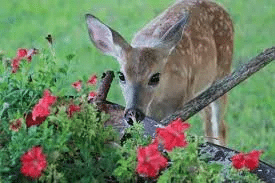
Deer are a joy to watch, and when the spotted fawns appear in June and July, few can resist a tender feeling for these graceful animals. Yet, where they are abundant, deer can be one of the most destructive pests of home gardens, landscape plantings and orchards. Buds and twigs are nibbled in winter, new growth is eaten in the spring, and leaves are browsed in the summer. In the fall, bucks rub bark and break down small trees and shrubs when removing the velvet from their antlers.
Deer primarily eat twigs, buds and leaves. However, they also will eat grass, young shoots of vegetables, flowers and bulbs. Among preferred foods are soft-needled and broad-leaved evergreens. Yew, juniper, fir, spruce, false-cypress and white pine are especially favored. Yews and spreading junipers can be eaten to the ground in one winter. Conifers with stiff needles, such as Austrian pine, are more likely to be left alone. Deer also like laurel and some viburnums. Other favorites are the various kinds of evergreen euonymus. Many evergreen ground covers, including pachysandra and periwinkle, are extremely vulnerable and generally cannot be grown in deer country.
Thorny plants generally are safe. However, roses do not stand much of a chance, because the young shoots are browsed before they develop thorns.
There are no deer resistant plants. But there are plants that most deer will not eat if there is an abundance of food. Most of the plants listed in this document will not be eaten by deer if there is another choice; however, this is not a guarantee they won’t at least take a sample now and then. When selecting plants from this list for your landscape be sure that all of the planting criteria are met, temperature, light, moisture and not just the deer tolerant need. Some of these plants may be more suitable in a meadow or pasture for example, than next to your patio or home. For this information consult your professional nurseryperson or appropriate garden books or call the Master Gardeners.
This is an excellent article from El Dorado County CA Amster Gardeners listing all plants recommended for areas with Deer and an article coping with Deer.
323397.pdf (ucanr.edu) Coping with Deer in Suburban Gardens | New Mexico State University – BE BOLD. Shape the Future. (nmsu.edu)
I want to share a few categories of plants or specific areas of your yard as something to consider.
Deer Resistant Flowers for Sun
Botanical Name: Gaillardia X grandi
Common Name: Blanket Flower
Sun: Full
Water: Medium
Plant height: 1-3′
Flower color: Orange Multi Color
Flower season: Summer-Fall
Botanical Name: Hemerocallis hybrids
Common Name Daylily hybrids
Sun: Full, Half
Water: Low, Extra in Summer
Plant height: Under 1′, 1-3′, 3-6′
Flower color: Red
Flower season: Spring, Summer
Botanical Name: Iris bearded ‘Beverly Sills’
Common Name: Beverly Sills Bearded Iris
Sun: Full, Half
Water: Low, Medium
Plant height: 1-3′
Flower color: Orange, pink
Flower season: summer
Botanical Name: Kniphofia uvaria
Common Name: Red Hot Poker
Sun: Full, Half
Water: Low
Plant height: 1-3′
Flower color: Orange
Flower season: Summer-Fall
Deer Resistant Flowers for Shade
Botanical Name: Helleborus hybrids
Common Name: Hybrid Helleborus or Hellebore
Sun: Shade
Water: Medium, extra in Summer
Plant height: 1-3′
Flower color: Green, Pink, white
Flower season: Spring
Botanical Name: Mimulus X hybridus
Common Name: Sticky Monkey Flower
Sun: Half, Shade
Water: Very low, extra in summer
Plant height: 1-3 ‘
Flower Season: spring, summer Flower color: Yellow
Botanical Name: Nepeta X faassenii
Common Name: Catmint
Sun: Half, Shade
Water: Medium
Plant height: 1-3′
Flower color: Blue, lavender
Flower season: Summer
Botanical Name: Tellima grandi
Common Name: Fringe Cups
Sun: Half, Shade
Water: Medium
Plant height: under 1′
Flower color: Green, Pink
Flower season: spring
Deer Resistant Ground Cover
Botanical Name: Ceratostigma plumbaginoides
Common Name: Dwarf Plumbago
Sun: Full, Half
Water: Medium, extra in summer
Plant height: 1-3″
Flower color: Blue
Flower season: Summer
Botanical Name: Erigeron glaucus ‘Wayne Roderick’
Common Name: Seaside Daisy, Beach Fleabane
Sun: Full, Half
Water: Low, extra in summer
Plant height: 1-3′
Flower color: Gold, Lavender, Multi color
Flower season: Spring- Fall
Botanical Name: Felicia amelloides
Common Name Blue Marguerite, Blue Felicia Daisy
Sun: Full, Half
Water: Medium, extra in Summer
Plant height:1-3′
Flower color: Blue, yellow, Multi
Flower season: Spring-Fall
Botanical Name: Gazania ‘Yellow’ trailing
Common Name: Trailing Yellow Gazania
Sun: Full, half
Water: very low, extra in summer
Plant height: under 1 ‘ Flower color: Yellow
Flower season: Fall Flower color: yellow
Deer Resistant Shrubs
Botanical Name: Ceanothus ‘Dark Star’
Common Name: Dark Star Ceanothus
Sun: Full
Water: Low
Plant height: 6′
Flower color: Blue
Flower season: Spring
Botanical Name: Chaenomeles speciosa
Common Name: Japanese Flowering Quince
Sun: Full, Half
Water: Medium
Plant height: 6-12′
Flower color: red Flower season: spring
Botanical Name: Choisya ternata
Common Name: Mexican Orange
Sun: Full, Half
Water: Medium
Plant height: 3-6′
Flower color: White
Flower season: Spring, Summer
Botanical Name: Daphne odora ‘Aureo-marginata’
Common Name: Variegated Winter Daphne
Sun: Half
Water: Medium extra in summer
Plant height: 3-6′
Flower color: Pink
Deer Resistant Trees
Botanical Name: Feijoa sellowiana
Common Name Pineapple Guava
Sun: Full
Water: Low
Plant height: 12-25′
Flower color: Red, White, Multi
Flower season: Spring
Botanical Name: Tibouchina urvilleana
Common Name: Princess Flower
Sun: Full, Half, Shade
Water: Medium
Plant height: 6-12′, 12-25′
Flower season: summer Flower color: Purple
Botanical Name: Prunus ilicifolia ssp. lyonii
Common Name: Catalina Cherry
Sun: Full, Half
Water: Very Low, Low, Medium
Plant height: 6-12′, 12-25′
Flower color: White
Flower season: Spring
Botanical Name: Albizia julibrissin
Common Name: Chocolate Fountain Mimosa Tree
Sun: Full Sun
Water: Moderate
Plant height: 15 – 20 feet
Flower color: Pink
Flower season: Spring, Summer
Helps to discourage deer in an area of your yard
The only certain protection for a large area against deer is an 8-foot-high woven wire fence; deer will jump over anything lower. Small areas near a building often can be protected with a 4-foot fence, because deer usually will not jump into small enclosures.
New shrubs and trees should be protected with cages 4-feet high and 18 to 24 inches in diameter. Young trees are especially vulnerable to antler rubbing, for bucks prefer to rub trunks no more than 1 or 2 inches thick. Trunks 4 inches or thicker can be safely left exposed. Small trees with 3 or 4 feet of clear trunk can be protected with a wire cage 6 inches across. An even simpler device is a pipe sunk into the ground right next to the trunk. With 3 or 4 feet of pipe above ground, rubbing is stopped completely.
An electric fence with two wires, one 18 inches and the other 36 inches above the ground, is effective in most cases. Although deer could easily jump over such a fence, they prefer to go under and, in doing so, will naturally touch the lower wire. Also, they often nuzzle an obstacle and with the upper wire at head height they are quickly stopped. Sometimes it is suggested that a third wire be placed about halfway between the other two.
Few homeowners are willing to fence themselves in. So, repellents may be an alternative. The most common are Hinder, Thiram (Arasan), bone oil, and two recent discoveries—Tabasco sauce and hair balls. None of this work perfectly. They are most effective in summer when the plants are in full leaf. Effectiveness also depends on deer pressure; the more deer there are, the less effective repellents are.
Hair balls are small net bags filled with human hair; you may have to make a deal with your barber. They seem to be effective only when deer pressure is low. This repellent is seldom effective during the winter, for hair balls do not smell when the temperature is low.
Strips of burlap soaked in a solution of half bone oil and half water and hung on stakes next to young plants have been effective in spring and summer. They have to be redipped every six weeks or so. To protect large plants, the stakes have to be placed about every 1 to 2 feet around the plant. This unattractive sight limits their use around the house or garden.

Soap Deer Repellent
Deer avoid strong fragrances, making deodorant bar soap an inexpensive option to keep deer out of your garden. And because this natural deer repellent doesn’t physically touch plants, it’s perfect for vegetable gardens.
To add soap to your plants:
- Using a sharp knife, cut a bar of soap into several pieces.
- Dump the soap pieces into an empty sock.
- Secure the top of the sock with twine to create a pouch.
- Attach the soap pouch to a wooden stake with a staple gun.
- Drive the wooden stake into the ground where you want to keep deer out.
Essential Oil Deer Repellent
For a DIY spray with a more pleasant aroma, use vinegar and herbal essential oils.
- Use a funnel to add 8 ounces of white vinegar to an empty 16-ounce spray bottle.
- Add 6 drops of peppermint essential oil and 4 drops of rosemary essential oil to the spray bottle with the vinegar.
- Tightly close the spray bottle lid and shake to mix the contents together.
- Spray this mixture onto plants, refraining from spraying anything you plan to eat.
Homemade Deer and Rabbit Repellent
You Will Need:
- 2 cups of water
- 5 tbsps. cayenne pepper
- 5 cloves of garlic
- Sprayer
How To:
Mix all ingredients in a blender then pour into a covered container. Let it stand for 24 hours, strain, and mix with a gallon of water. Apply to plants using a sprayer. This can be effective as a rabbit repellent too.
Sometimes no repellent seems to work. If you live in deer country and want to grow vegetables or fruit trees, the only dependable methods of eliminating deer damage are fences and cages.
A State-by-State Resource for Deer-Resistant Plants
Just about every state has a university cooperative extension service that can provide a list of plants that are generally less popular with visiting deer. Unfortunately, no one can claim a plant is totally deer resistant—it seems the deer themselves do not read these lists. Other sources also have lists of deer-resistant plants for your landscape.
Alabama
- “Deer Resistant Plants of the South,” Better Homes & Gardens
Alaska
- “Deer Resistant Plants of the Pacific Northwest,” Better Homes & Gardens
Arizona
- “Deer and Rabbit Resistant Plants,” University of Arizona Cooperative Extension Service
Arkansas
- “Deer,” University of Arkansas Cooperative Extension Service
California
- “Deer Resistant Plants,” University of California Cooperative Extension
- “Deer-Resistant Plants for the Sierra Foothills,” Cooperative Extension Nevada County (California) Master Gardeners
Colorado
- “Deer Resistant Plants for Colorado,” Garden Centers of Colorado
Connecticut
- “Deer Resistant Plants,” Woodstock Conservation Commission: Woodstock, Connecticut
Delaware
- “Deer Resistant Plants,” Delaware Department of Natural Resources
Florida
- “Deer Resistant Plants of the South,” Better Homes & Gardens
Georgia
- “Deer Resistant Plants,” University of Georgia College of Agricultural
Idaho
- “Top Deer Resistant Plants of the Mountain West and High Plains,” Better Homes & Gardens
Illinois
- “Gardening with Perennials,” University of Illinois Extension
Indiana
- “Deer Resistant Plants for Homeowners,” Purdue University
Iowa
- “Deer Resistant Landscaping,” City of Iowa City
Kansas
- “Top Deer Resistant Plants of the Midwest,” Better Homes & Gardens
Kentucky
- “Deer Resistant Plants of the South,” Better Homes & Gardens
Louisiana
- “Deer Resistant Plants of the South,” Better Homes & Gardens
Maine
- “Deer Resistant Plants,” Maine.gov
Maryland
- “Resistance of Ornamentals to Deer,” Maryland Cooperative Extension
Massachusetts
- “Deer Resistant Plants,” University of Massachusetts, Amherst
Michigan
- “Deer Resistant Plants for Homeowners,” Michigan State University
Minnesota
- “Deer Resistant Plants,” University of Minnesota Extension
Missouri
- “Deer Resistant Plants for the Landscape,” Missouri Department of Conservation
Mississippi
- “Deer Resistant Plants of the South,” Better Homes & Gardens
Missouri
- “Deer Gardening,” Missouri Department of Conservation
Montana
- “Minimizing Deer Damage to Residential Plantings,” Montana State University Extension Service
Nebraska
- “Plants Deer Will Not Eat,” University of Nebraska Extension
Nevada
- “Deer Resistant Plants for Northern Nevada,” University of Nevada Cooperative Extension
New Hampshire
- “Deer Resistant Native Plants,” New Hampshire Extension
New Jersey
- “Landscape Plants Rated by Deer Resistance,” Rutgers Cooperative Extension
New Mexico
- “Deer Resistant Plants,” High Country Gardens
New York
- “Deer Resistant Plants,” Cornell University
North Carolina
- “Deer Resistant Plants,” North Carolina Cooperative Extension
North Dakota
- “Top Deer Resistant Plants of the Midwest,” Better Homes & Gardens
Ohio
- “Deer Resistance Rating for Landscape Plants,” Gardening in Deer Country
Oklahoma
- “Top Deer Resistant Plants of the Midwest,” Better Homes & Gardens
Oregon
- “Deer Resistant Plants for Central Oregon,” Oregon State University Extension Service
Pennsylvania
- “Deer Resistant Plants,” Penn State Cooperative Extension
- “Landscape Plants Rated by Deer Resistance,” Rutgers Cooperative Extension
Rhode Island
- “Plants Least-Preferred by Deer,” Rhode Island Department of Environmental Management
South Carolina
- “Deer Resistant Plants for the Grand Strand,” Clemson University Extension
Texas
- “Deer in the Urban Landscape,” The Texas A&M University System
Vermont
- “Deer Resistant Perennials,” University of Vermont Extension System
Virginia
- “Deer “Resistant” Plant List,” University of Virginia Extension
South Dakota
- “Deer Resistant Plants,” Dakota Garden
Tennessee
- “Deer Resistant Plants,” Plant Friendly
Texas
- “Deer in the Urban Landscape,” Texas A & M Extension
Utah
- “Minimizing Browsing Damage by Deer,” Utah Division of Wildlife Management
Washington
- “Deer Resistant Plants,” Washington State University Extension
West Virginia
- “Resistance of Ornamentals to Deer Damage,” West Virginia University Extension Service
Wisconsin
- “Deer Resistant Plants in Wisconsin,” Garden Guides
Wyoming
- “Deer Resistant Plants,” High Country Gardens
Good Luck!
#deerresistant #deer #flower
