
Sub-Total: $0.00
Hummingbird Garden
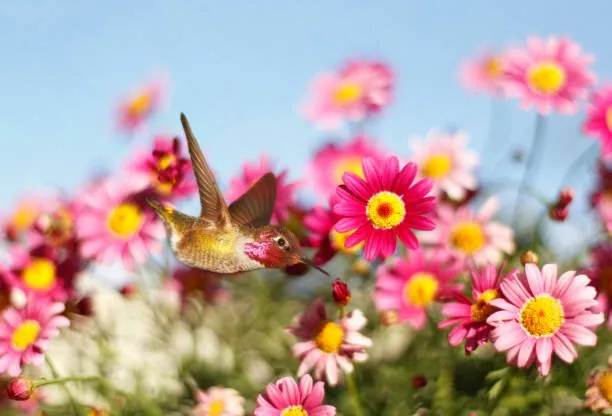
One of the most amazing reasons to plant a pollinator garden is to bring hummingbirds near. We love birds of all kinds, but hummingbirds have a magic all their own. Not only are they the only bird that can fly backward, but they’re also incredibly tiny and incredibly tough! Most North American hummingbirds migrate, and some travel thousands of miles each winter, going south, then coming back north in the spring, much the way geese do!
All that flapping means that hummingbirds are hungry creatures. They eat four to five times per hour and one bird can visit nearly 2,000 flowers in a day to get enough food.
A good rule of thumb when choosing hummingbird-friendly plants: They tend to prefer bell or trumpet-shaped flowers that they can dip their long beaks into, and they like the color red. That said, we’ve found hummingbirds will eat from a wide variety of flowers—when you eat as much as they do, you can’t afford to be too picky!
Always remember, when choosing perennials, check out the USDA’s Hardiness Zone Map to see which zone you’re in, and avoid varieties that aren’t right for your area. Keep in mind that the map was updated in 2023, and many zones have actually changed!
Lantana

Lantana is a sturdy plant that doesn’t mind heat and drought once it’s established. In most of the country, it is an annual, though it can become a perennial shrub in warm climates. Look for new varieties which are not invasive.
Type of plant: Annual, but perennial in USDA zones 8 to 11 Exposure: Full sun
Trumpet Vine
As you can see from the photo, Trumpet Vine’s long, tubular flowers are deeply attractive to hummingbirds, and ruby-throated hummingbirds in particular.

The good news? It’s very easy to grow. The bad news? Though it’s a native plant, it’s an aggressive grower and can be invasive in some parts of the country. The vines can grow upwards of 30 feet in one season! If you’re up for keeping it in check, however, it’s sure to draw birds to your yard.
Type of Plant: Perennial in USDA zones 4 to 9 Exposure: Blooms best in full sun but grows well in partial shade

Lupine
The lupine genus contains dozens of different species (including Texas Bluebonnets) that produce cones of flowers that hummingbirds quite like. Many are early spring bloomers, which can help bring the pollinators to your yard when there’s little else out there.
Type of Plant: Perennial in USDA zones 3 to 7 Exposure: Full to part sun

Beardtongue
Also called Penstemon, this small perennial can grow masses of flowers in sturdy spikes. The bell-shape of the flowers encourages hummingbirds to dip their beaks in.
They can be sown directly onto the soil in spring and will produce flowers for years. Cut back stalks after flowering to encourage reblooming.
Type of Plant: Perennial in USDA zones 5 to 8 Exposure: Full sun
Trumpet Honeysuckle

This native plant, Lonicera sempervirens, is a popular flowering vine that’s easy to grow and beloved by our tiny flying friends! Bonus: it’s deer resistant!
Make sure not to confuse it with Lonicera japonica, the invasive Japanese honeysuckle.
Type of Plant: Perennial in USDA zones 5 to 9 Exposure: Full sun to part shade
Coral Bell

The wild vibrant leaves of the Heuchera plant, also known as Coral Bell, are often what draw gardeners: species are available in practically every color imaginable. But when the tiny blooming flowers arrive in mid-summer, hummingbirds will visit!
Type of Plant: Perennial in USDA zones 4 to 9 Exposure: Part sun to full shade
Phlox

This fragrant garden flower comes in shades of white through pink to purple, and even multiple colors. Pollinators love it, especially hummingbirds.
Deadhead the flowers to keep it blooming all summer.
Type of Plant: Perennial in USDA zones 3 to 8; easily self-seeds Exposure: Full sun to part shade
Cardinal Climber

This charming heirloom plant has ferny foliage and tiny star-shaped red flowers hummingbirds love. As the name suggests, these plants are vines that can cover a trellis or fence quickly. Cardinal climbers, also called red cypress vines, grow easily from seed.
Type of plant: Annual Exposure: Full sun
Columbine

Columbine is a spring bloomer that offers early-season nectar to hummingbirds. It prefers cooler springtime temperatures, comes in an array of colors and self-seeds readily.
Type of plant: Perennial, USDA Zones 3 to 8 Exposure: Full to part sun
Sunflower

Sunflowers are super-easy to grow from seed, and they come in so many different colors and varieties, with heights ranging from a foot to 10 feet tall! They offer vital late-season food for hummingbirds, but all pollinators love them. Plant several different types of sunflowers to keep the blooms coming
Type of plant: Annual Sun Exposure: Full sun
Fuchsia

Fuchsia has the most exotic-looking flowers. They come in shades of purple, pale pink, and hot pink. They look best cascading out of baskets and window boxes, which also keeps the flowers at eye level so you can enjoy the visiting hummingbirds.
Type of plant: Annual Sun Exposure: Full shade with morning sun for best blooms
Cuphea

If you plant only one flower for your hummingbirds, make it cuphea! This pretty flower loves, loves, loves the heat. It will keep blooming well into fall, as long as you keep it fertilized and watered. It’s one of the absolute best for attracting hummingbirds.
Type of plant: Annual Exposure: Full sun

Delphinium
These stunning cottage garden flowers are a must-have for garden borders. Of course, hummingbirds love them, but you will, too, with their striking upright form and intense pink, purple or blue hues.
Type of plant: Perennial in USDA zones 3 to 7 Exposure: Full sun to part shade

Cardinal Flower
This native perennial attracts hummingbirds because of its stunning tube-shaped brilliant red flowers. It does especially well in boggy or wet areas.
Type of plant: Perennial in USDA zones 5 to 10 Exposure: Full sun

Petunia
Petunias are old favorites in the garden because they work everywhere: In planters, window boxes, baskets, and landscape beds. And their tubular-shaped flowers in every color you can imagine are appealing to hummingbirds.
Type of plant: Annual Exposure: Full sun

Bee Balm
Hummingbirds, butterflies, and—of course—bees are all attracted to bee balm, also known as wild bergamot. Native to North America, scarlet bee balm is a special favorite of hummingbirds.
Type of plant: Perennial to USDA Zones 3 to 9 Sun Exposure: Full sun

Hummingbird Mint
With a name like this, you know it’s a must-have in a hummingbird garden! This sturdy perennial doesn’t mind heat and drought, once established. And it’s also deer and rabbit resistant.
Type of plant: Perennial Exposure: Full sun

Butterfly Bush
This easy-to-grow flowering shrub is attractive to butterflies, but hummingbirds love the elongated clusters of nectar-rich blooms, too.
Type of plant: Shrub, hardy in USDA Zones 5 to 9 Sun Exposure: Full sun
Zinnia

Native to the Southwest, zinnias are one of the most popular annuals throughout the U.S. (They’re one of our favorite annuals too.)
They are easy to grow from seed and will re-seed readily! Hummingbirds and other pollinators love the bright blooms. They’re perfect in a cutting garden where you can grow some for the hummingbirds, and some for you to enjoy indoors!
Type of plant: Annual Exposure: Full sun
Rose of Sharon

This pretty shrub blooms late in the season, when many other plants in your garden are starting to wind down. Hummingbirds adore the brightly-colored flowers. New types also are columnar in form, so they fit in tight spaces. Note: Rose of Sharon is considered invasive in some states, including Virginia and Kentucky.
Type of plant: Shrub hardy in USDA zones 5 to 9 Exposure: Full sun

Foxglove
The tubular flowers of foxglove are the perfect drinking vessel for hummingbirds. It is a biennial, meaning it has a two-year lifecycle and only flowers in the second year, but it can re-seed. Foxglove is easy to grow and can top out at 5 feet tall.
Type of plant: Biennial in USDA zones 4 to 8 Exposure: Full sun

Salvia
Salvia are a sturdy perennial that bloom for weeks in the summer. They come in various shades of pinks and purples. Hummingbirds love their tubular flowers.
Another benefit: They’re also deer-resistant. Some types are annual, so make sure to buy the perennial varieties if you want the plant to return each year.
Type of plant: Annual, or perennial types in USDA zones 4 to 8 Exposure: Full sun

Bleeding Heart
It’s easy to see where this perennial plant got its name, and the flowers are a rich source of nectar for hummers. These perennials take a few years to get established, but they’re worth the wait. And deer and rabbits tend to leave them alone!
Type of plant: Perennial to USDA zones 3 to 9 Exposure: Part shade with morning sun

Morning Glory
These fast-growing vines are super-easy to grow from seed. Make sure to give them something to climb, such as a trellis, mailbox, or fence.
Type of plant: Annual Exposure: Full sun
All pictures are Getty Images
I would love to see any Hummingbird pictures you have!
