Sub-Total: $0.00
Mendocino Coast Botanical Garden
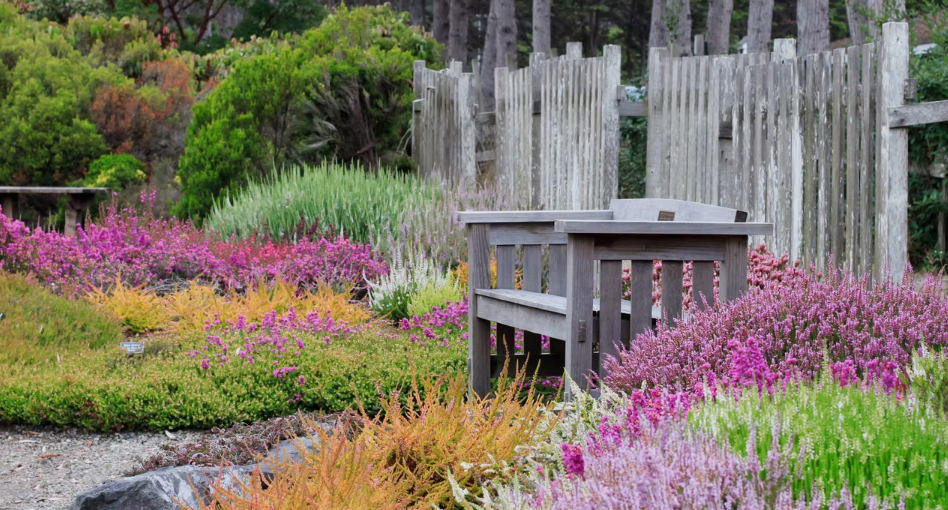
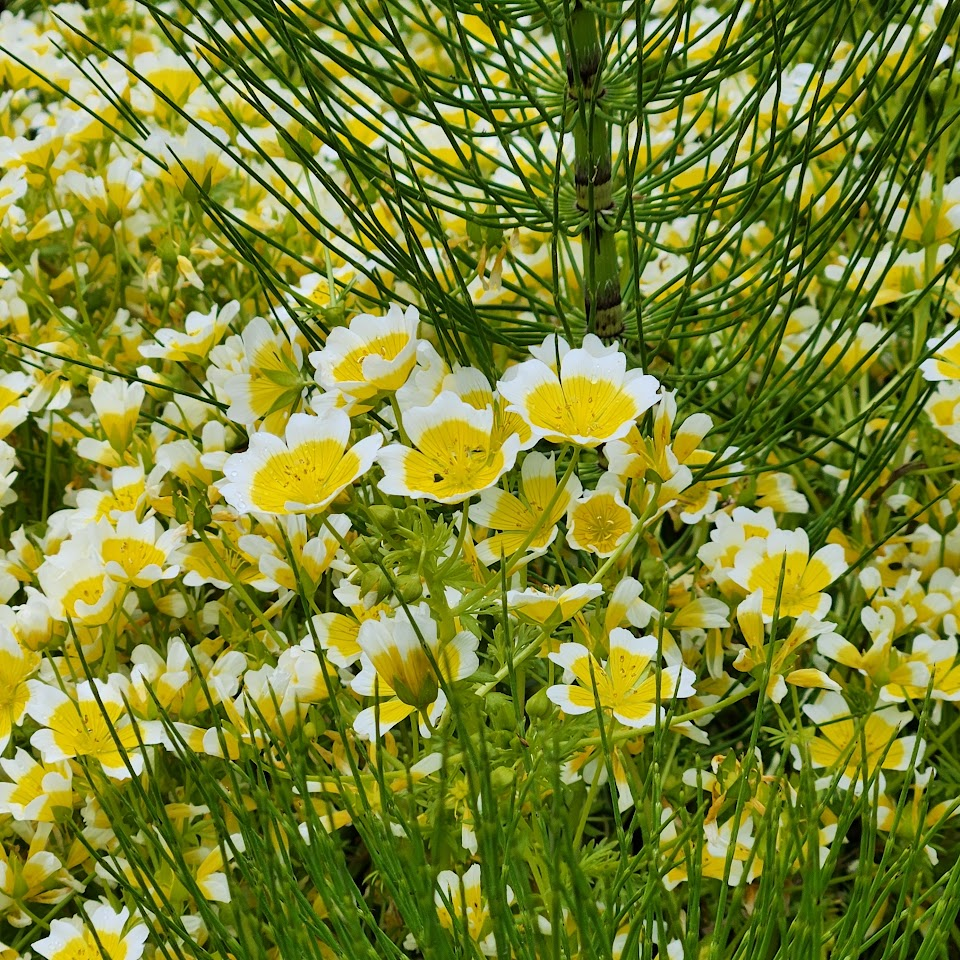
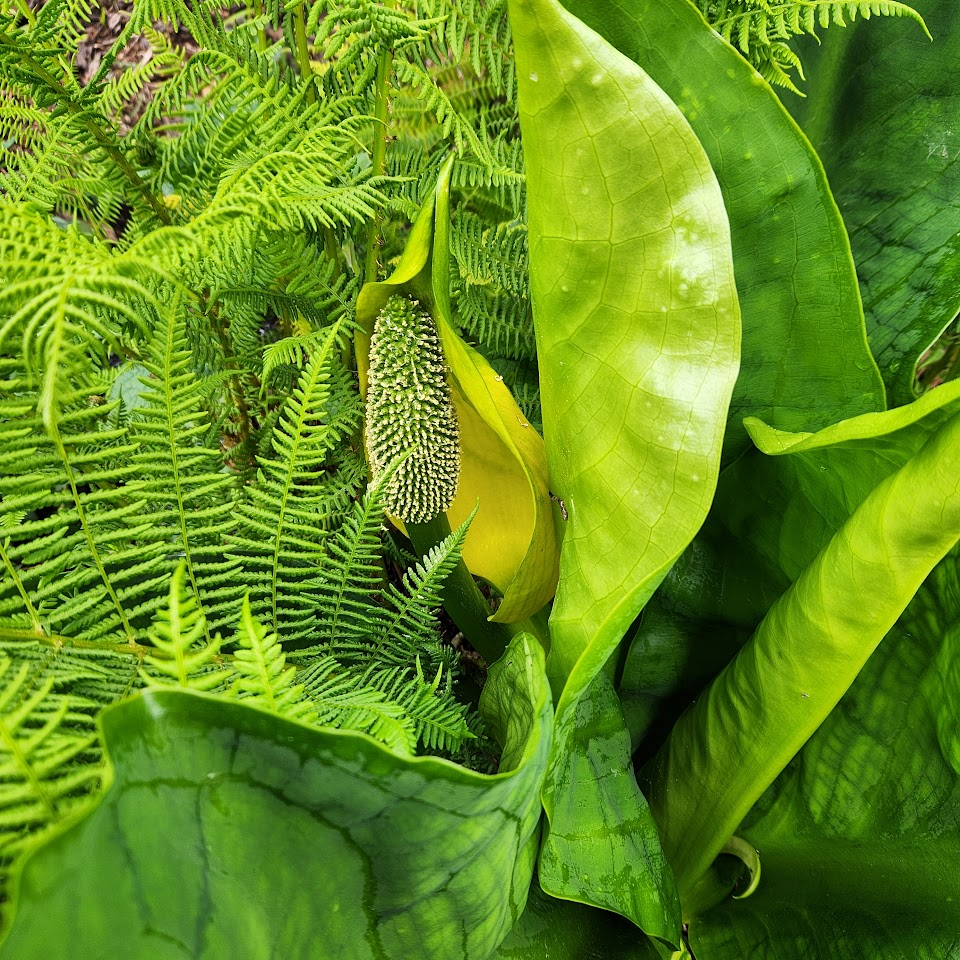
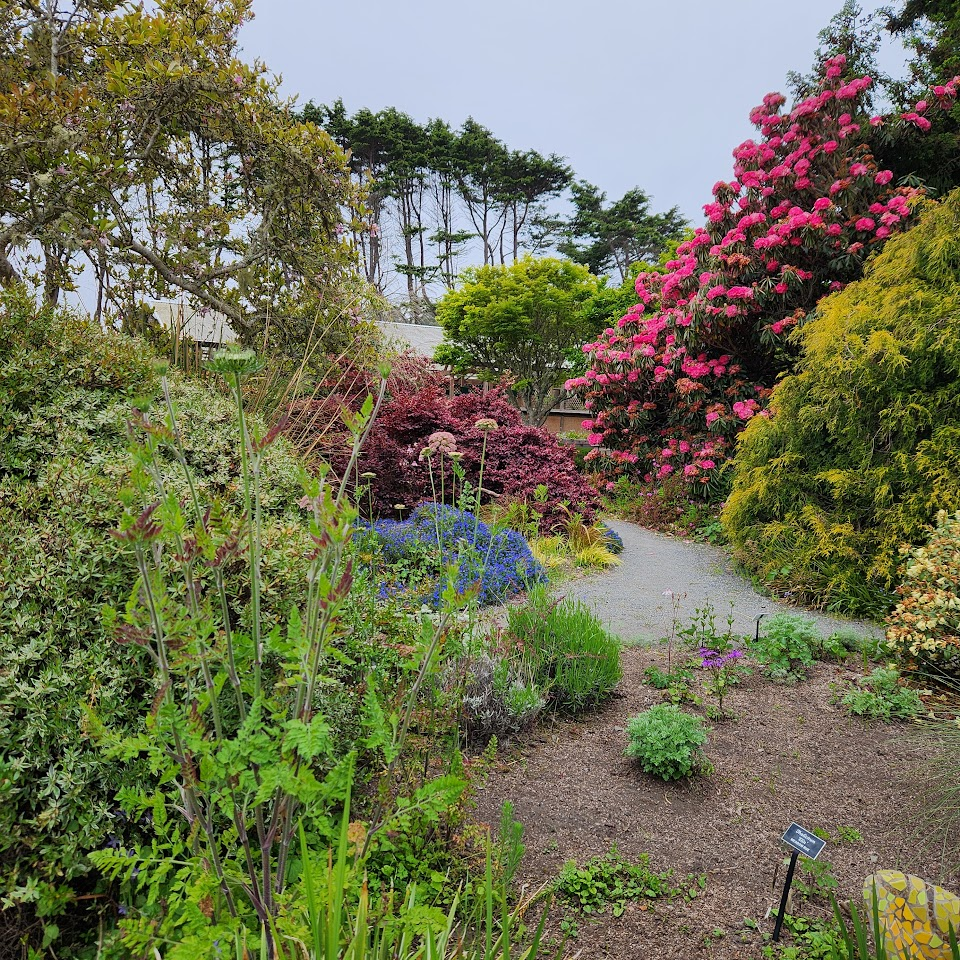
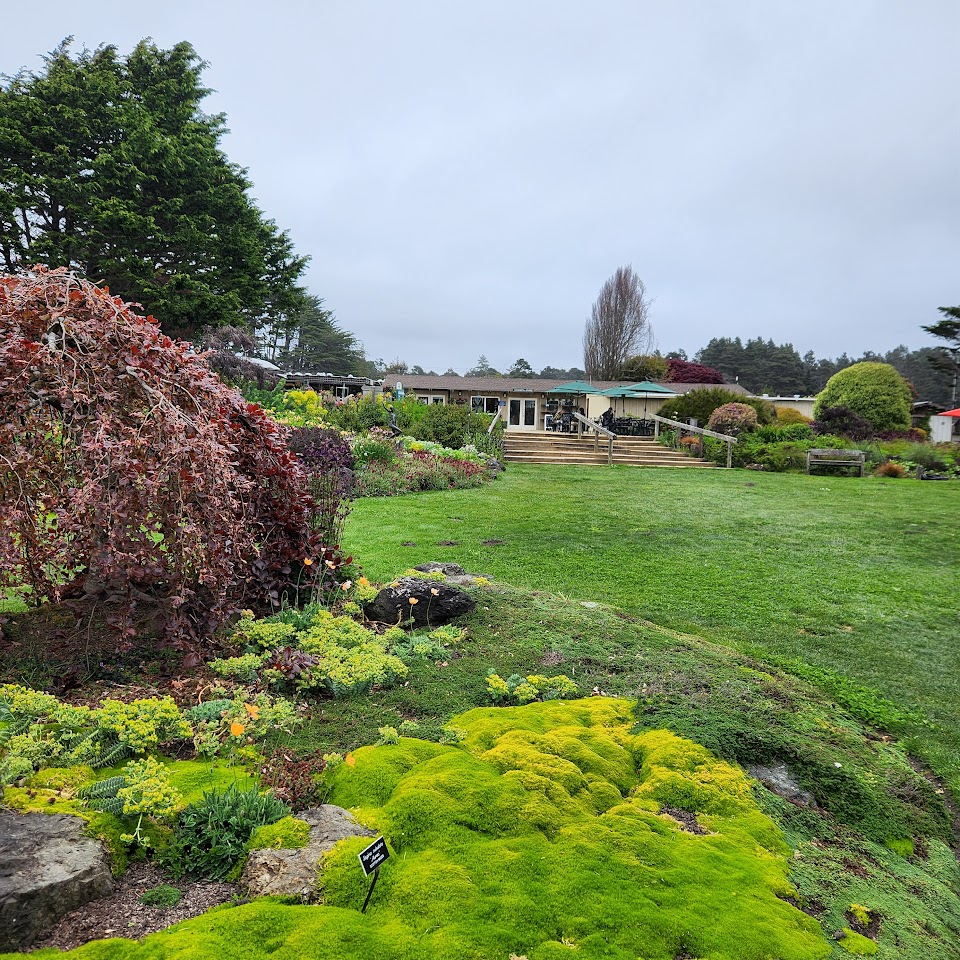
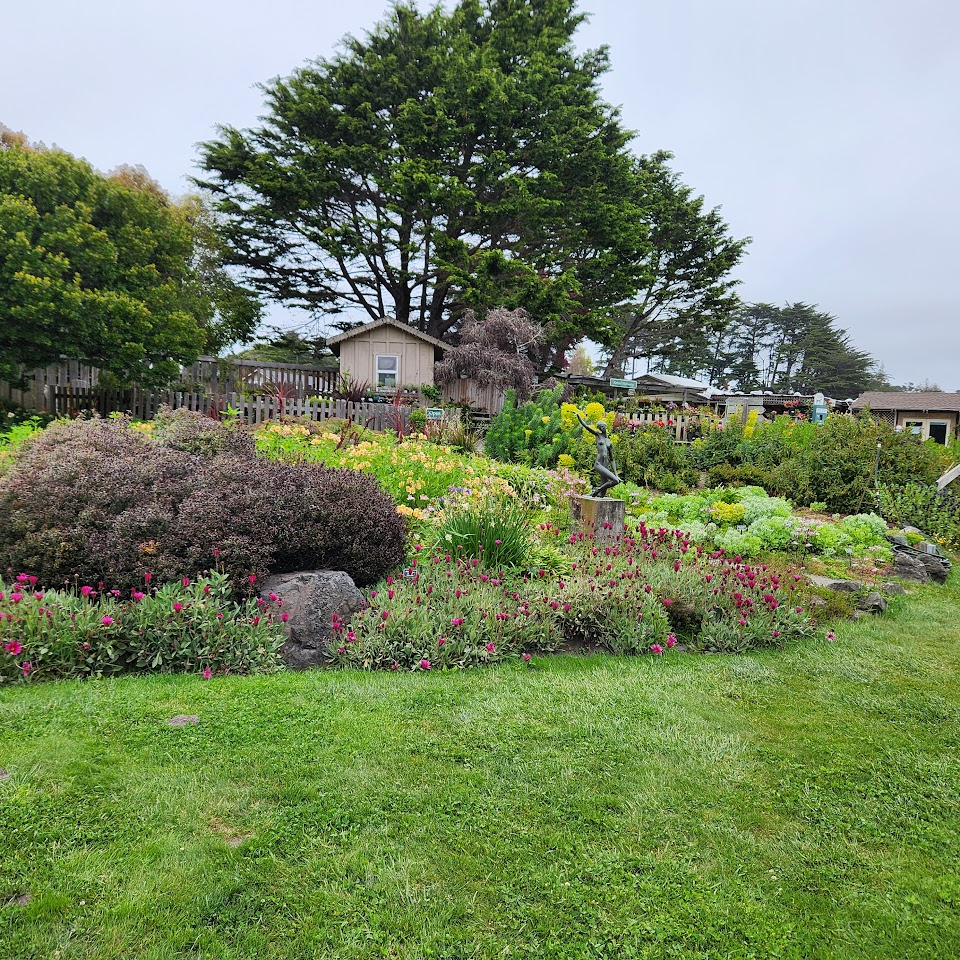
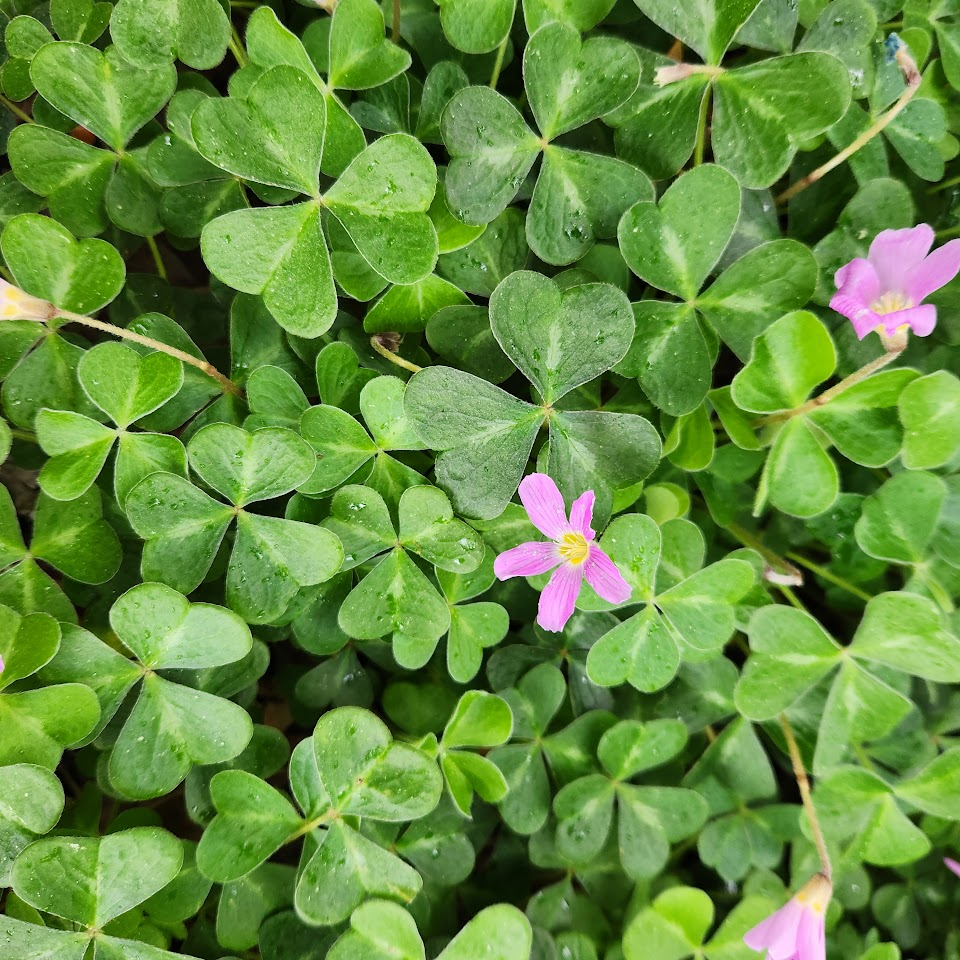
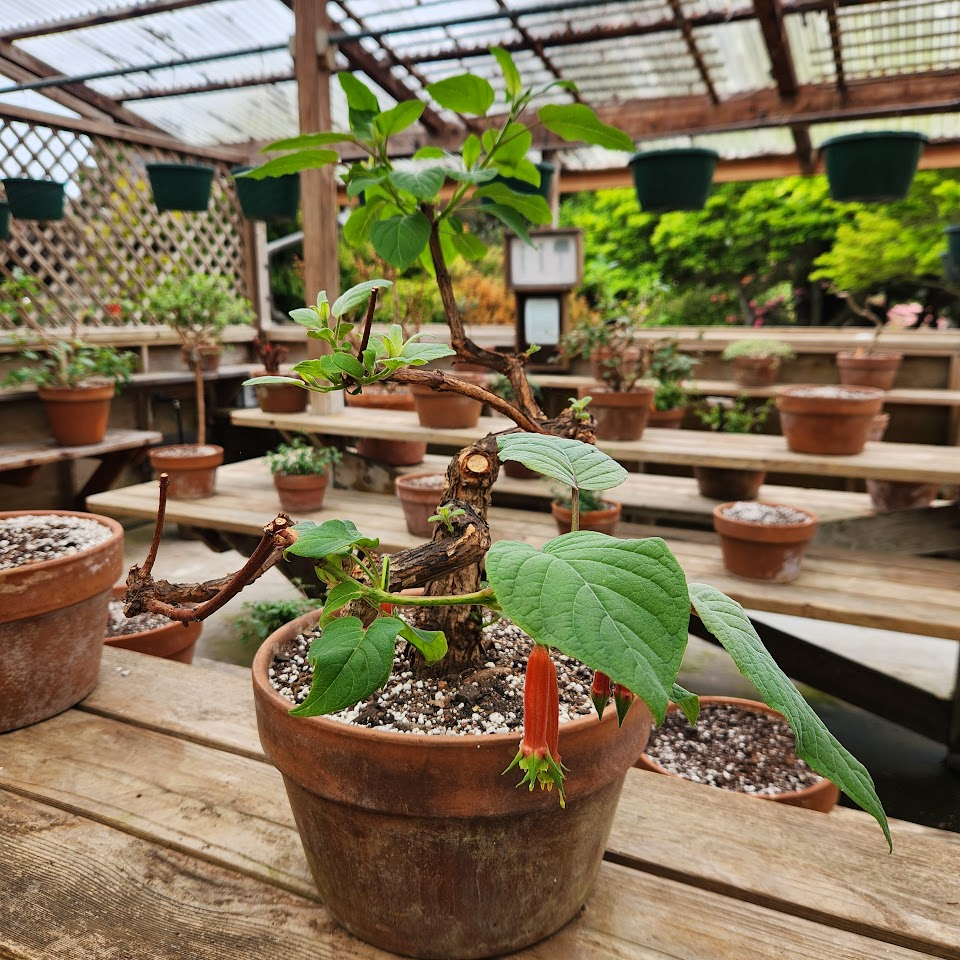
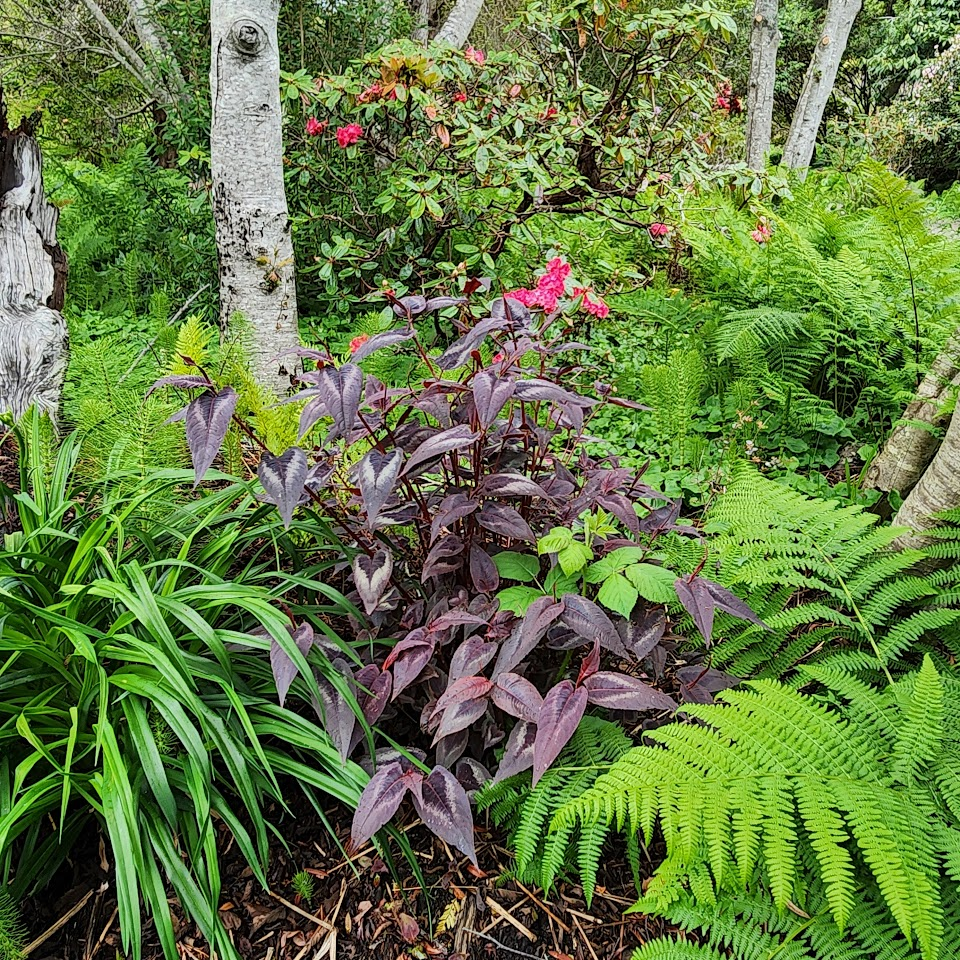
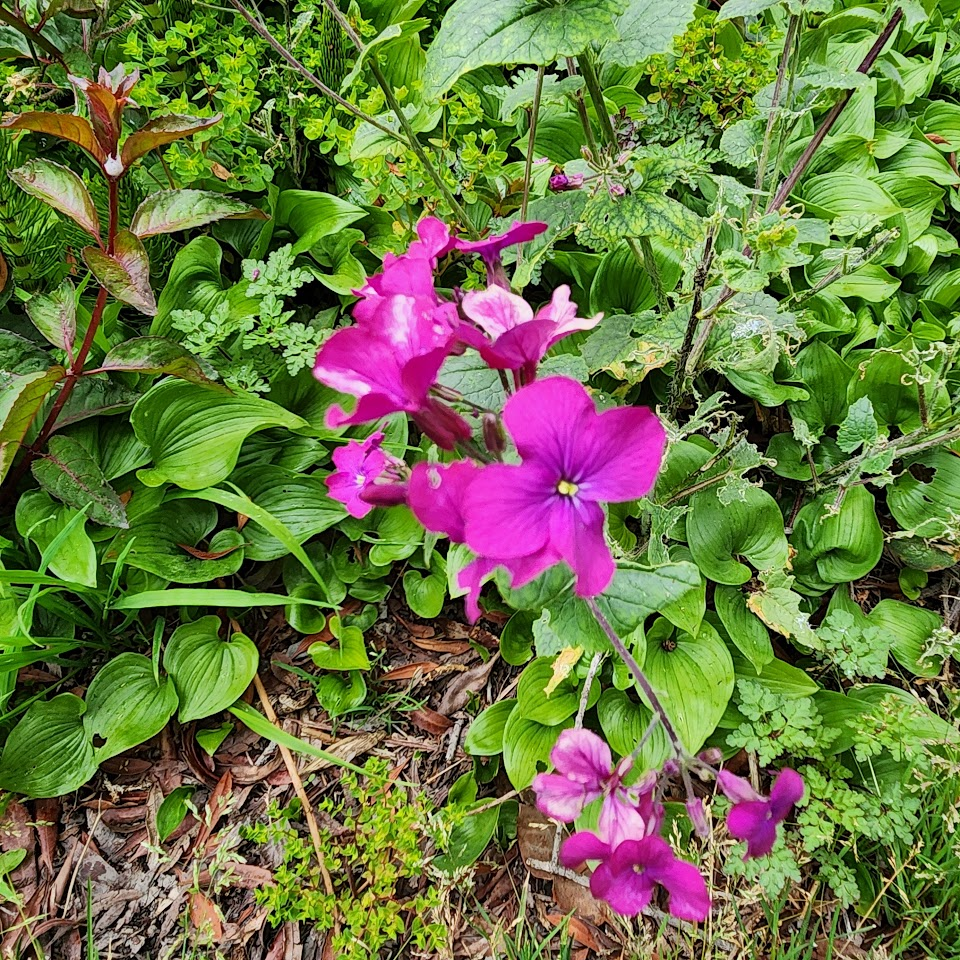
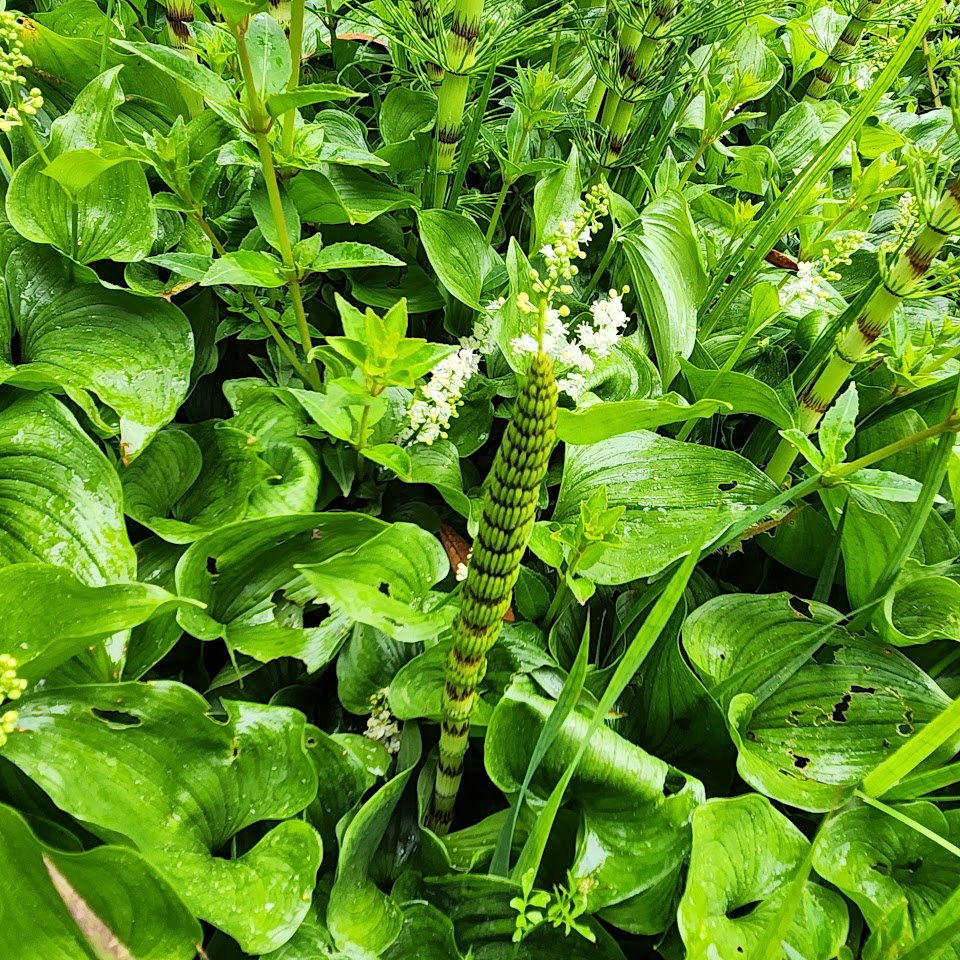
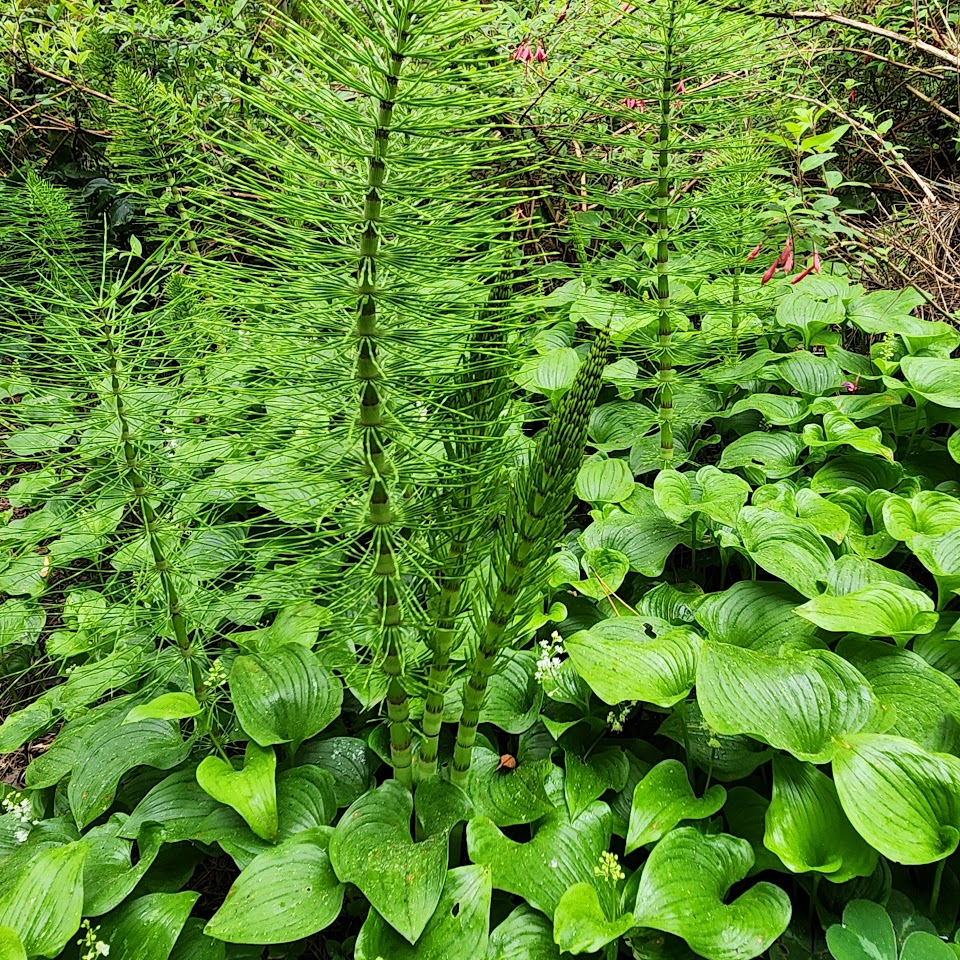
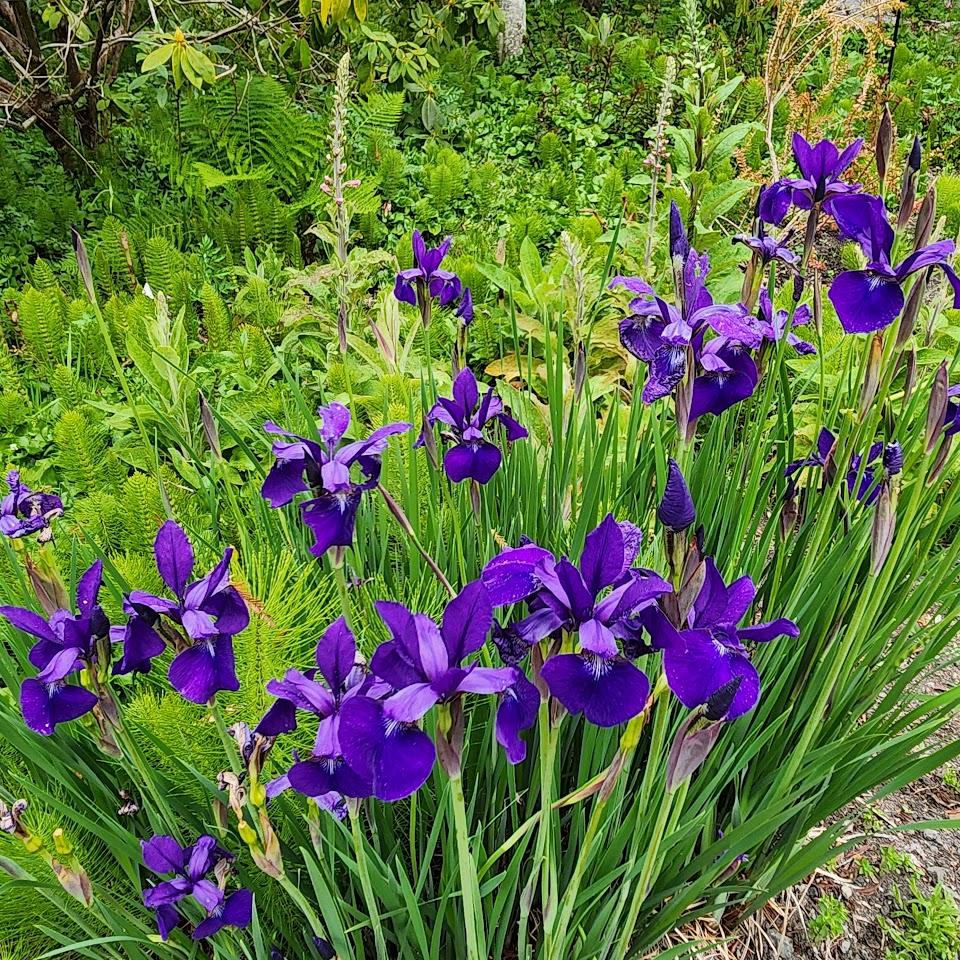
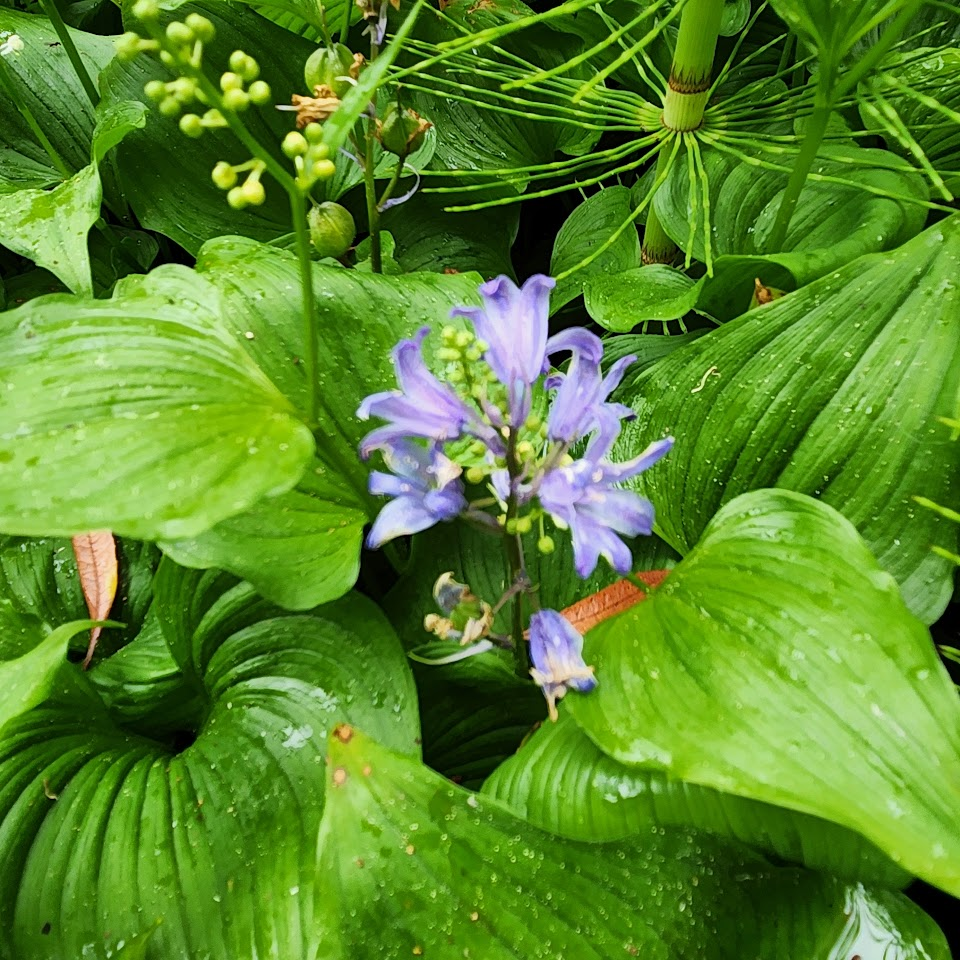
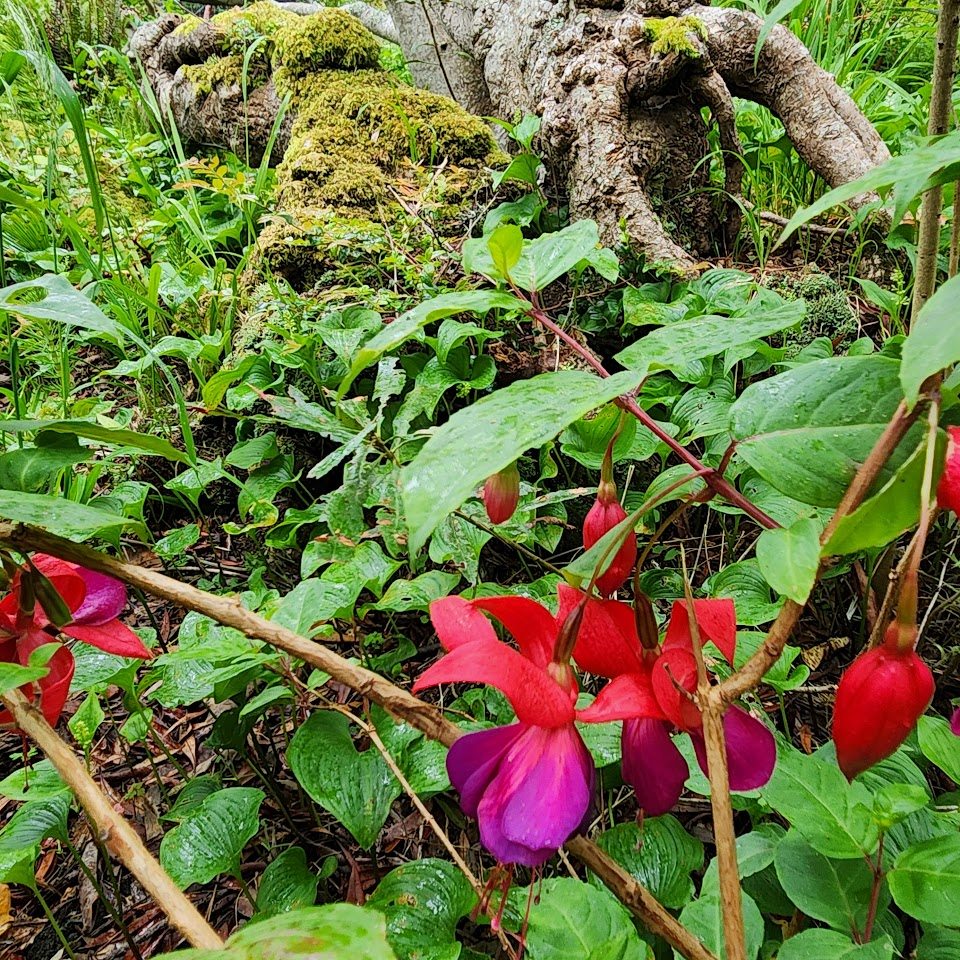
Mendocino coasts’ Botanical Garden, known as the garden by the sea, was a beautiful experience in April. Read alone about the gardens from their website and then stroll in your mind as you view my photographs. Mendocino Coast Botanical Gardens | Fort Bragg, California Visit | Mendocino Coast Botanical Gardens
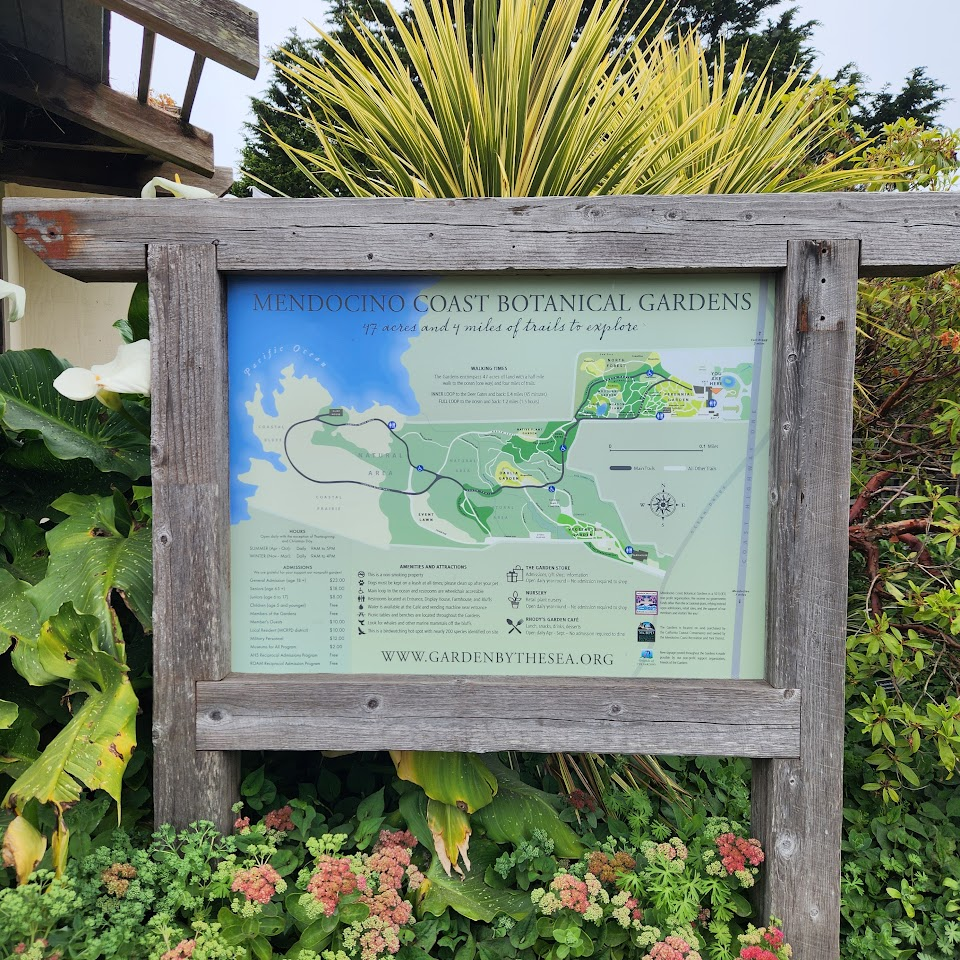
47 acres of botanical bliss
The Mendocino Coast Botanical Gardens (MCBG) is a premier example of ornamental horticulture, nestled along Northern California’s rugged coastline. The Gardens span 47 breathtaking acres between historic Highway 1 and the Pacific Ocean. We recognize with humility that the land we steward is the land of the Northern Pomo People. This land, a treasure from the earth, is one we honor deeply. As stewards of this land, we pledge to care for it with respect—for those who came before us, those who walk it now, and those yet to come.
Perched on the rugged Northern California coast, the Mendocino Coast Botanical Gardens is one of only a handful of public gardens in the world to sit directly on the ocean. Visitors can stroll winding trails with sweeping Pacific views, where coastal winds, salty spray, and native flora combine to create a unique seaside experience. The Gardens also play a vital role in conserving California’s coastal plant species, protecting rare and endangered flora, and educating the public about the importance of preserving these fragile ecosystems. Known for its stunning plant collections, rich history, and commitment to conservation, MCBG is a must-visit destination for nature lovers, gardeners, and outdoor enthusiasts.
The Gardens was founded in 1961 by retired nurseryman Ernest Schoefer and his wife, Betty. Ernest’s keen eye spotted the ample supply of water, augmented by the mild coastal climate and quality soil that is essential to growing acid-loving plants like Rhododendrons. The Grand Opening of the Gardens was in 1966. By 1992, the Gardens’ property had been purchased with grants from the California Coastal Conservancy and transferred to the Mendocino Coast Recreation and Park District (MCRPD). The property and the botanical gardens have since been under the care of Mendocino Coast Botanical Gardens Corporation, a nonprofit 501(c)(3) membership organization.
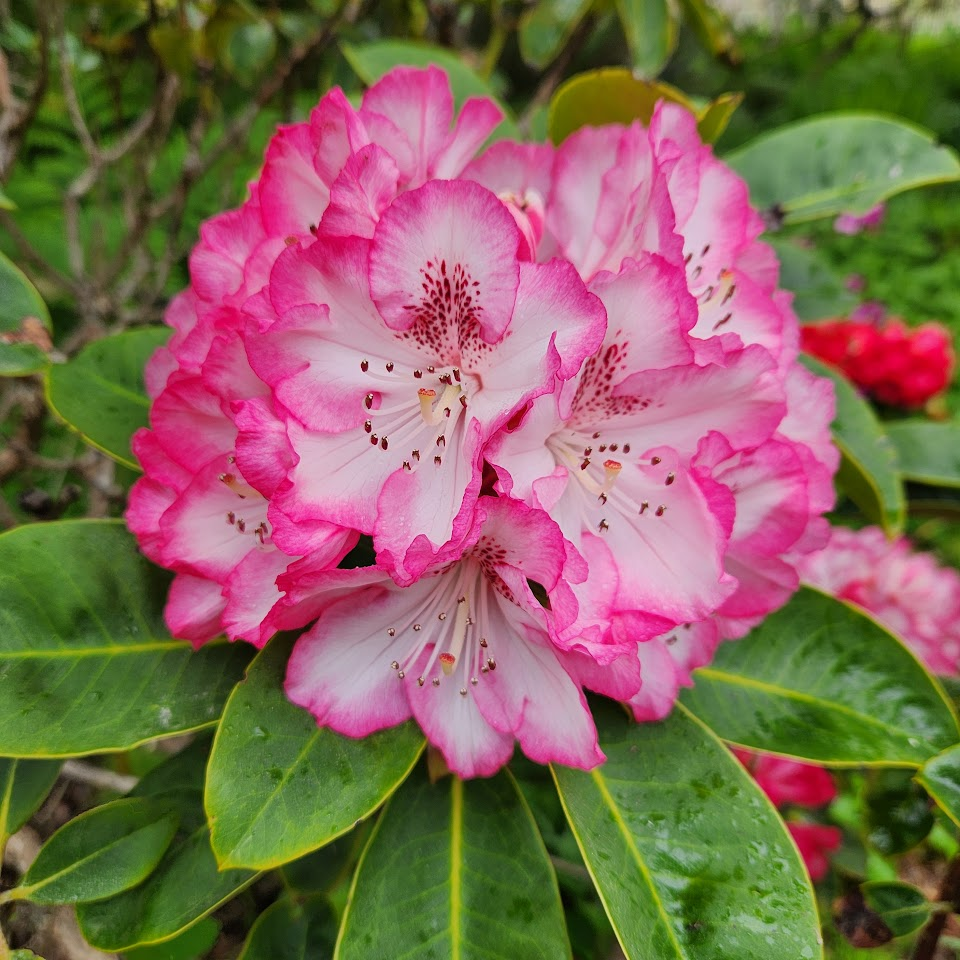
The Gardens is known for its tender species Rhododendrons that produce some of the most fragrant blossoms of the year. Native to the cloud forests of Southeast Asia and the Himalayas, these gems are by their growing requirements to a narrow band along the northern California coast in the U.S., where they thrive in the foggy, coastal climate.
In March and April, hybrid rhododendrons tower overhead, dropping petals on the trails below. These old-time hybrids, planted over 40 years ago, are hard to find in nurseries today. Yet hybrids such as ‘Cynthia’ with its pink trusses continue to elicit enthusiastic responses from visitors. A special group is our Fort Bragg Collection, comprised of rhododendrons hybridized in Fort Bragg. Some, such as ‘Noyo Chief,’ the official flower of Fort Bragg, have become popular in the nursery trade.
The Perennial Garden is a delight with bulbs, flowers and grasses blooming from spring to fall. Visitors are often surprised that a mild and sometimes foggy climate can accommodate cactus and succulents, yet many grow well here.
The collection of Heaths and Heathers is a national treasure as are the species camellias. Equally, if not more important, the natural areas of the garden harbor six different rare and endangered plants. A wonderfully weird forest of pines leads to the breezy bluff of the coastal prairies and views of the Pacific Ocean in all of its moods.
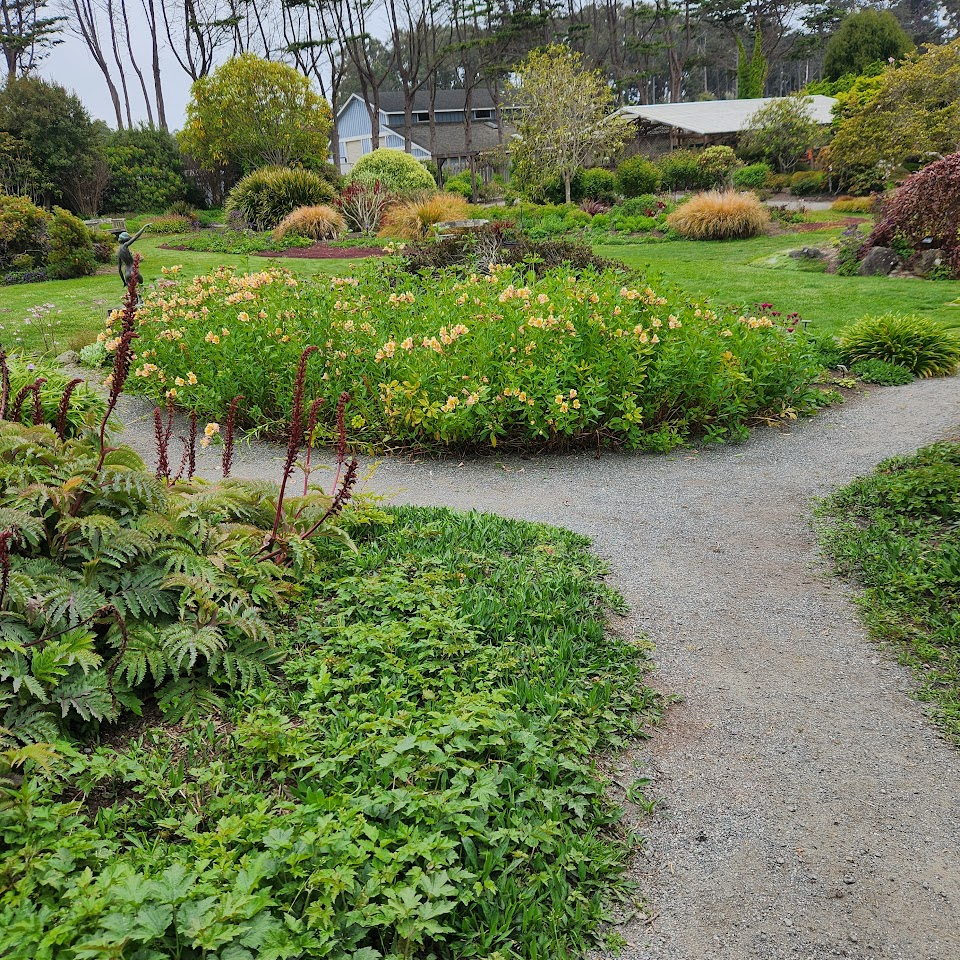
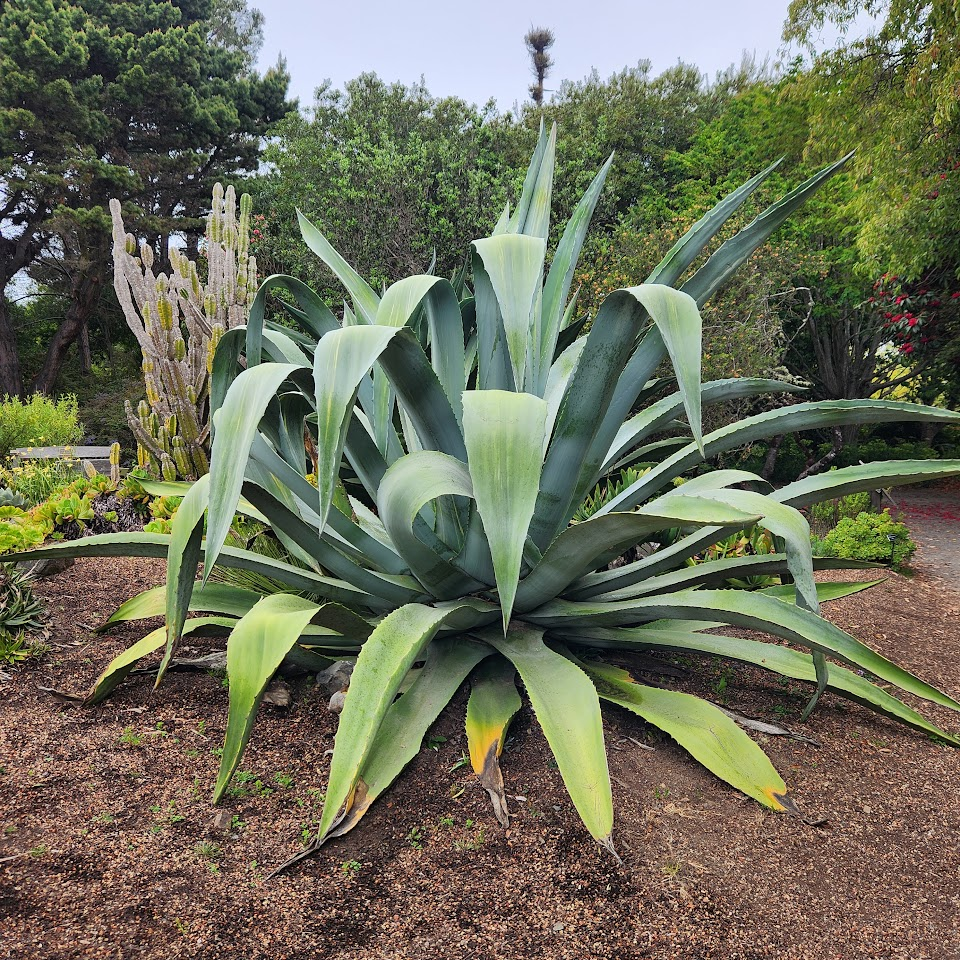
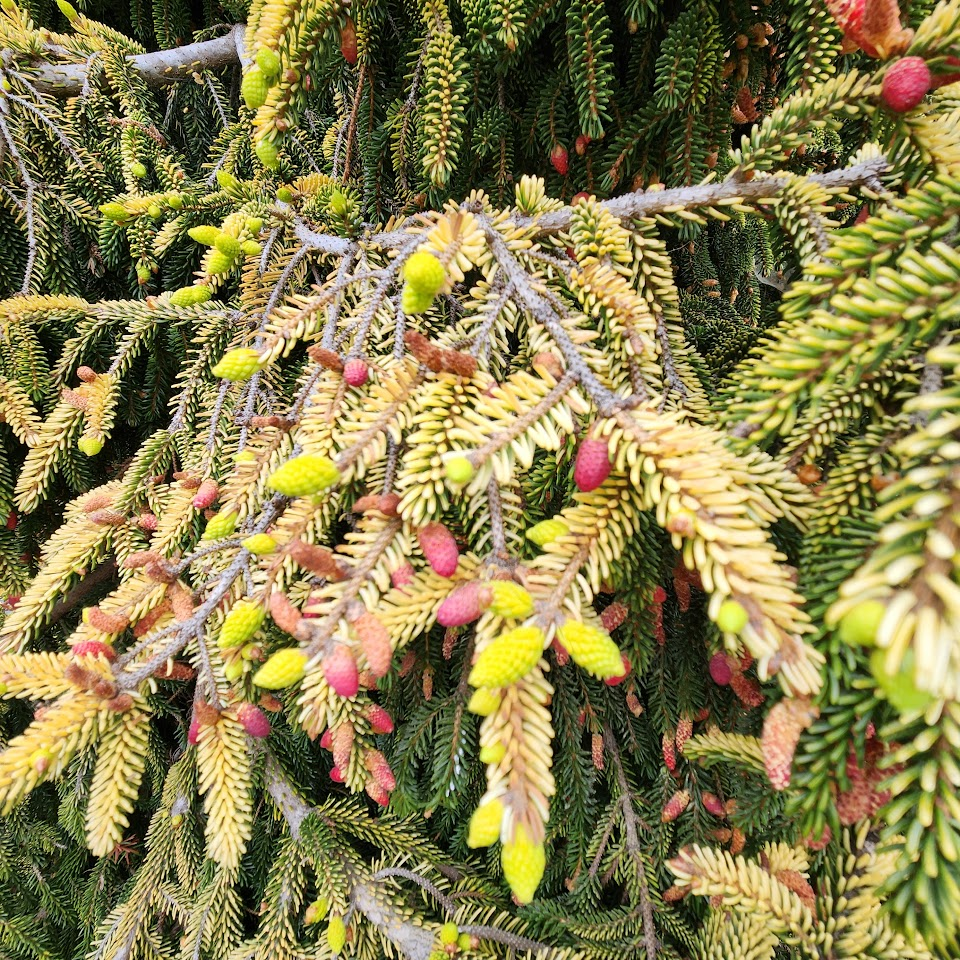
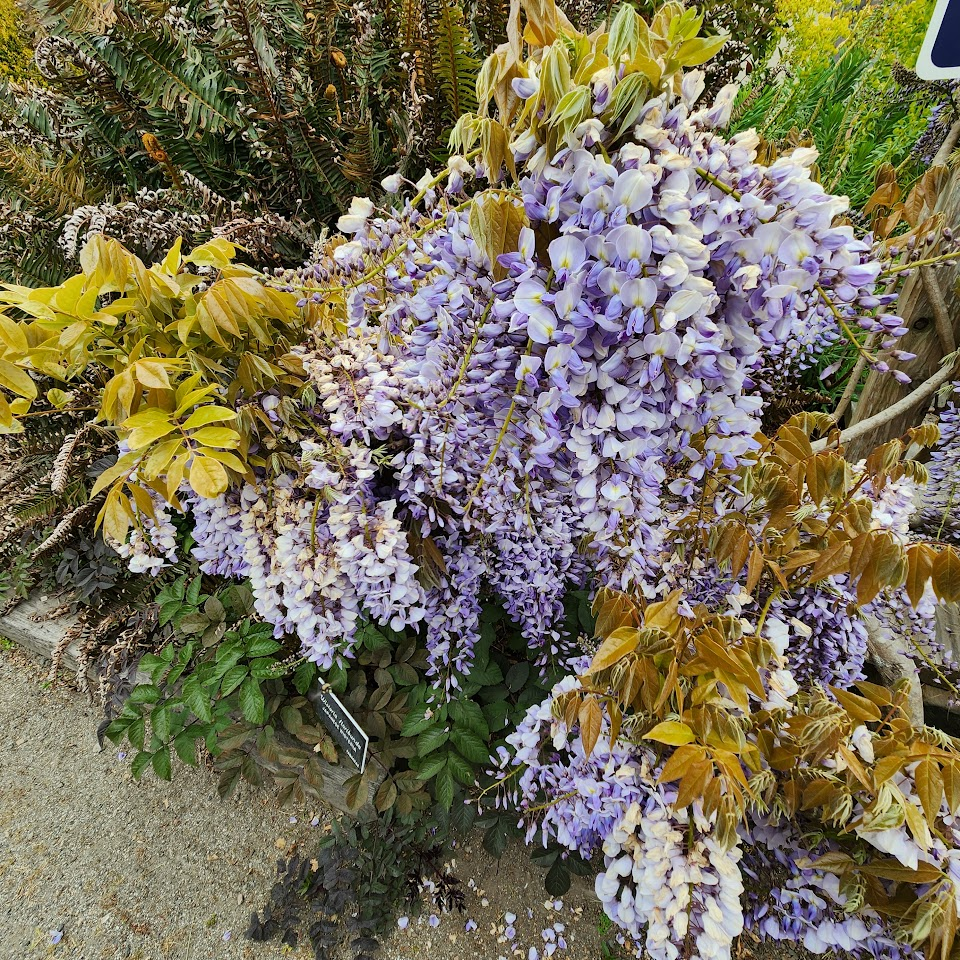
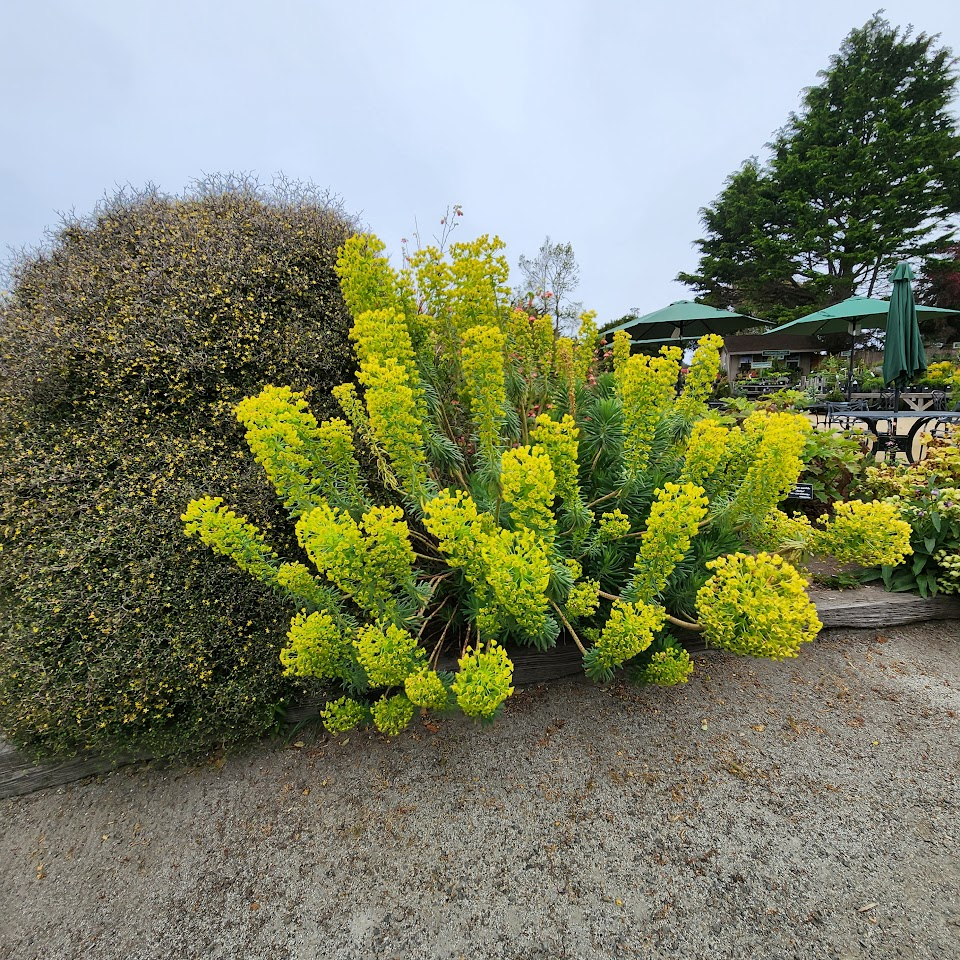
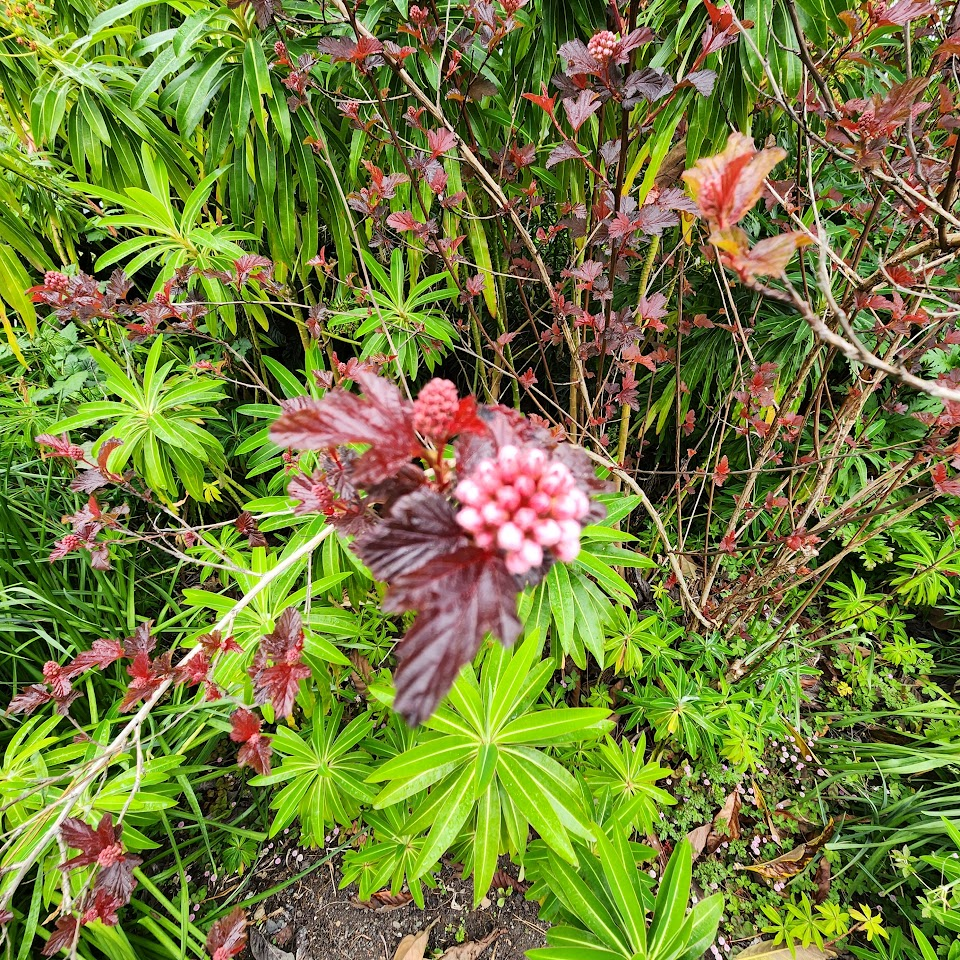
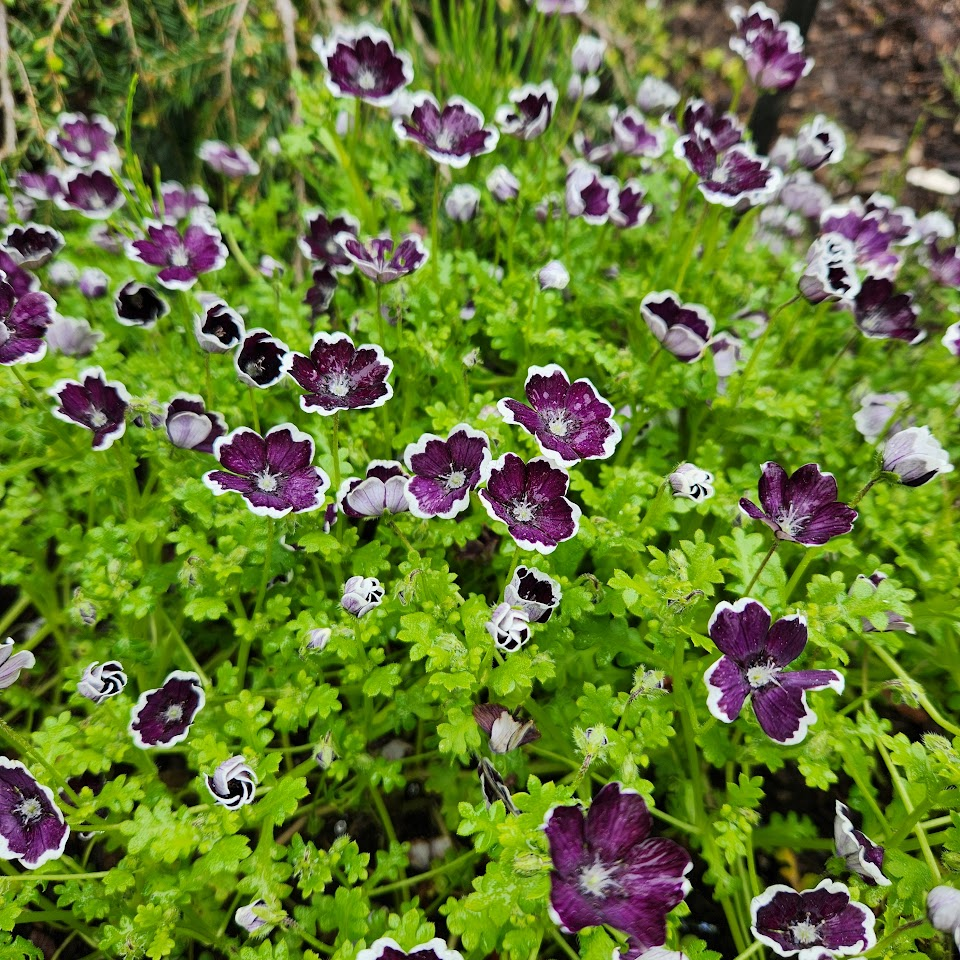
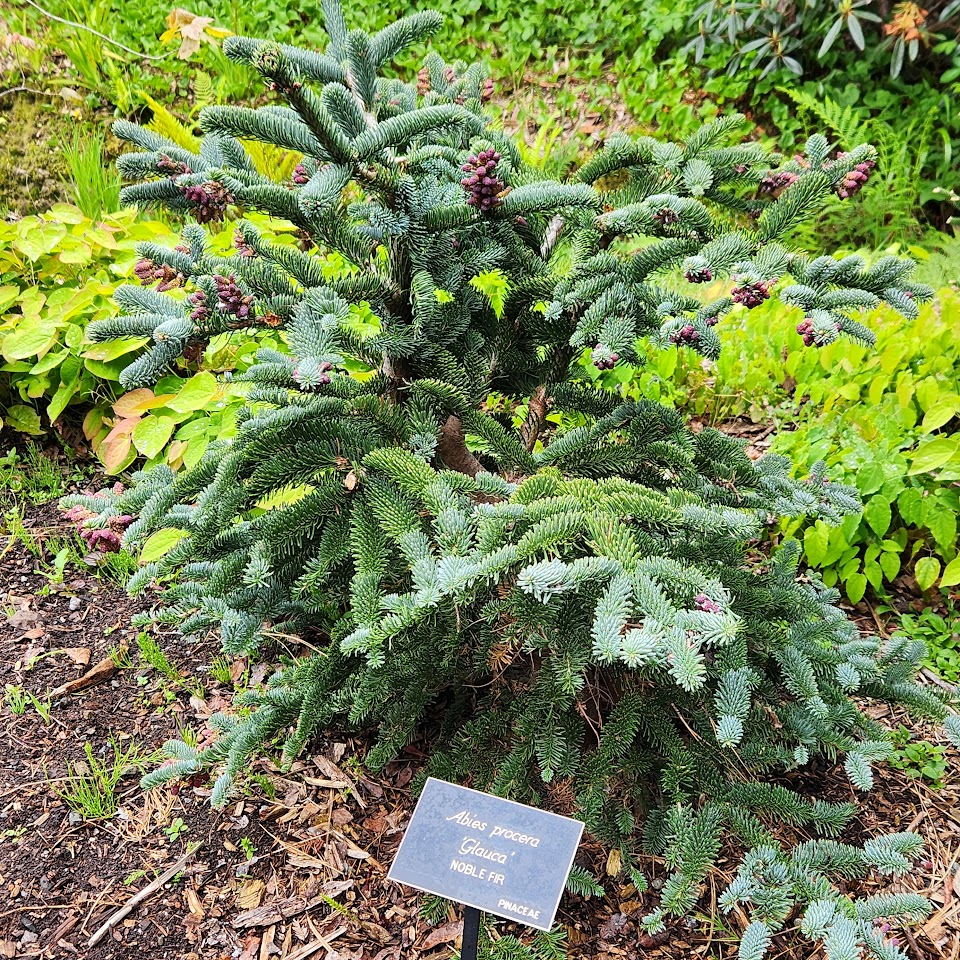
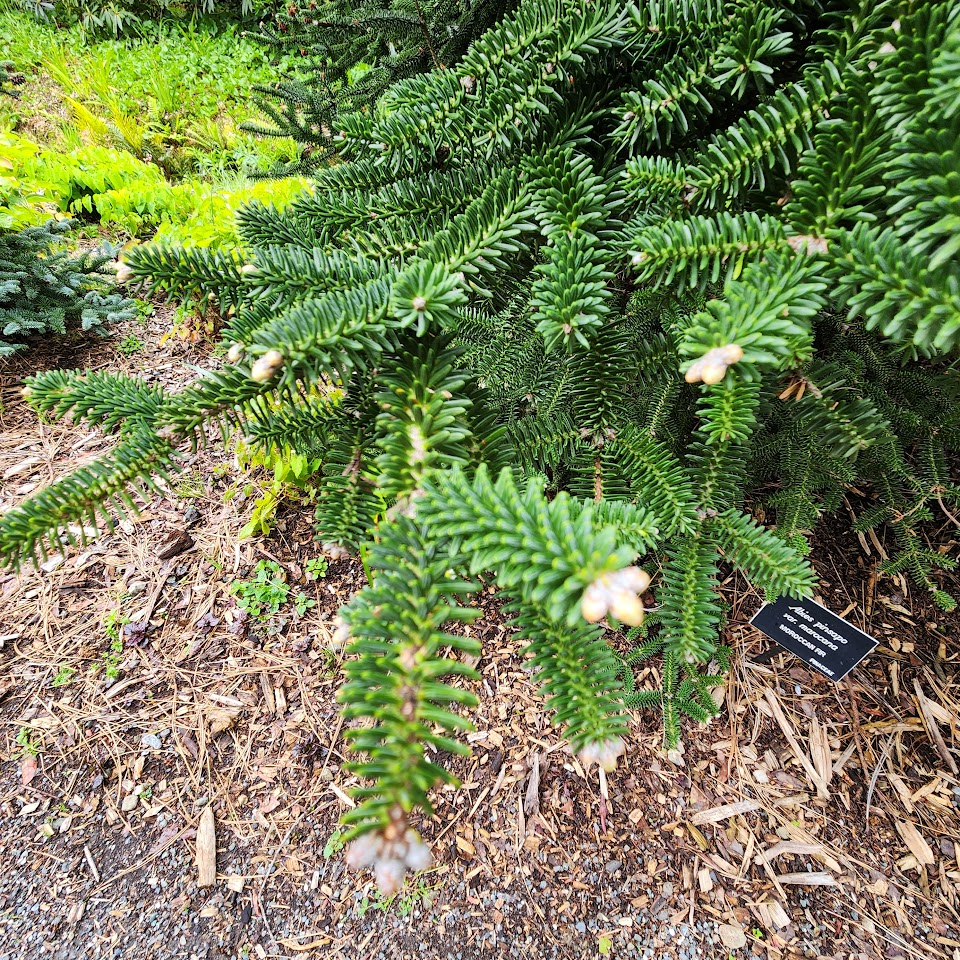
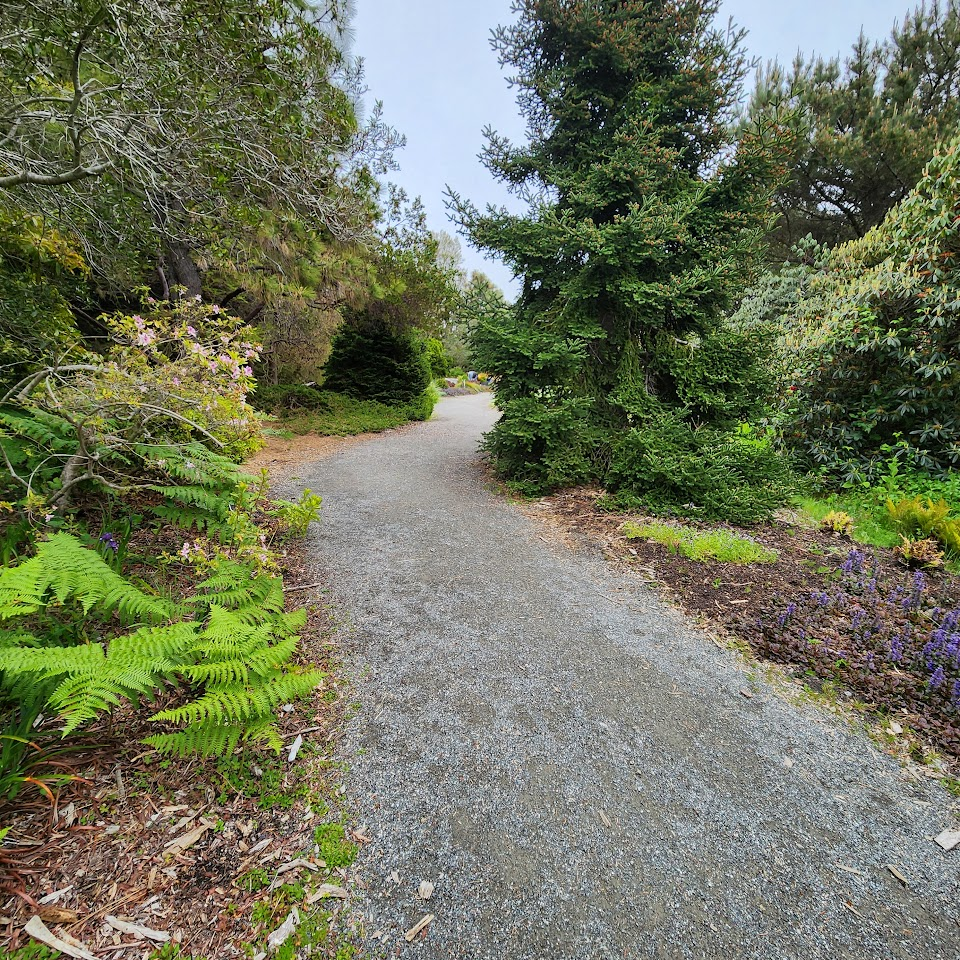
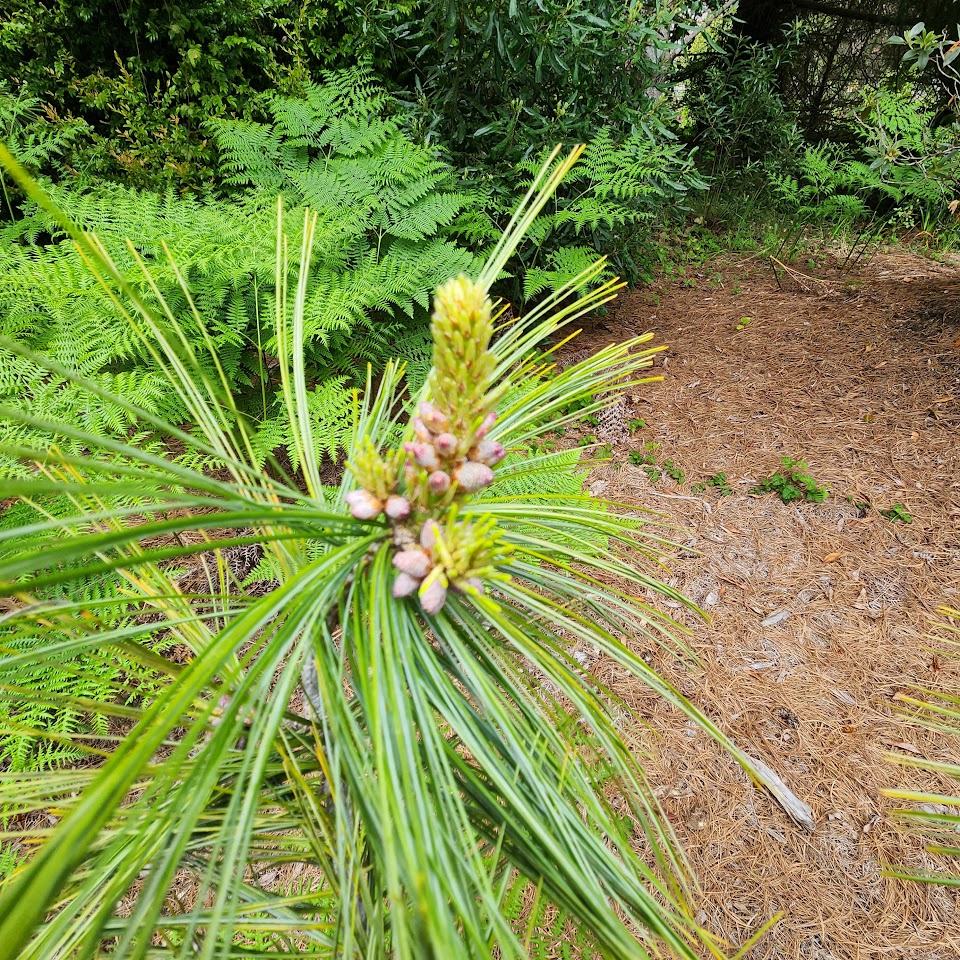
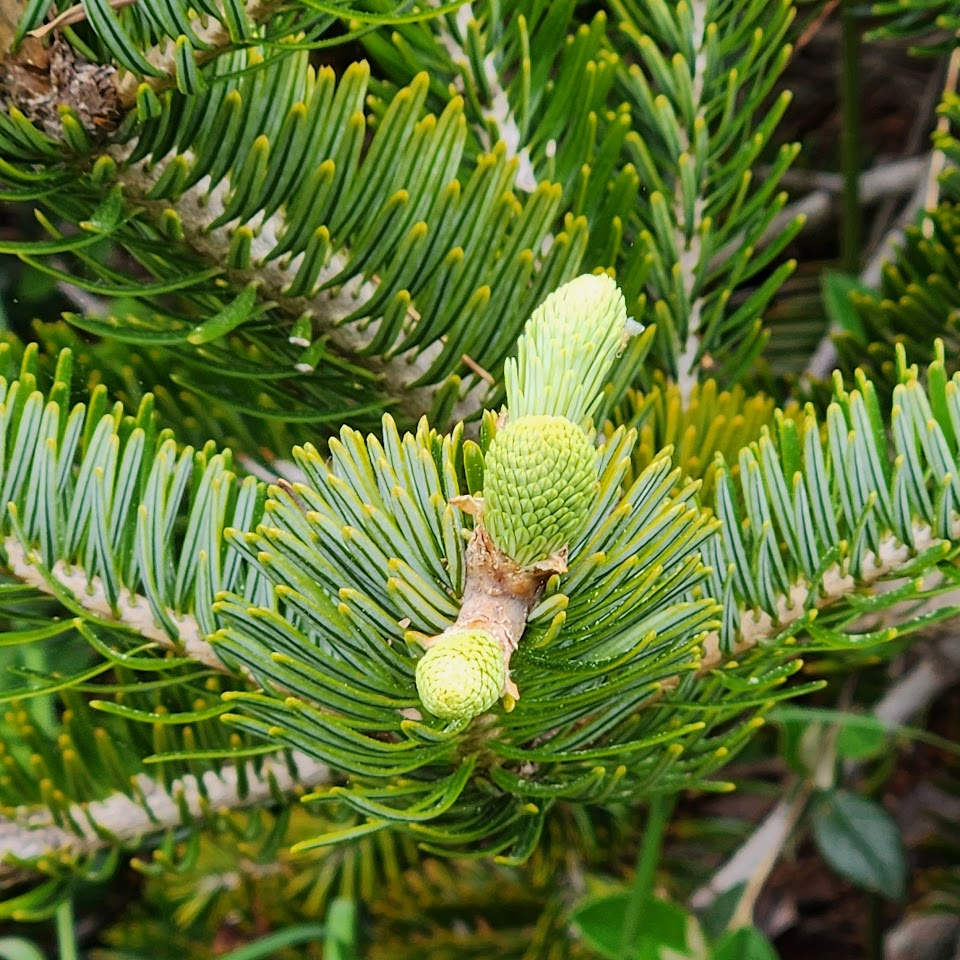
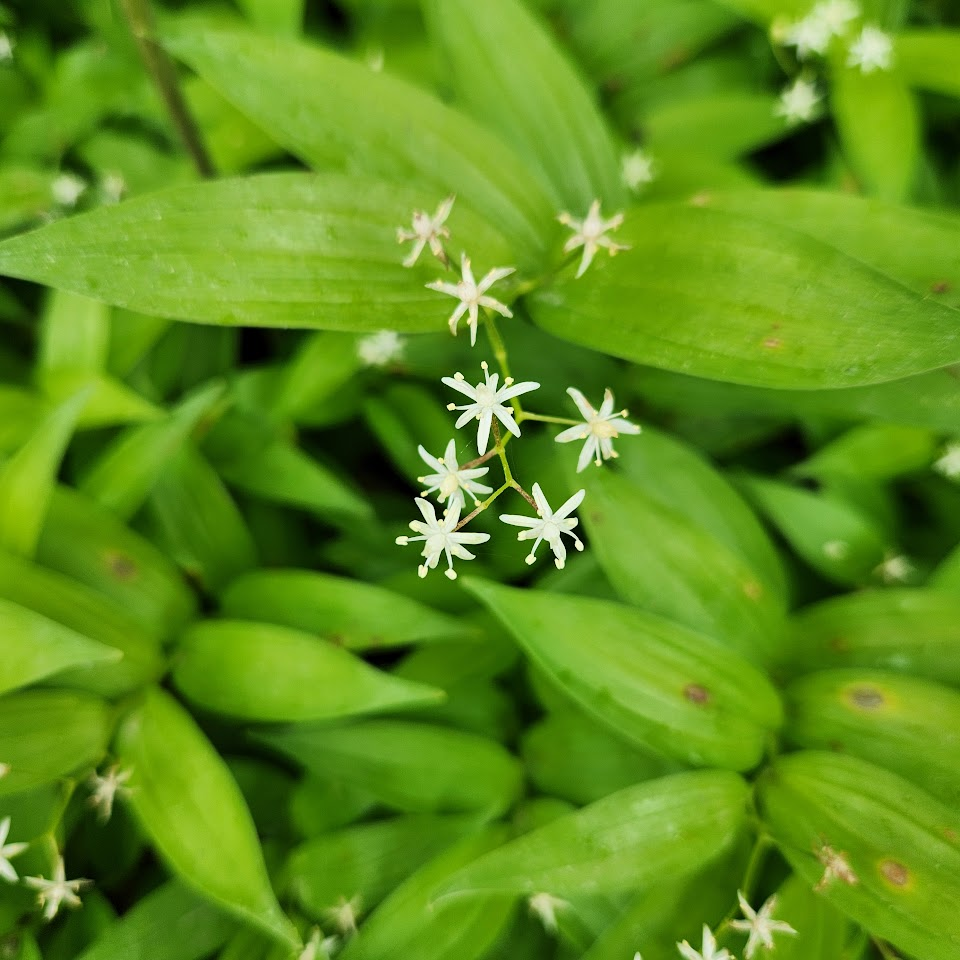
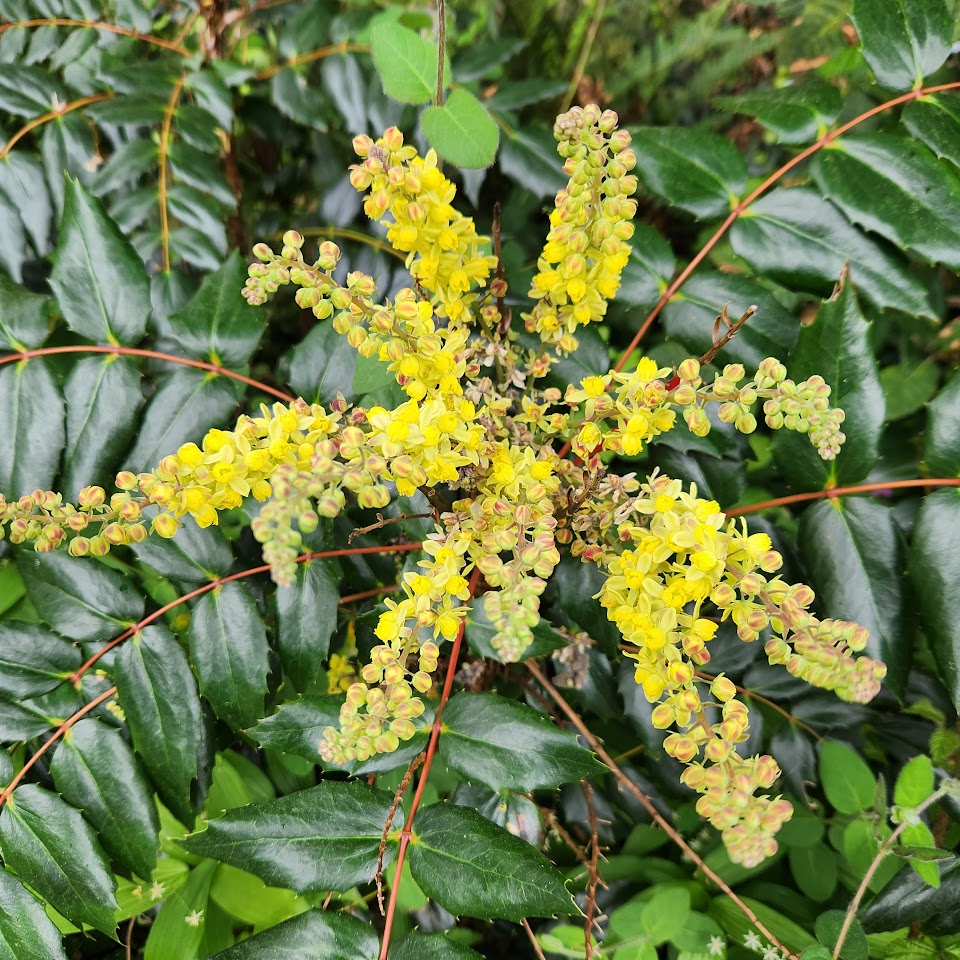
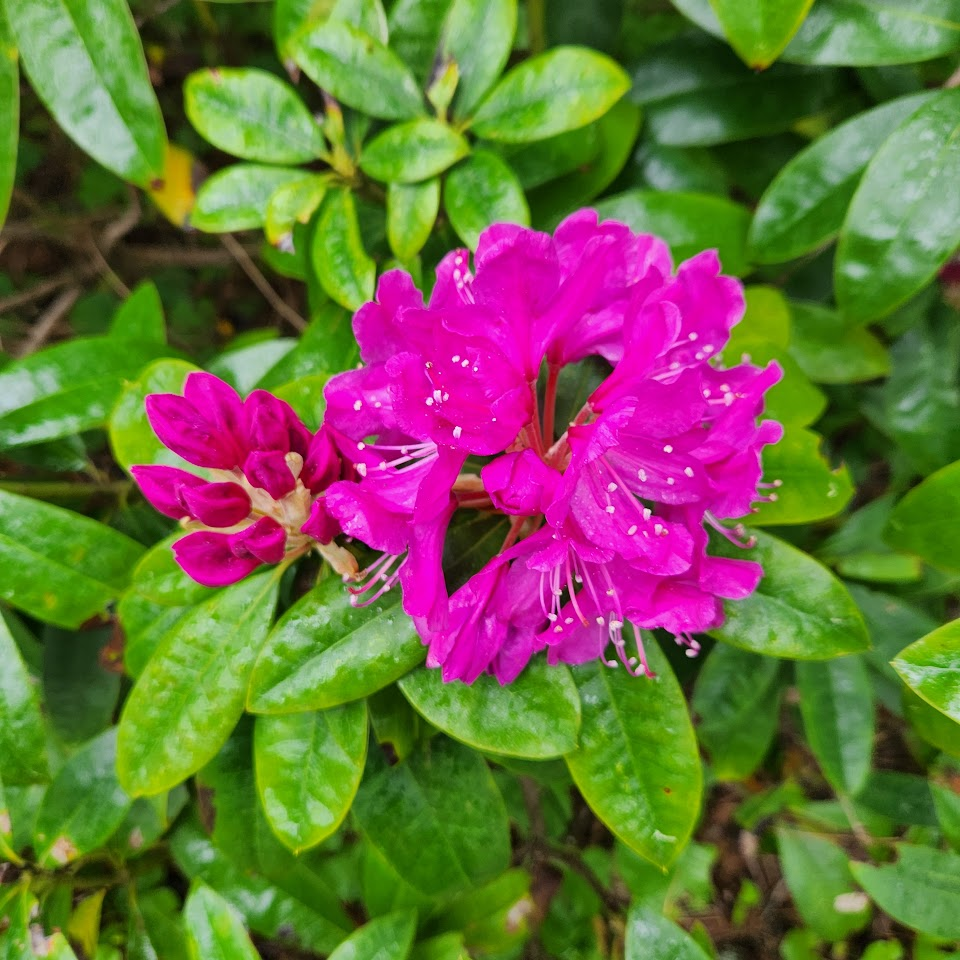
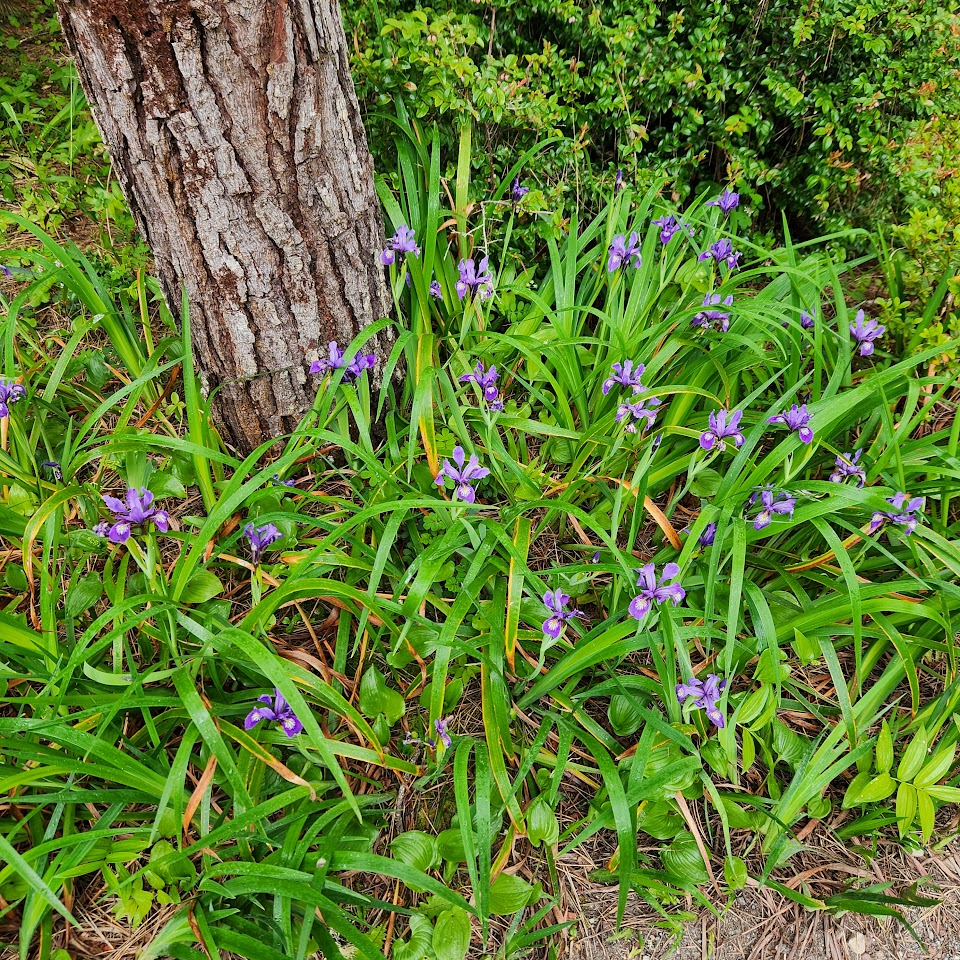
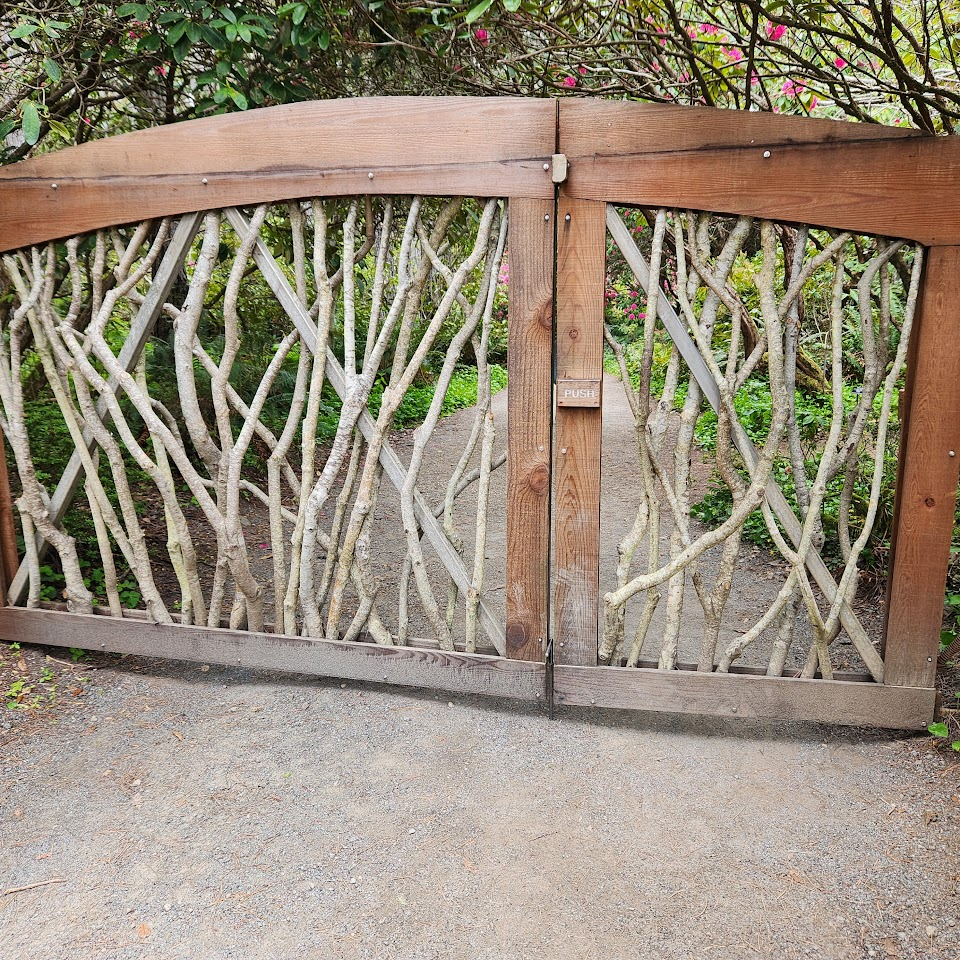
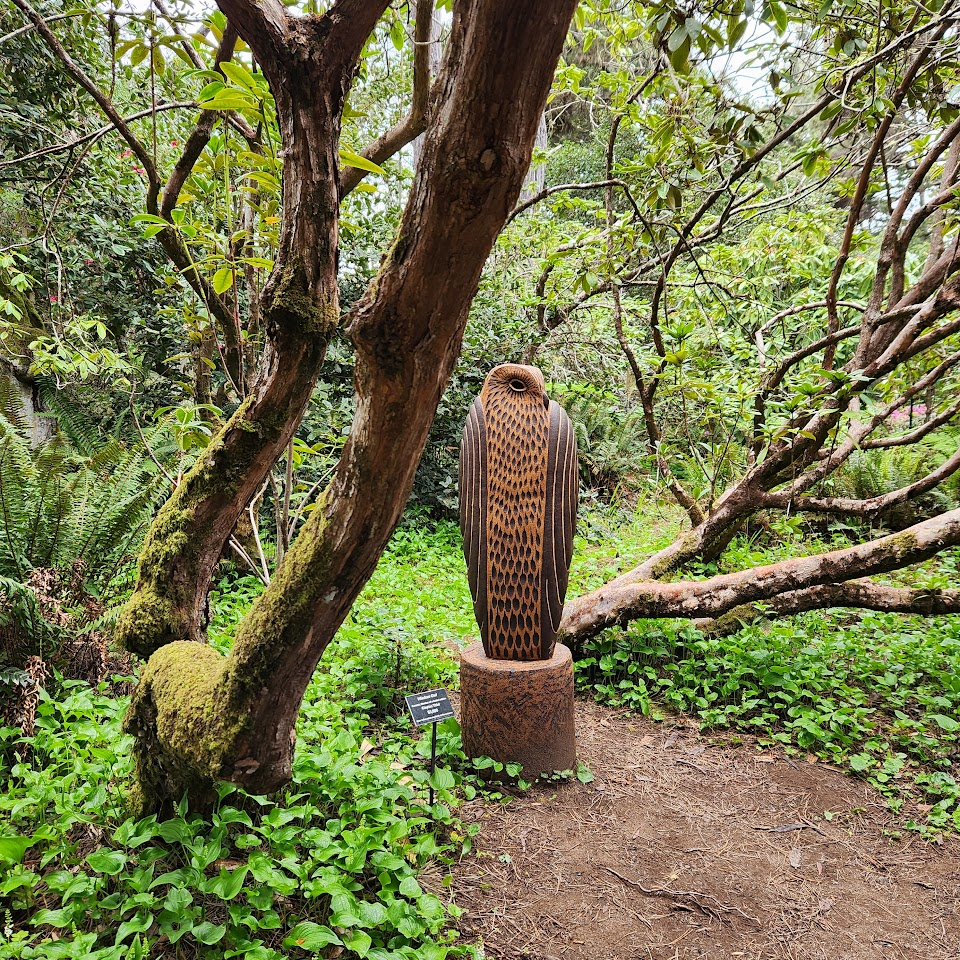
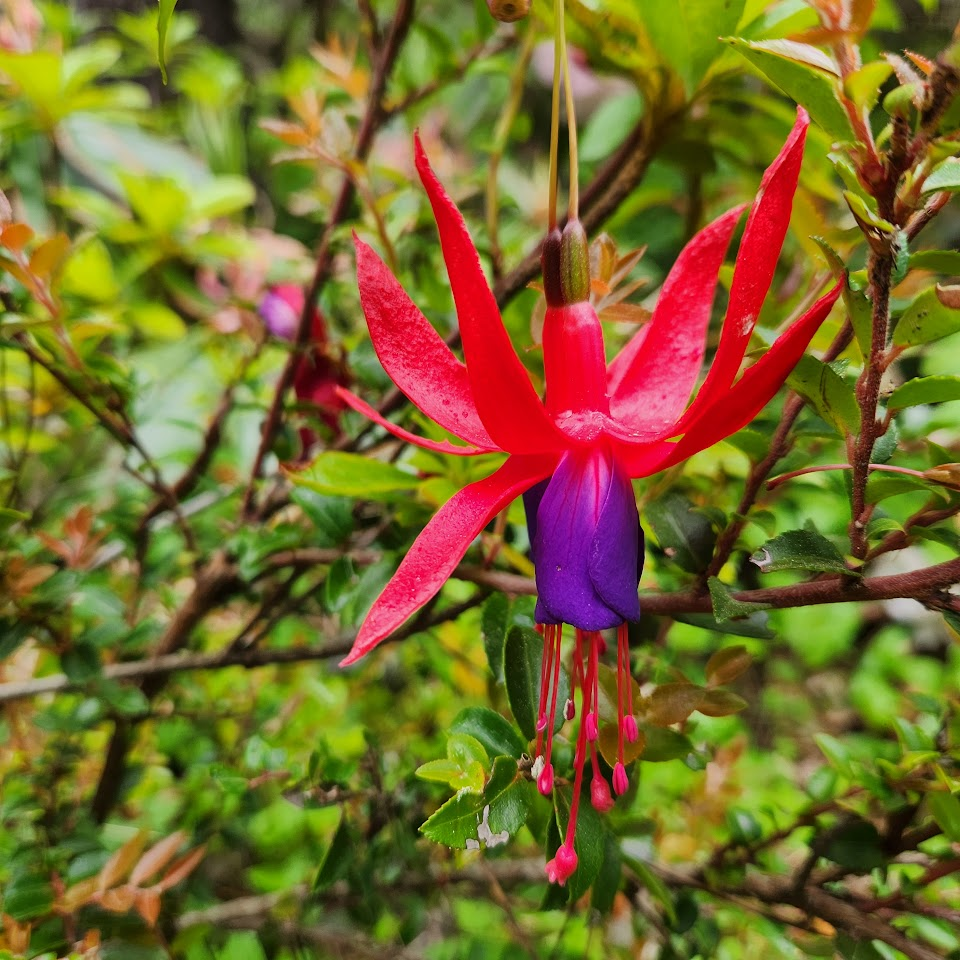
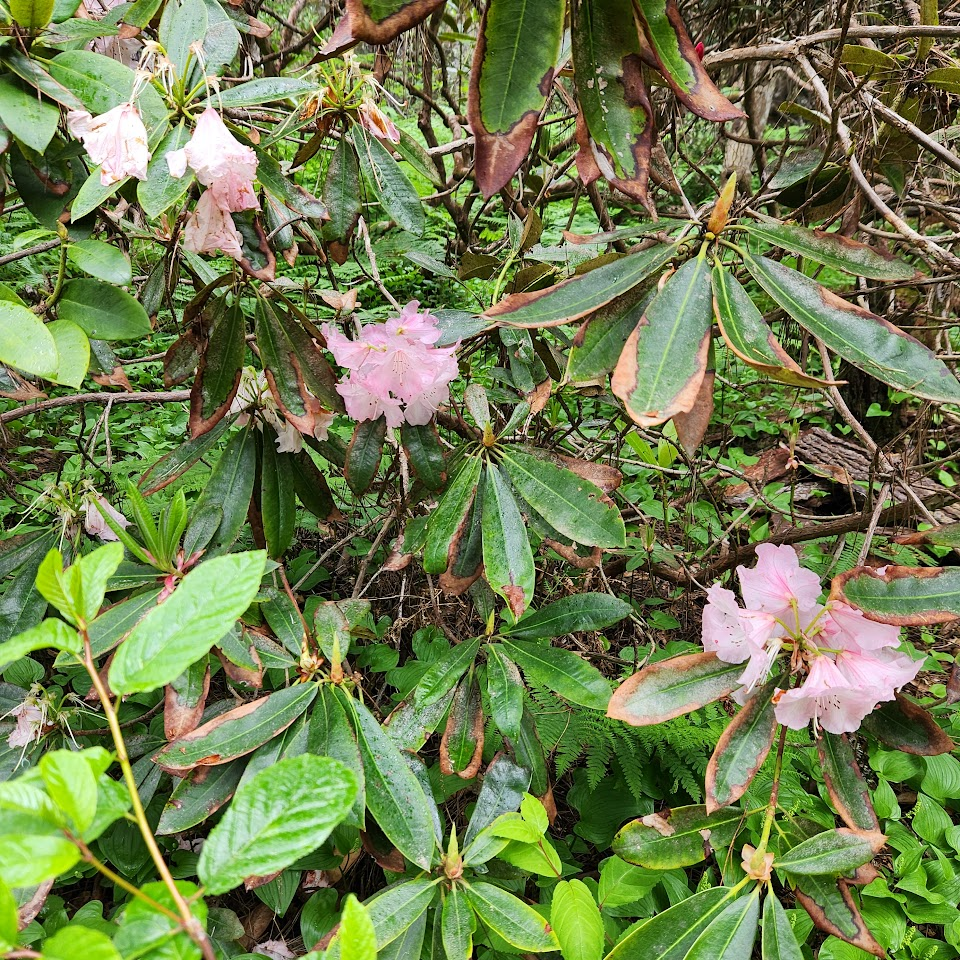
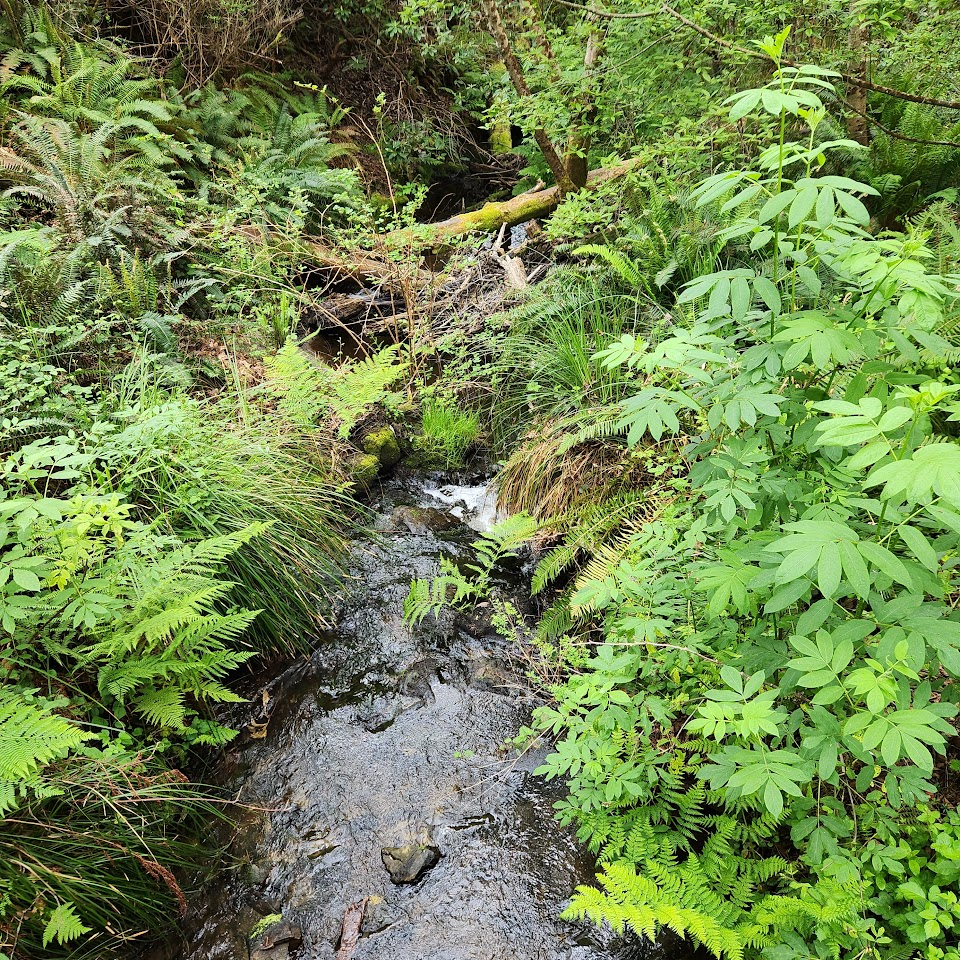
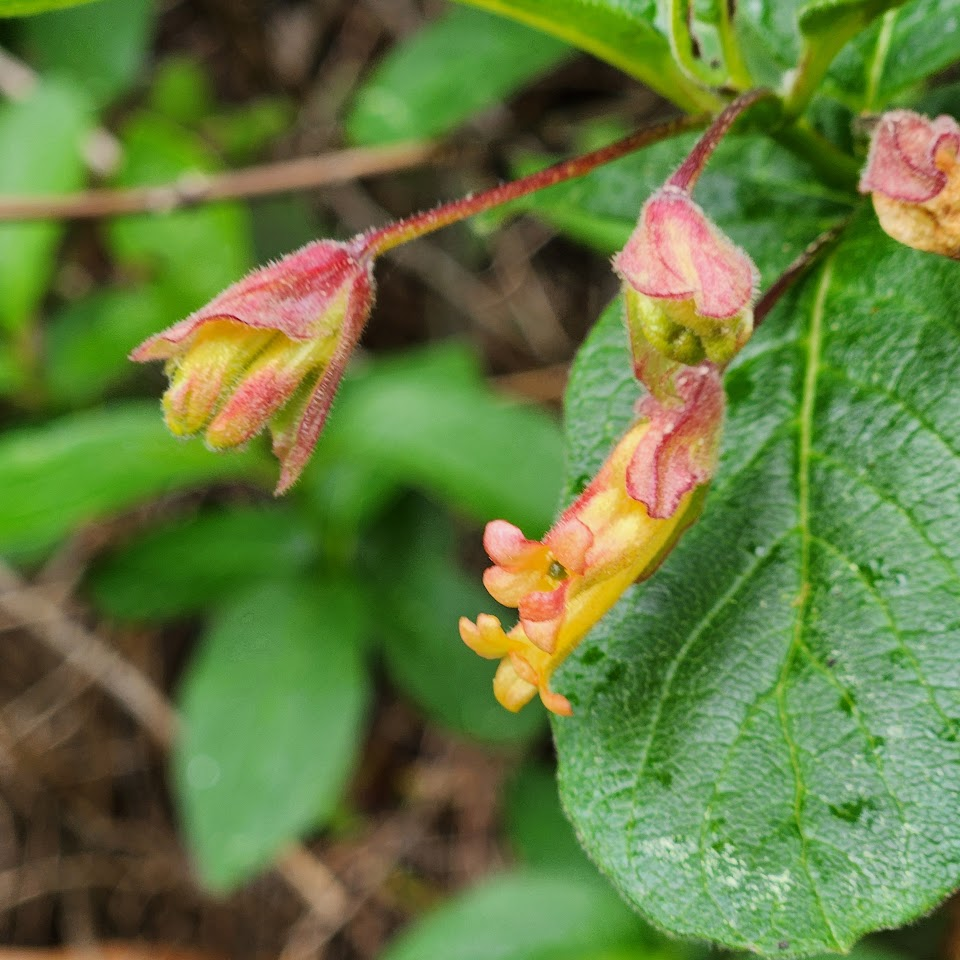
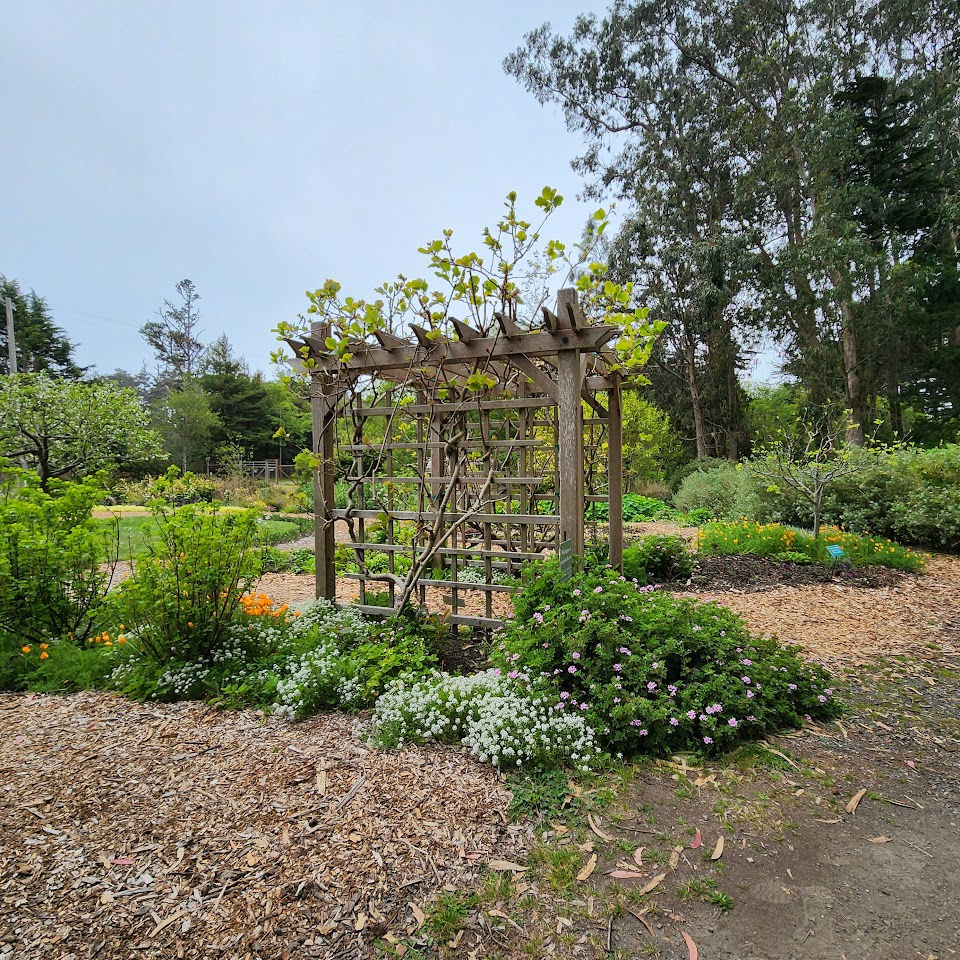
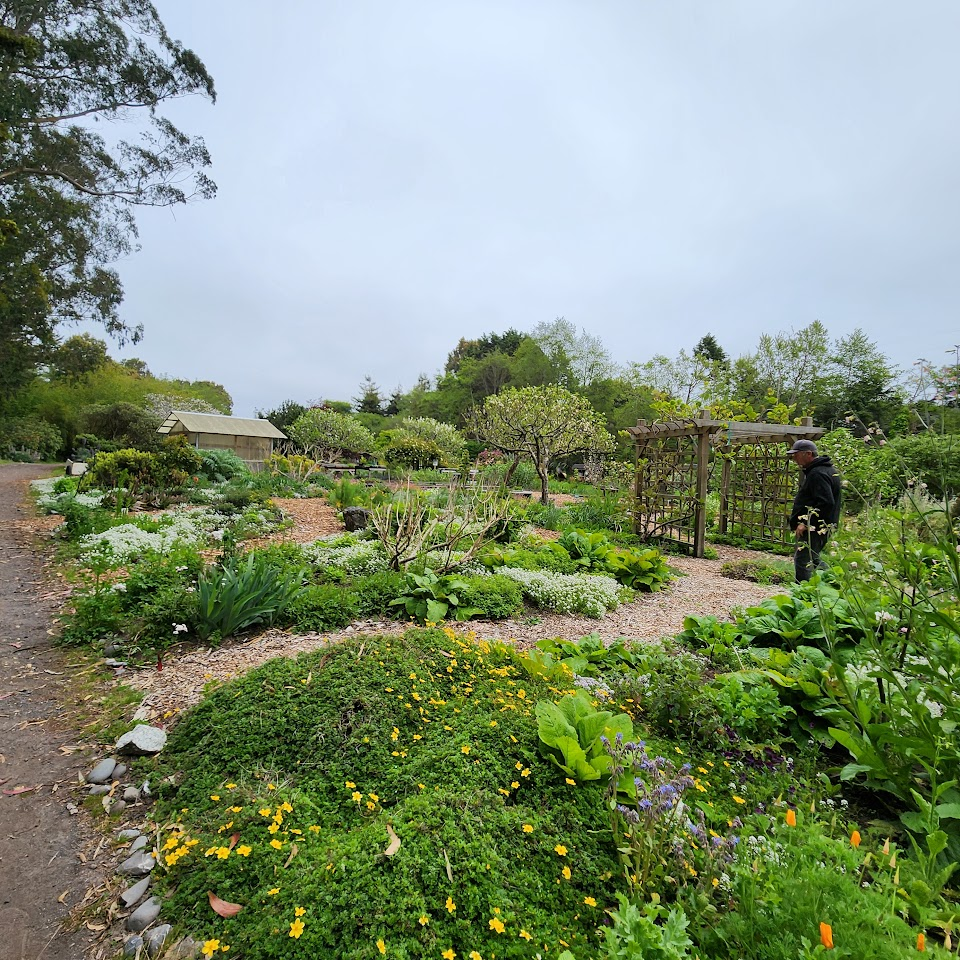
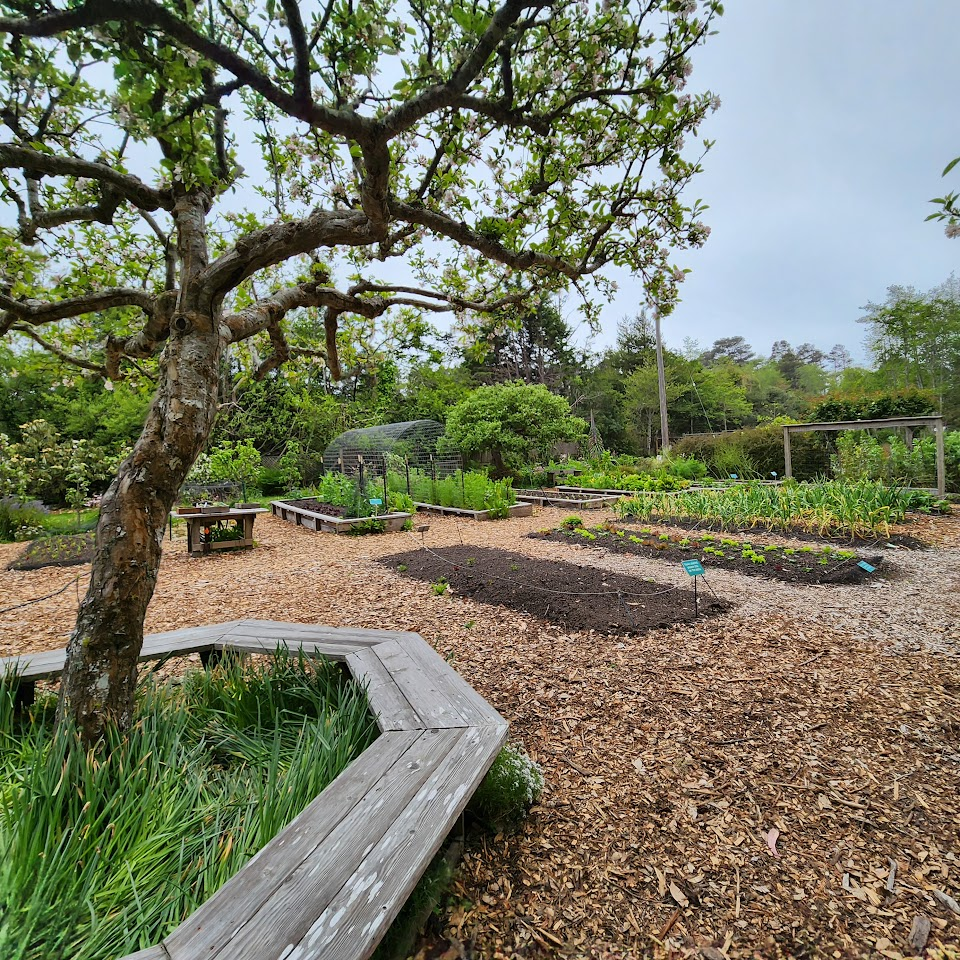
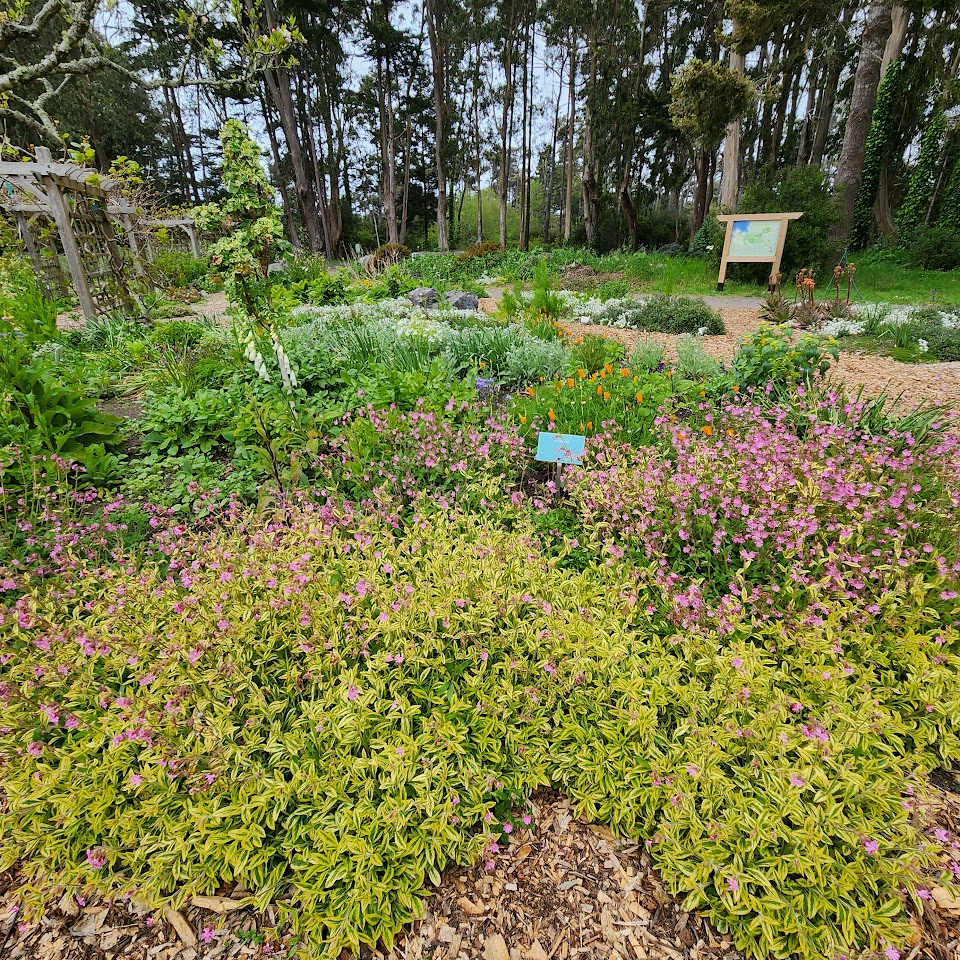
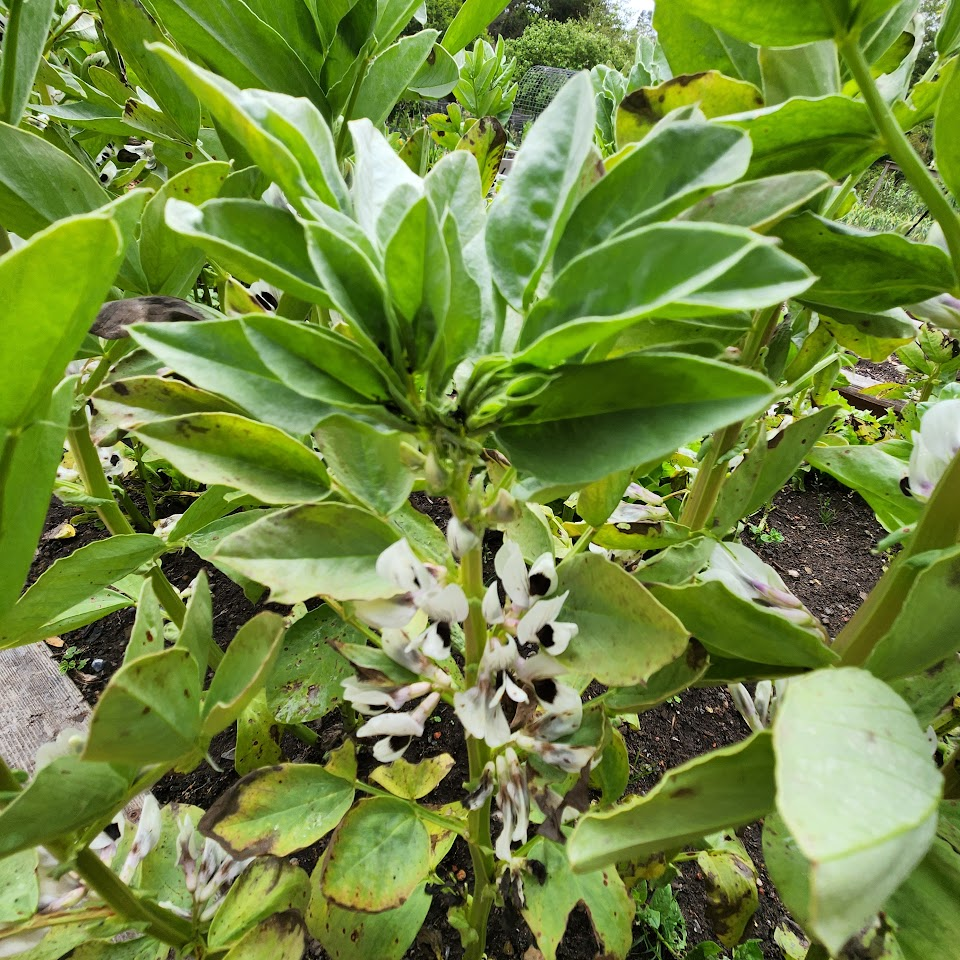
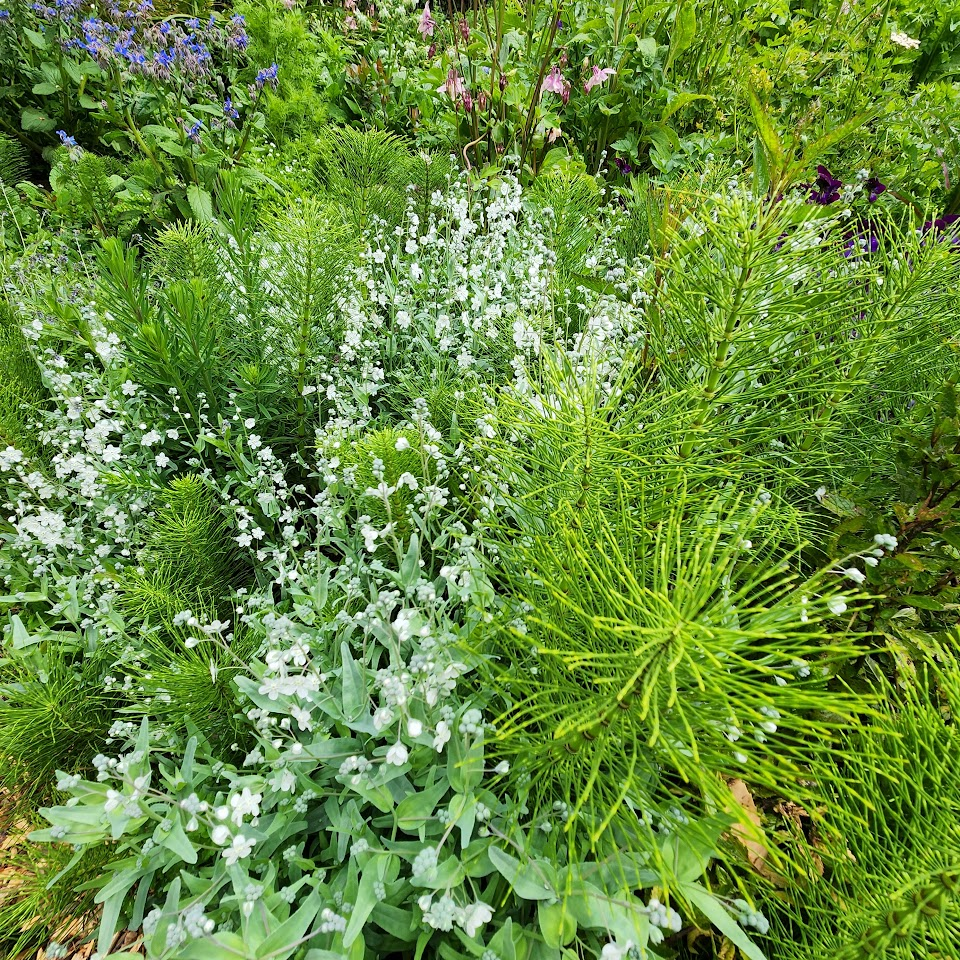
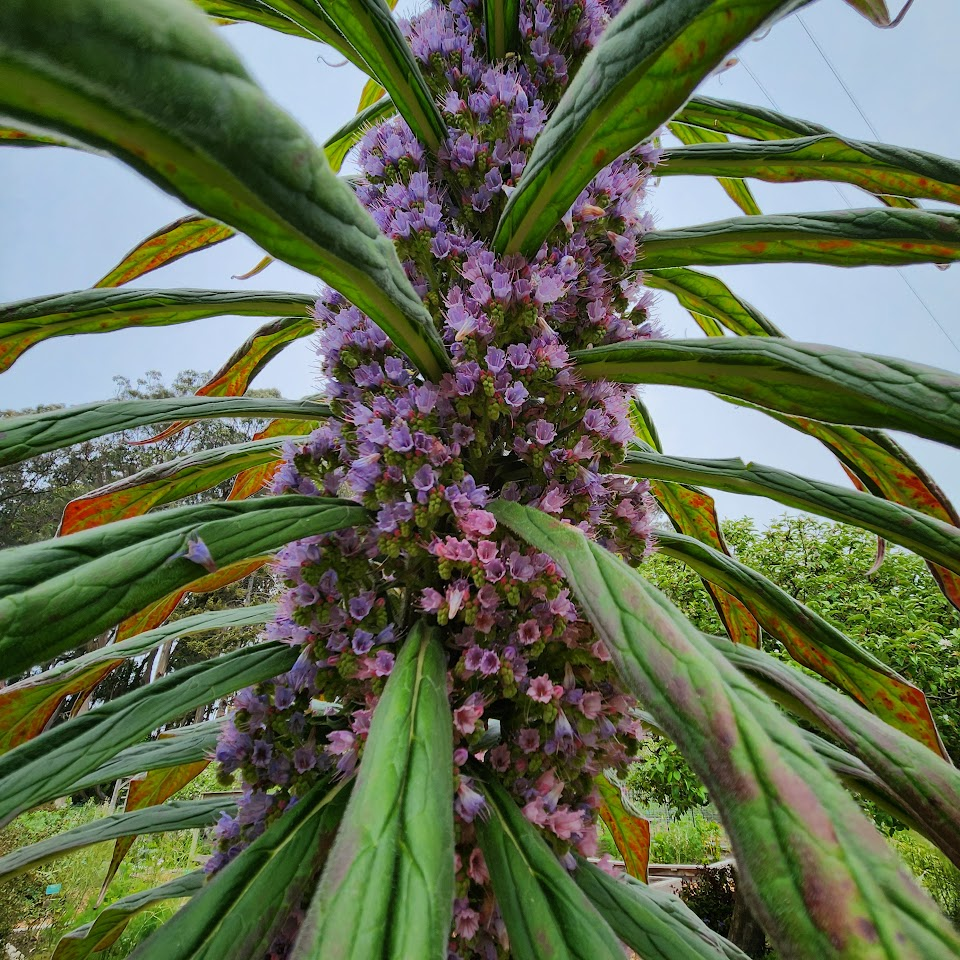
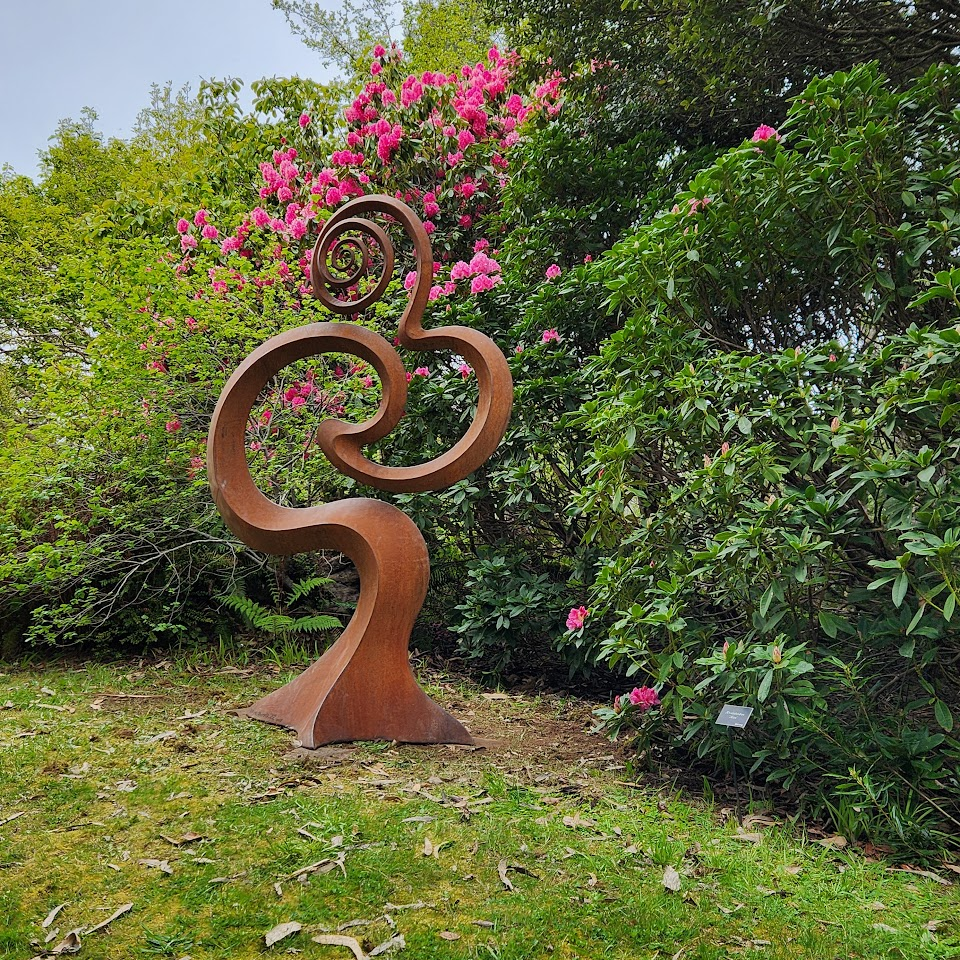
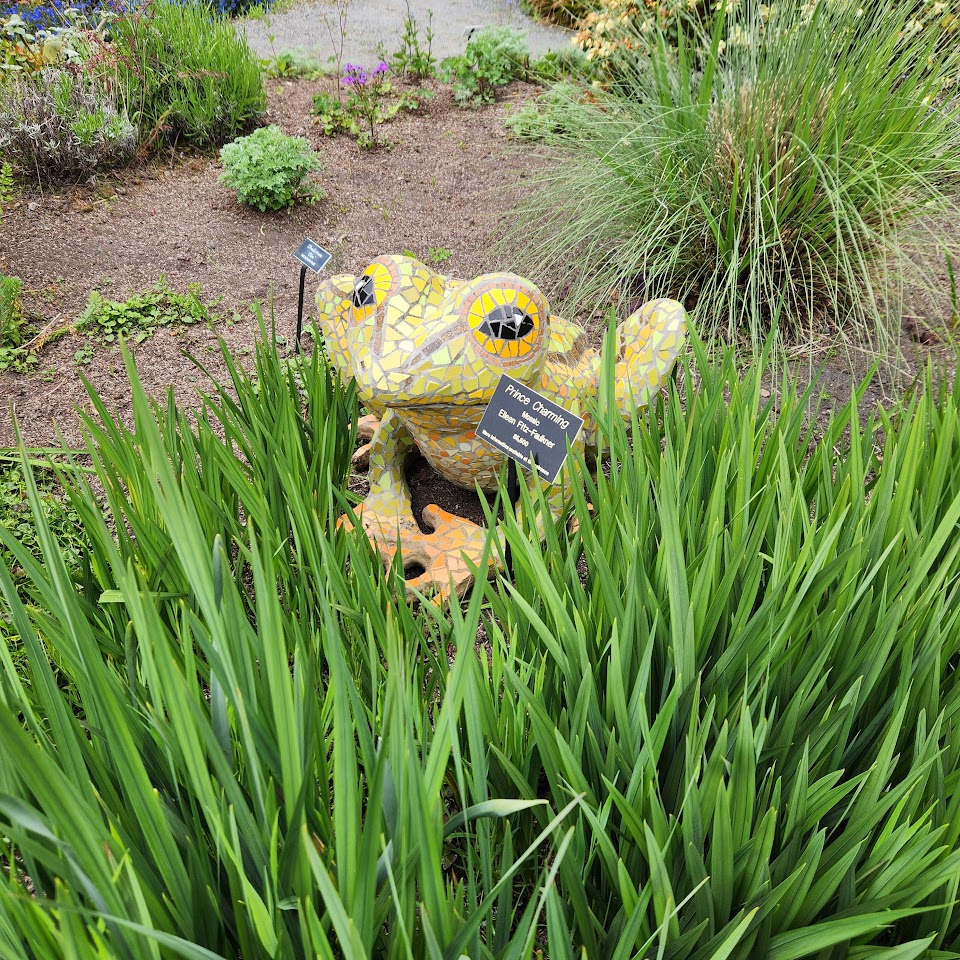
The Garden has several Scupltures to view here are a few
Diego Harris River Guardia $17,000
Corten steel sheeting welded over an internal structure of steel rebar; 8’ 2” tall x 6’ 11” wide x 3’ 5” deep
Location: Dahlia Garden
Artist’s description:
River Guardian is a large corten steel sculpture with an internal structure of steel rebar. It is an abstract sculpture, but it is somewhat plant-like in its design. I took inspiration for it from shapes and designs of the natural world. I also like to blend these more natural elements with the more hard-edged and mechanical designs of modern industry. There are two opposing shapes at the top of the sculpture. The spiral has many manifestations in nature as well as in the universe as a whole. It is the building block of life. The other is a more serpent or vine-like branch, but can also be seen as water flowing in a river. Although the spiral is the larger shape out of the two, they are very balanced because the serpentine branch is so dynamic and leads the eye up, whereas the spiral causes you to look more toward the center. It has such a strong stance that I thought it almost looked as though it was standing guard. I tried to think what it would be guarding and then decided that, since it had such a water-like feel to me, it would be fitting to call it River Guardian.
My sculpture is completely seam-welded. It’s very strong and safe. It has had all of its edges sanded smooth. There is an internal structure of steel rebar. Since it is made of corten steel, it will develop a fine rust patina that will help to preserve it for many years to come. It can be either bolted down in four locations or it can be welded down at any point along its base. It can fit on a square plinth of at least 4×4 ft.
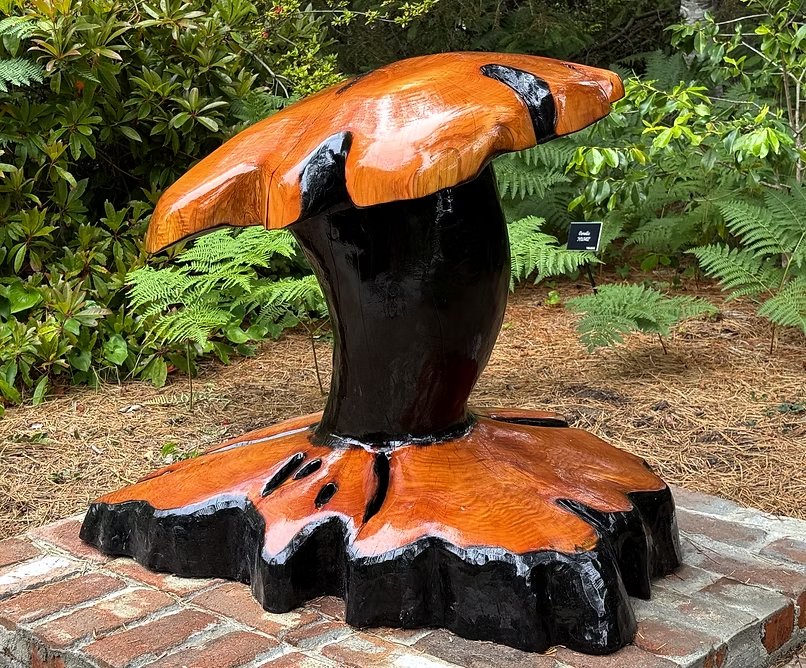
Peter Baker
Black Bolete
$5,500
Mendocino cypress; 3’ tall x 3′ wide
Location: North Forest
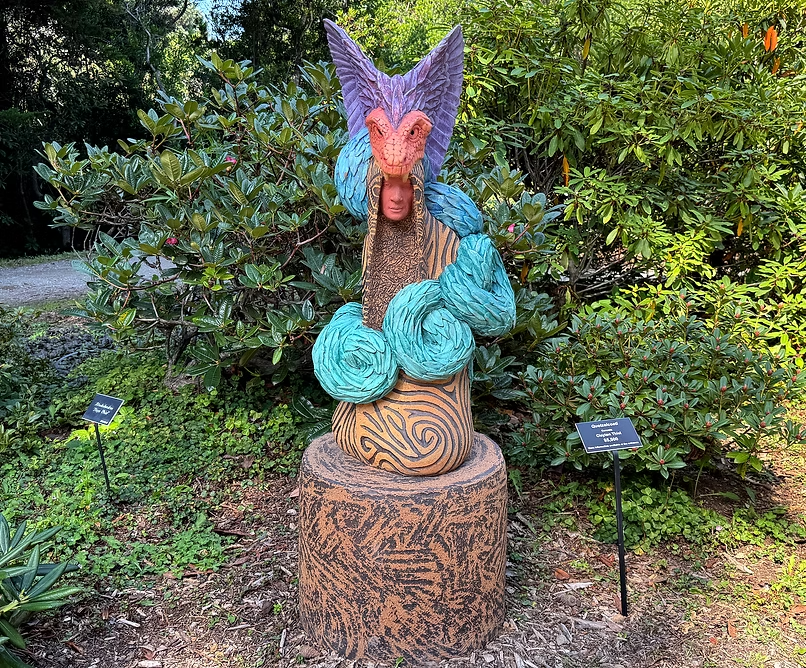
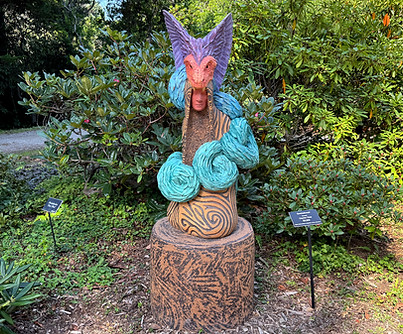
Clayton Thiel Quetzalcoatl $5,500
Ceramic; 56″ tall x 18″ wide x 17″ deep sold with pedestal
Location: Fort Bragg Rhododendron Collection
About the Artist:
Born in St Charles, Missouri in 1956, Clayton Thiel received his BA in sculpture from Maryville University in 1979, then came to California to study with Peter Voulkos and Joan Brown at UC Berkeley. At San Jose State he studied with David Middlebrook and Stan Welsh receiving an MFA in 1985 (suma cum laude). He was a full-time professor of Sculpture (clay, stone, and bronze), Art History, and Design at Chabot College in Hayward, CA from 1990 to his retirement in 2025. Thiel’s work has been shown widely in exhibits and galleries, and he has received numerous commissions from private collectors.