
Sub-Total: $0.00
Naked Ladies- No, Not Playboy Type Girls! They are Lillies.
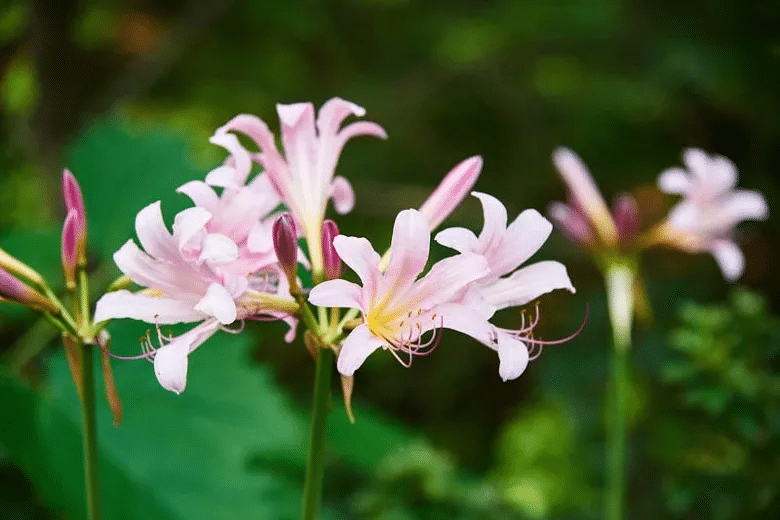
One of my favorite flowers on our property is our Naked Ladies. Besides the beautiful color of the flowers, they are deer resistant. The front of our property along the creek has open access to deer and having worry free flowers is awesome. We use the Common name Naked lady as the green foliage appears in December at our place and they die off down to dirt and in August a single stalk emerges and produces a flower(s) with no leaf or green attached, thus Naked Ladies.
Read on about some facts regarding these amazing flowers
Lycoris squamigera Previously known as: Amaryliis hallii.

Common names: Magic Lily, Mystery Lily, Naked Ladies. Resurrection Lily. Sesame Lily
Climate Zones: 2-24
Plant Type” Bulbs, perennials
Plant Family Lycoris
Exposure: Full Sun, Part Sun
Season of Interest: Summer- Late Fall
Height: 1′-2′
Spread: 1′-2′
Water needs: Average
Soil Type: chalk, loam, sand
Soil PH: Acid, alkaline, neutral
Soil drainage: Well-drained
Characteristics: Cut Flowers, Fragrant, showy
Attracts: Hummingbirds, Butterflies
This plant deserves prime spot in beds and boarders. Plant in groups of 3-5 minimum for best visual impact.
Virtually pest and disease free. Deer resistant.
The Naked Lady is a perennial bulb in the Amaryllis family, and it is the hardiest of all the plants in the Lycoris species. The bulbs are about 3 inches in diameter and have long necks and can persist for many years once established. The foliage emerges in late winter to early spring with silvery gray greenish strap-like leaves that measure 12 inches long and 1 inch wide and grow in clumps. The foliage dies away in late spring.
In late summer to fall, the surprise lily emerges like magic and produces 5 to 7 four-inch pale pink trumpet-like blooms atop the 2-foot tall stalks.
The Naked Lady is native to Southeast China, Japan, and Korea and is found in moist disturbed areas in valleys and along streams. It has been available in the United States since about 1880. It was originally, mistakenly identified, and sold as Amaryllis halli.
The genus name, Lycoris, honors the Roman actress and mistress of Marc Anthony. The plants in this genus are commonly known as the resurrection flower, surprise lily, or magic lily. Many of the common names originate from the bulbs’ unusual growth habit. The foliage appears in the spring and then dies in the summer, and the plant flowers appear to rise from the dead by late summer on naked stems. The specific epithet, squamigera, means “bearing scales.” This references the small scales on the flower petals that cause an iridescent sparkle.
The Naked Lady is easy to grow. They prefer full sun to partial shade. When planting, bury bulbs to a depth of 8 to 12 inches. and space them 6 inches apart. They grow best in well-drained, fertile soils, and they should be watered sparingly during the rest period and moderately during their growing season. They will adapt to many soil types. Transplanting should be avoided since this plant dislikes being disturbed. This plant does not need pruning, just simply remove the spent foliage and stems. The bulbs will suffer cold injury when temperatures drop below 28 degrees Fahrenheit. To protect them over winter, it is best to apply about a 2-inch layer of mulch.
The surprise lily is propagated by division, but they will not bloom the first year after being divided since the bulbs need to establish new roots. They may need to be divided about every 3 years. This plant is triploid or has 3 sets of chromosomes instead of 2, which results in it being sterile.
It would be best to incorporate these bulbs in a mixed ground cover or flowerbed so that their starkness will not be so readily apparent. When the bulbs are planted in clusters, the surprise lily can be a showstopper. Consider these bulbs as a container planting, border, patio planting, meadow, or woodland setting. The flowers are showy. fragrant, and a good cutting flower.
Seasons of Interest:
Bloom: Late Summer and Fall Foliage: Late Winter and Early Spring
