
Sub-Total: $0.00
The Four Monarchs of One Grove
A Pismo Beach story of migration, memory, and return
“They return not because they remember, but because the land remembers them.”
On a winter morning at Pismo State Beach Monarch Butterfly Grove, the air feels hushed. Sunlight filters through eucalyptus and Monterey cypress. Thousands of monarchs cling to bark and branches, wings folded like living leaves. To many visitors, this looks like the end of a journey.
It isn’t.
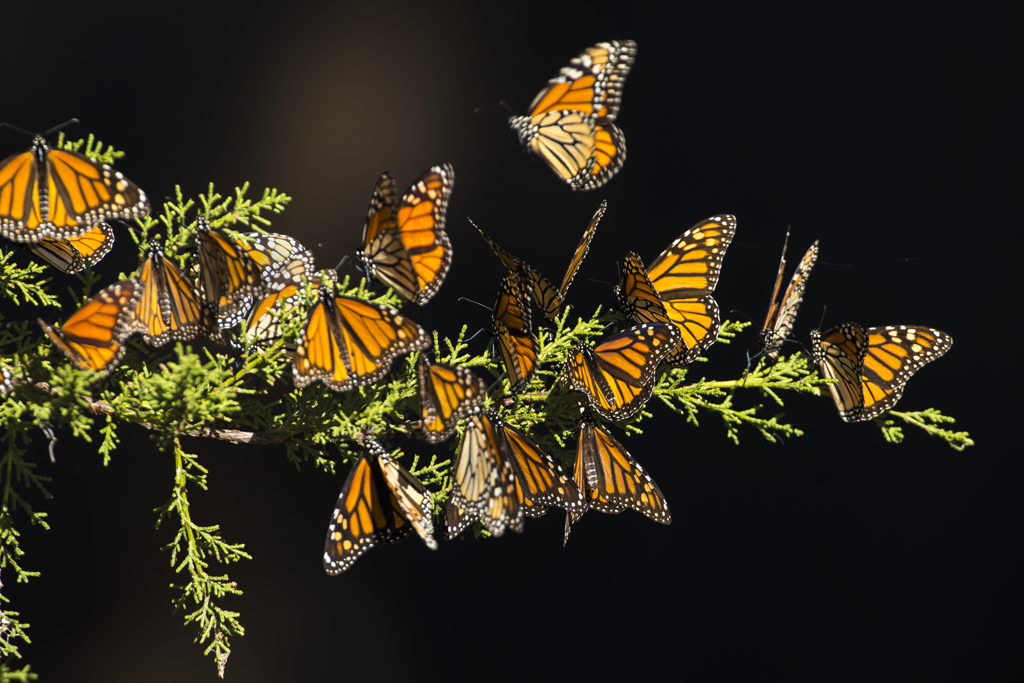
This grove is both a finish line and a starting gate. The monarchs clustered here are part of a migration so vast that no single butterfly completes it. Instead, the journey unfolds across four generations, each born for a specific role, each carrying the story forward—until, months later, their descendants return to this same grove, often to the very same trees.
What follows is that journey, told as a relay—four generations, four names, one place: Pismo.
Generation 1: Her name is Cypress; The Sleeper Who Wakes
“Cypress waits through winter so the journey can begin again.”
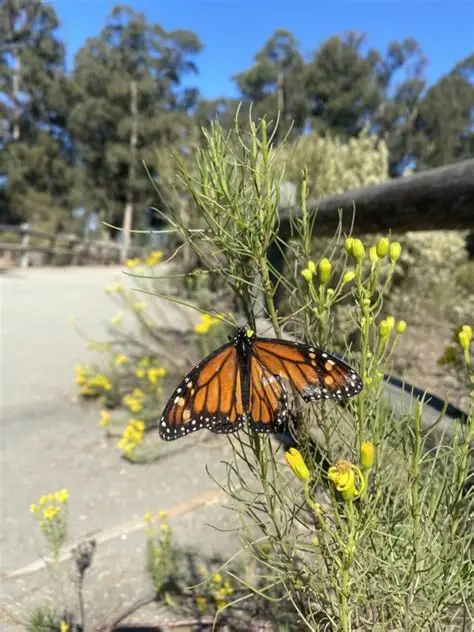
Meet Cypress, a monarch of the overwintering generation. Cypress arrived at Pismo in fall, guided not by memory but by instinct and environmental cues. Like all monarchs born late in the season, Cypress belongs to the super generation—physiologically different from summer monarchs.
Cypress entered reproductive diapause, a suspended state where mating is delayed and energy is conserved. This adaptation allows her to live for months rather than weeks. All winter, Cypress remains clustered in the grove, conserving warmth and fat reserves.
When days lengthen and temperatures rise, Cypress awakens. She drinks nectar, mates, and then leaves the coast—not to return, but to lay the first eggs of the year on emerging milkweed inland.
Cypress’s role:
• Survive the winter
• Restart reproduction
• Launch the year’s migration relay
Sidebar: What is a “Super Generation”?
Monarchs born in late summer and fall experience hormonal changes triggered by shorter days and cooler temperatures. These changes delay reproduction, slow metabolism, and extend lifespan—creating the only generation capable of surviving winter and long-distance migration.
Generation 2: Her name is Sage; The Spring Scout
“Sage doesn’t look back. The road ahead is green.”
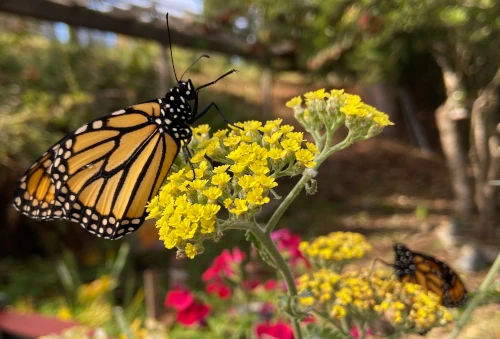
From Cypress’s eggs emerges Sage, a monarch built for speed and growth. Sage is part of the expansion generation. Sage’s life is short—just weeks—but purposeful. This generation spreads outward from the coast, following fresh milkweed as spring unfolds across inland valleys and foothills.
Sage does not migrate back to Pismo. Instead, she pushes the population’s footprint eastward and northward, laying eggs wherever milkweed grows. The relay stretches inland, away from the ocean, deeper into California and beyond.
Sage’s role:
• Expand breeding range inland
• Track spring milkweed
• Pass the baton forward
Generation 3: Her name is Juniper; The Summer Builder
“Juniper multiplies the miracle.
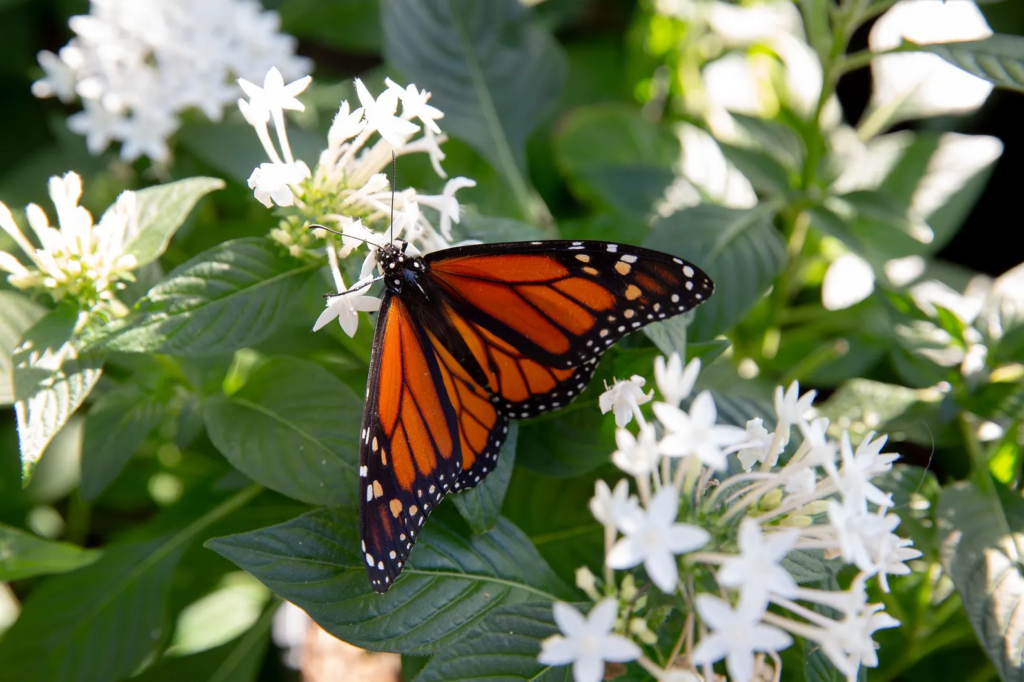
Juniper is born into abundance: long days, warm air, flowering nectar plants. This is the population‑building generation. Each monarch lives briefly but can lay hundreds of eggs, transforming a handful of winter survivors into a widespread summer presence.
By now, the relay may stretch far from Pismo—into mountain valleys, high desert edges, and in some cases as far as the western Rockies. While monarchs are often described as “western” or “eastern,” science shows that the divide isn’t absolute. Some monarchs interchange between regions, creating a braided migration rather than a perfectly closed loop.
Juniper’s descendants are everywhere—and among them are monarchs born as the season begins to change.
Juniper’s role:
• Build population numbers
• Broaden geography
• Keep the chain unbroken
Sidebar: Is There a West‑to‑East Monarch?
Most western monarchs overwinter along the California coast, while eastern monarchs overwinter in Mexico. However, studies show genetic mixing and occasional crossover, especially in regions near and east of the Rockies. Think of monarch migration not as two separate highways—but as a braided river.
Generation 4: Her name is Solstice; The Navigator Who Returns
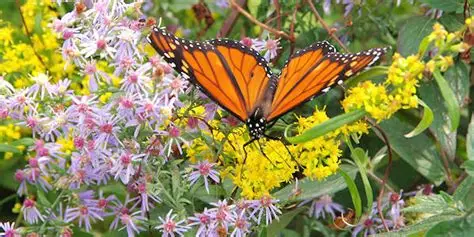
“Solstice flies toward a place she has never seen—and finds it.”
As summer wanes, monarchs born under shortening days may become the next super generation. This is Solstice. Like Cypress before her, Solstice is built for distance, not reproduction. She stores energy, delays mating, and feels the pull of migration.
Solstice leaves inland breeding grounds and turns west.
She has never been to Pismo. Yet she will arrive—guided by sun angle, internal clocks, and environmental cues—joining thousands of others in the familiar shelter of eucalyptus and cypress. Monarchs do not just return to the same coastline; they often return to the same groves, the same trees.
The relay closes its circle.
Solstice’s role:
• Fly to the coastal overwintering grove
• Cluster through winter
• Become next year’s Cypress
Why Pismo Matters
The story of monarch migration is not written in wings alone—it’s written in places.
Pismo’s grove is not a rest stop. It is a keystone chapter in a multi‑generational story. Without protected overwintering habitat, the relay breaks. Without inland milkweed, the relay breaks. Without nectar along the way, the relay breaks.
The monarch’s migration is a family story—and Pismo is one of its ancestral homes.
At‑a‑Glance: The Four Generations
Generation 1 – Cypress
Overwintering super generation
Long‑lived, non‑reproductive in winter; survives in Pismo grove; lays first spring eggs.
Generation 2 – Sage
Spring scout
Short‑lived breeder; expands inland; follows emerging milkweed.
Generation 3 – Juniper
Summer builder
Population boom; broad geographic spread; possible regional interchange.
Generation 4 – Solstice
Returning super generation
Late‑season migrator; flies back to Pismo and other coastal groves—often the same trees.
“When you stand in the Pismo grove, you are not watching the end of a journey. You are standing inside a story that is already beginning again.”
Why this story matters
The monarch’s multi‑generation migration depends on a simple truth: no milkweed, no monarchs—because milkweed is required for caterpillars. Supporting monarchs means supporting habitat across every leg of the relay: nectar for adults, milkweed for larvae, and protected overwintering groves for the super generation.
The monarch’s story is a family story—one that only works if the road stays open.
