
Sub-Total: $0.00
Top Orchids To Grow
Orchids have a reputation for being exotic and intimidating, but many of the best varieties to grow are surprisingly resilient and beginner‑friendly. With their elegant blooms, long-lasting flowers, and wide range of colors and forms, orchids can thrive on a sunny windowsill just as easily as they do in a greenhouse. In this post, we’ll explore the top orchids to grow at home—reliable, widely available favorites that combine beauty with ease, making them perfect for both first‑time growers and seasoned plant lovers alike.
1. Phalaenopsis — The Best Orchid to Start With
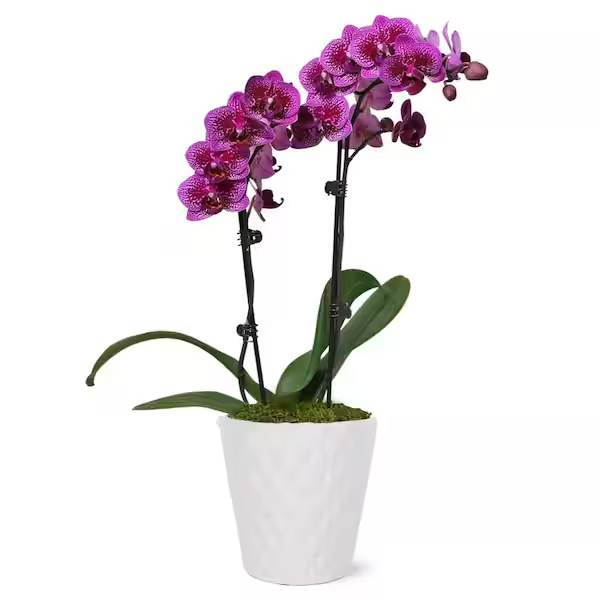
Phalaenopsis, the moth orchid, is by far the most popular orchid sold worldwide — and for good reason. It genuinely thrives under normal home conditions without special equipment [1]. The broad, glossy leaves and arching flower spikes bearing 10–20 blooms are familiar to almost everyone; less appreciated is just how easy this plant actually is to keep alive and flowering.
- Growth habit: Monopodial. No pseudobulbs; grows from a single crown.
- Light: 1,000–2,000 footcandles. An east-facing windowsill or a spot a few feet from a south window works well. Phalaenopsis tolerates lower light better than any other genus here, though more light means more reliable reblooming.
- Watering: Water thoroughly in the morning, then let the medium dry almost completely — but not bone dry. Aerial roots turning silvery-white indicate the plant is ready to water.
- Bloom season: Novelty varieties flower year-round with adequate light. Traditional types can be triggered to rebloom by cooler autumn night temperatures
- Fragrance: Absent in most commercial hybrids.
- Difficulty: ★☆☆☆☆ Beginner
According to the University of Maryland Extension, Phalaenopsis thrives in conditions similar to African violets [2] — a useful benchmark for anyone who has successfully kept other houseplants alive. Because there are no pseudobulbs to buffer moisture loss, missing a watering matter more than with sympodial orchids, but checking the pot every 5–7 days is all it takes.
2. Dendrobium — The Orchid That Needs a Winter Rest
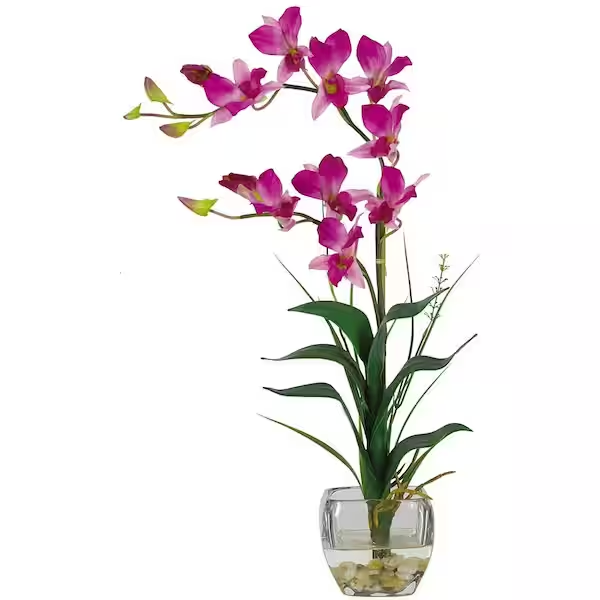
Dendrobium is one of the largest orchid genera, with over 1,800 species ranging from the humid tropics to the cool Himalayas. The types most commonly sold are Phalaenopsis-type soft-cane Dendrobium, which produce long arching sprays carrying 15–20 or more flowers per spike.
- Growth habit: Sympodial. Upright pseudobulb-canes; new canes develop from the base each season.
- Light: Brighter than Phalaenopsis — direct filtered sun is well tolerated. Avoid harsh midday exposure in summer.
- Watering: Soak thoroughly, then allow to dry before the next watering. Reduce frequency significantly in winter when growth slows.
- Bloom season: Late winter through spring, after the cool rest period.
- Fragrance: Variable; many commercial hybrids are unscented.
- Difficulty: ★★☆☆☆ Easy–Intermediate
The critical detail with Dendrobium is the cool, dry rest in autumn. Most Phalaenopsis-type Dendrobium need night temperatures of around 50–55°F (10–13°C) for 4–6 weeks in late autumn to initiate flower bud formation Without this cue, the plant produces keikis — small plantlets on the canes — instead of flowers. If your home runs warm all winter, a cool bedroom or unheated porch solves this. Once spikes appear, move the plant back to warmer conditions to develop and open the flowers.
3. Oncidium — Dancing Ladies with a Fragrant Surprise
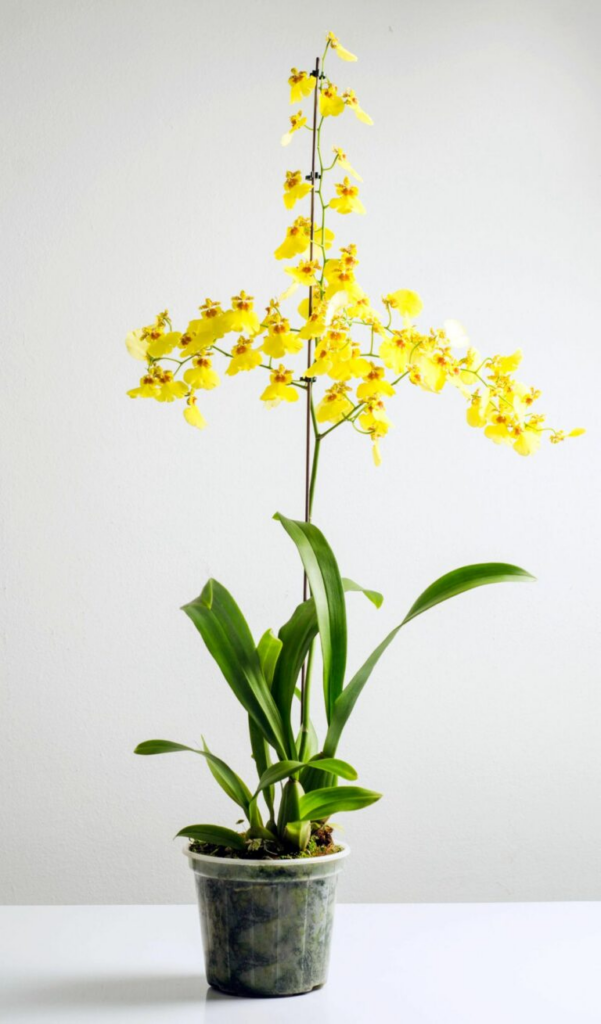
Oncidium — the “dancing lady orchid” — produces cascading sprays of small flowers that tremble in the slightest air movement. The genus is broader than most people realise: compact Tolumnia types sit on a windowsill; large spray types produce 50 or more flowers per spike and require more space.
- Growth habit: Sympodial. Pseudobulbs store water, making Oncidium more forgiving of erratic watering.
- Light: East, west, or shaded south windows. According to Smithsonian Gardens, yellow-green leaves rather than deep green indicate sufficient light [4]; dark, lush foliage usually signals too little light and poor blooming.
- Watering: Water thoroughly when the medium is about half dry. Thick-leaved varieties tolerate longer dry periods than thin-leaved types.
- Bloom season: Mostly autumn and winter. After blooming, leave the spike intact until completely dead — it may branch and produce a second flush.
- Fragrance: Some varieties carry a distinctive chocolate or vanilla scent — one of the more pleasant surprises in orchid growing.
- Difficulty: ★★☆☆☆ Easy–Intermediate
Oncidium’s pseudobulbs provide genuine resilience to the slightly-too-long-between-waterings situation that most home growers encounter. It’s a natural second orchid once you’ve mastered Phalaenopsis, adding variety and potential fragrance without significantly raising the care difficulty.
4. Cattleya — The Corsage Orchid That Demands Bright Light

Cattleya is arguably the most iconic orchid in Western horticulture — the genus that defined the look of corsages for decades, with large ruffled blooms in purples, pinks, and whites. Growing them well comes down to one factor above all others: light.
- Growth habit: Sympodial. Prominent club-shaped pseudobulbs; rhizomes must sit at or above the medium surface when potting.
- Light: 2,500–3,500 footcandles — roughly twice the requirement of Phalaenopsis. A south- or west-facing window without significant obstruction is ideal. Counterintuitively, light green foliage with a slight yellow tint means the plant is getting enough light; dark, lush green leaves signal insufficient light for reliable blooming [5].
- Watering: Full wet-dry cycle: soak thoroughly, then let the medium dry completely before watering again.
- Bloom season: Varies by type — some are spring-blooming, others autumn or winter. Individual flowers last 2–4 weeks.
- Fragrance: Strong and distinctive. This is the genus most associated with the classic orchid scent.
- Difficulty: ★★★☆☆ Intermediate
Miniature Cattleya — plants under 25 cm / 10 inches — are worth considering for smaller spaces. They carry the same cultural requirements but produce proportionally smaller, still-fragrant flowers and fit a windowsill without dominating it. Many miniatures also bloom more frequently than standard types, making the extra light requirement worthwhile.
5. Cymbidium — The Outdoor-Tolerant Cool-Grower
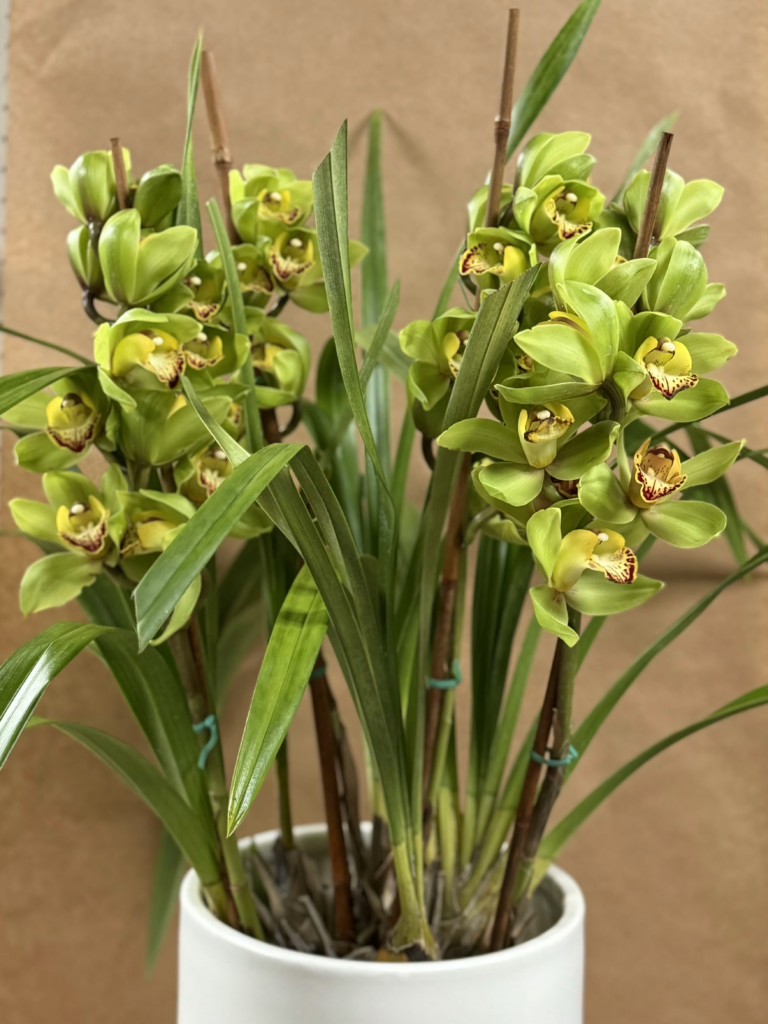
Cymbidium is the only genus in this guide that actively benefits from a summer outdoors. Cool-growing by nature, it produces elegant, long-lasting flower spikes — bearing 10 to 20 blooms each — in response to a meaningful temperature drop in autumn.
- Growth habit: Sympodial. Large plump pseudobulbs; dead leaves should be removed but old pseudobulbs left intact as energy reserves.
- Light: Bright indirect indoors; direct morning sun outdoors. Reddish leaf tips indicate excess light; pale yellow-green indicates adequate levels [7].
- Temperature: The crucial variable. Smithsonian Gardens recommends night temperatures of 50–60°F (10–15°C) from mid-September through October to trigger spike formation [7]. Without this cool period, the result is beautiful foliage and no flowers
- Watering: Consistently moist spring through summer; gradually reduced from late summer to barely damp through winter. Never waterlog the pot.
- Bloom season: Winter to spring — the payoff for the autumn cool period.
- Difficulty: ★★★☆☆ Intermediate
6. Paphiopedilum — The Slipper Orchid That Loves Low Light
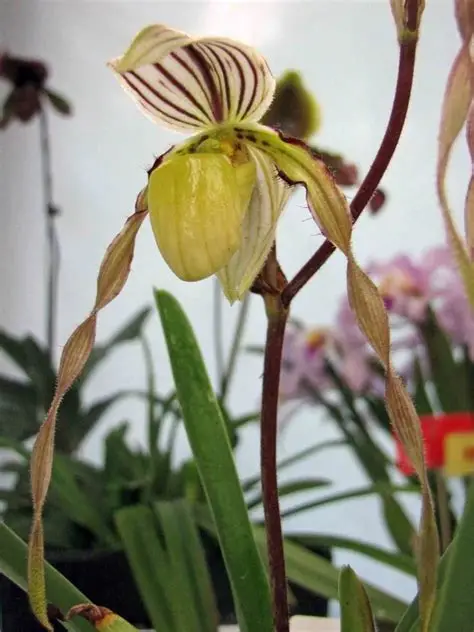
Paphiopedilum — the “slipper orchid” or “lady slipper orchid” — is the genus for anyone who genuinely doesn’t have a bright window. These terrestrial orchids evolved on forest floors across South-East Asia, where light is filtered and temperatures are stable year-round. They’re one of the only orchids in this guide that will bloom on a north-facing windowsill [8].
- Growth habit: No pseudobulbs. Each growth produces one flower
, then a new fan of leaves develops from the base. The plant fans out laterally over time.
- Light: Just 2–3 hours of shaded sun per day is sufficient. This makes Paphiopedilum an excellent choice for orchid enthusiasts with dim rooms.
- Watering: Keep the medium consistently moist — not wet, but never allowed to dry out completely. This is the opposite of most orchids here and reflects the plant’s terrestrial origins [8].
- Temperature: Green-leaf types prefer cooler conditions (55–65°F nights); mottled-leaf types prefer warmer (65–70°F nights) [8].
- Bloom season: Long-lasting flowers — often 2–3 months per bloom. Many rebloom readily in home conditions without requiring temperature manipulation.
- Difficulty: ★★☆☆☆ Easy–Intermediate
Paphiopedilum mottled-leaf varieties are attractive even out of bloom — the patterned foliage reads as a decorative plant in its own right, not just an empty pot waiting for its season. The combination of low-light tolerance, long bloom duration, and attractive foliage is genuinely hard to beat for anyone building a year-round indoor display.
7. Miltonia and Miltonopsis — Pansy Orchids for Cool, Humid Rooms
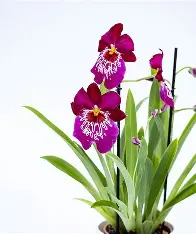
The “pansy orchids” are often sold interchangeably but are two distinct genera with meaningfully different needs. Miltonopsis (the Colombian type) produces the large flat-faced flowers most associated with the name — blooms that genuinely do look like oversized, patterned pansies. Miltonia (the Brazilian type) is warm-growing, with slightly smaller flowers and a more robust constitution.
Growth habit: Both sympodial, producing compressed pseudobulbs on creeping rhizomes.
- Light: 900–1,000 footcandles for Miltonopsis; somewhat brighter for Miltonia. East or west windows work well for both [9, 10].
- Temperature: The key divergence. Miltonopsis needs cool nights (55–65°F / 13–18°C) and suffers in centrally heated homes. Miltonia is the warmer-growing option, tolerating temperatures that would stress Miltonopsis.
- Humidity: Both require 50–70%+. Miltonopsis is particularly prone to bud blast — sudden flower drop — if temperature or watering changes abruptly [9]. Consistency is not optional with this genus.
- Watering: Miltonopsis: keep medium perpetually lightly moist (like a wrung-out sponge). Miltonia: allow to approach dryness between waterings, occasionally flushing the medium.
- Fragrance: Mild and pleasant.
- Difficulty: ★★★★☆ Intermediate–Advanced (especially Miltonopsis)
These are worth saving for your second or third year of orchid growing. The flowers are extraordinary — but Miltonopsis especially will punish an inconsistent approach quickly and visibly, making it frustrating for newer growers who haven’t yet developed reliable watering habits.
8. Epidendrum — The Most Heat-Tolerant Orchid for Sunny Windowsills
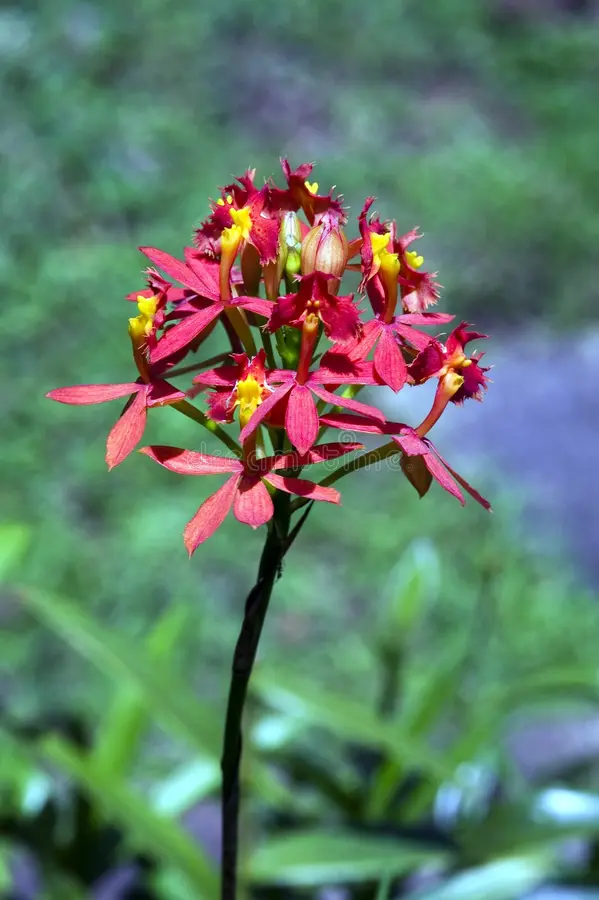
Epidendrum is one of the largest orchid genera, but the reed-stem types most often cultivated produce tall cane-like stems topped with clusters of small, star-shaped flowers. They’re not the showiest orchids in this guide, but they’re among the most robust — and the most tolerant of the warm, bright conditions that challenge other genera.
- Growth habit: Sympodial. Reed canes develop from the base each season rather than plump pseudobulbs, though the growth pattern is the same.
- Light: High — 2,500–3,500 footcandles, similar to Cattleya [11]. Insufficient light is the single most common reason Epidendrum fails to bloom. A tall, leggy, flowerless plant needs more light first.
- Temperature: The most heat-tolerant genus here. Summer temperatures that would stress Cymbidium or Miltonopsis are no problem for Epidendrum.
- Watering: Two-phase seasonal approach: every 4–5 days during the growing season (March–September), keeping the medium consistently moist; every 7–8 days from October through February with more drying between waterings
- Bloom season: Long flowering periods; new flower clusters appear successively on older stems.
- Fragrance: Variable by species.
- Difficulty: ★★☆☆☆ Easy–Intermediate
Epidendrum suits hot conservatories and south-facing windowsills where most other orchids would struggle — provided the light requirement is genuinely met. The two-phase watering rhythm is straightforward once established, and the succession of new flower clusters makes these long-season performers rather than one-flush wonders.
This amazing information was written by Marzena Rewers (Horticulturist)
