
Sub-Total: $0.00
What is a Bulb? No, Not the Lamp Kind…Bulbs
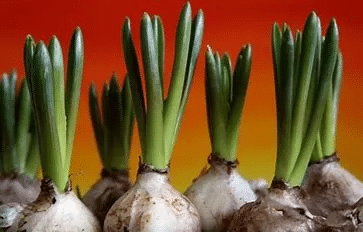
Put simply, a bulb is a short stem with fleshy leaves or leaf bases. These specialist leaves often have the function of acting as food storage organs during periods of dormancy.

A bulb’s leaf bases, known as scales, generally do not support leaves, but contain food reserves to enable the plant to survive adverse conditions. At the center of the bulb is a vegetative growing point or an unexpanded flowering shoot. The base is formed by a stem, and plant growth occurs from this basal plate. Roots emerge from the underside of the base, and new stems and leaves from the upper side. Tunicate bulbs have dry, membranous outer scales that protect the continuous lamina of fleshy scales.
Other types of storage organs (such as corms, rhizomes, and tubers) are sometimes erroneously referred to as bulbs. The technical term for plants that form underground storage organs, including bulbs as well as tubers and corms, is geophyte. Some epiphytic orchids (family Orchidaceae) form above-ground storage organs called pseudobulbs, that superficially resemble bulbs.
When and how can I plant spring-flowering bulbs?
Few plants are more rewarding or easier to grow than spring flowering bulbs. They are readily available each fall in local garden centers or hardware stores. Many bulbs are also available through mail order suppliers, who send out glossy catalogs in mid-summer. Shop early in the season while the selection is good.
There are hundreds of bulb varieties from which to choose. Some of the most popular include tulips, narcissus (also called daffodils), crocus and hyacinths.
Bulbs should be planted in drifts or groups of three or more to avoid a rigid look. They may be planted in full sun or partial shade. Bulbs do well when planted under deciduous trees, because they generally bloom before the tree’s leaf out. Before planting work an all-purpose fertilizer such as 20-20-20 into the soil along with organic matter and sharp sand or calcined clay
Plant tulips and daffodils 7-8 inches deep, hyacinths 6 inches deep, and crocus and most small minor bulbs 3-4 inches deep. Daffodils and small bulbs are best planted by the end of October. Tulips can be planted up until the ground freezes. They need about ninety days from planting to the time they flower. After covering the bulbs with soil, mulch the area with 2-3 inches of shredded bark, leaf mold or other organic material and water to facilitate rapid root growth.
How do I care for my spring-flowering bulbs?
Hardy spring bulbs are some of the most colorful plants in the garden and among the earliest to flower. The season begins in February with snowdrops and winter aconites followed by crocuses, scillas, chionodoxas, and daffodils in March, hyacinths and tulips in April. It is always sad to see the display fade but, that burst of color will be welcomed next season and here are a few tips to follow which will ensure that the bulbs are in good shape for next year’s show.
The first thing to recognize is that what happens between now and when the foliage yellows in early to mid-summer determines the next seasons flower crop. This is the time when the buds are being set and new bulb offsets are growing. Now is a good time to add nutrients to support bulb growth. This can be done by broadcasting a granular fertilizer like 5-10-5 or 5-10-10 at the rate of 2 pounds per 100 square feet across the bed. If your plantings are scattered, this works out to about 1 to 2 tablespoons per plant sprinkled around the clump. Use the higher rate for old and larger clumps.
Removing the seed pods after the flowers fade will have a positive effect upon new bulb formation and bud set. This is especially true of daffodils and tulips. Failure to do this will result in smaller bulbs because the seed pods will continue to develop and set seed. This requires energy reserves which otherwise would go into bulb growth.
Then, there is always the question of what to do with the foliage. The temptation for many is to bunch the leaves with a rubber band or string into a nice tidy bundle. Alternatively, some people will cut the foliage back to the ground. Both of these practices will reduce bulb development and flower formation next season. Instead, the foliage should be allowed to sprawl out to collect as much sunlight as possible. Daffodils are sensitive to premature leaf removal and there should be a least 4 to 6 leaves per bunch to support bulb growth. The same follows for tulips, however, they are less sensitive. So as long as you leave the bottom two leaves intact, new bulbs produced will develop to normal size. So, be patient to cut the foliage back until signs of leaf yellowing. Generally, tulips can be cut back in mid-June while daffodils often take a month longer. At this time cut the leaves back to the ground level and compost the leaf material.
Most bulbs flower very well in the first year regardless of where they are planted. This is because the storage reserves are already in place for the first year’s growth. The second year will be a reflection of the new planting site conditions. If flower production is poor in subsequent years, this may be due age. Older clumps that have become overgrown will produce small flowers and stems because of crowding. Tulips fit this pattern more so than daffodils and it is recommended to divide tulip plantings every 3 to 4 years. If you have noticed a real decline in tulip flowers, it may be better to discard them and start over because they have a tendency to be less showy after the first two years of growth. Daffodils can often go several years without much concern.
In either case, the remedy is to dig the clumps of bulbs and divide. This is commonly done in the fall. However, any time after the foliage has turned yellow, the bulbs could be lifted from the soil. If you replant, take the time to improve the bed by adding organic matter such as leaf compost or aged manure at the rate of 2 to 3 bushels per 100 square feet. This should be tilled or worked into the soil to a depth of about 8 inches along with one pound of complete fertilizer. Bulbs set in this way will begin to develop a new root system through the summer, fall and winter. If you are not ready to prepare the bed immediately, the bulbs can be lifted and air dried in a cool place like a garage or basement area until fall planting preferably prior to November 1st.
Are there any tulips that will come back year after year?
Although tulips are favorites in the spring garden, many gardeners become disappointed when they do not return reliably every year as do daffodils, crocuses and many of our other favorite spring bulbs. Fortunately, there are some tulips that are quite perennial and excellent repeat performers. Look for those species and varieties that are listed in catalogs or on the packaging as good prospects for naturalizing or perennializing. They should return reliably and perform well for three to five years or more.
In general, the species or botanical tulips and their hybrids will return year after year and thus naturalize well.
Companion planting offers a way to hide unsightly tulip foliage after the flowers are gone. Plant odd-numbered clumps of tulips in among taller perennials such as daisies, Monarda, coneflowers, hostas, daylilies and peonies. Annuals planted in among the tulips offer another way to hide the ripening tulip foliage. Cosmos, marigolds and zinnias offer varieties that will grow tall and camouflage the tulip foliage.
To get the best results from these perennial tulips, plant them in the mid-to late fall in a site that gets six to eight hours of sunlight during the spring blooming season. Be sure they are in well-draining soil. That will help avoid rots, fungi and diseases. Plant tulip bulbs deeply, in eight-inch holes, measuring from the base of the bulb. Mulch applied to the area after planting counts as soil depth.
Be sure the soil is moist after planting. Water bulbs after planting if the soil is dry–they need to develop a vigorous root system before the ground freezes. In the spring, deadhead tulips after the flowers are past their peak–simply cut the flower stems and put them in your compost heap. Then the plants can direct all of their energies into preparing for the next blooming season rather than into developing seeds. Be sure to allow the foliage to ripen naturally–cutting green tulip foliage will drastically reduce the likelihood of the next year’s bloom.
Each spring when tulip foliage begins to appear, an application of organic fertilizer such as dried cow manure will encourage good growth. Or you could use a slow-release, all-purpose manufactured fertilizer such as 5-10-10, 8-8-8 or a formulation made especially for bulbs such as 9-6-6.
Choosing the most perennial of the tulips will ensure years of beauty in your garden. For top tulip performance, provide them with good drainage, adequate light and moisture and the full range of important nutrients.
Mass Flower Bulb Planting
When planting in a large planting bed that flower bulbs will fill completely this is often called mass planting. This method can also be used if planting flower bulbs along an entire border by digging a trench the length of the planting bed. Whether you are planting in a trench or planting in a large area, dig out the entire planting area first. Drop the bulbs into large sections of the planting area. After they are resting on the soil they can be spaced and straightened out.
When planting in mass the spacing will vary based on the effect you want to create. For a full look space, the bulbs closer than the recommended spacing on the package. For example, with tulips in mass planting the bulbs can be as close as 1″ from each other, as long as they aren’t touching.
Note that by spacing the bulbs closer than the recommended spacing they may not return in the following years as robustly as if they are spaced according to the recommendation. Therefore, if having the bulbs return for several seasons is the main goal follow the planting spacing listed on the product package.
The following fall-planted bulbs are recommended for bouquet planting:
Mass Planting
- Tulips: 5 bulbs per square foot bouquet planting area
- Daffodils: 5 bulbs per square foot bouquet planting area
- Hyacinths: 5 bulbs per square foot bouquet planting area
- Crocus: 12 bulbs per square foot bouquet planting area
- Dwarf Dutch Iris: 12-15 bulbs per square foot bouquet planting area
- Small Allium: 8-12 bulbs per square foot bouquet planting area
- Lily bulbs: 3-5 bulbs per square foot bouquet planting area
How Many Flower Bulbs Do I Need, really?
Perhaps you are like me and math isn’t your favorite thing. After reading this information about planting techniques maybe you still don’t know how many flower bulbs you need? The simple answer is if it seems like a lot of flower bulbs, you probably need more. 50 flower bulbs may seem like a lot to plant. However, planting 50 tulip bulbs in a bouquet method will only cover 10 bouquets or 10 square feet.
Consider this too, that one tulip bulb will produce 1 flower. Therefore, if 50 tulip bulbs are planted they should generate 50 flowers. Finding spots throughout the yard to bouquet plant bulbs is an easy way to increase the number of bulbs blooming in spring. Planting in mass creates the largest color impact if you have the space and time to make it happen, the results are stunning. Lastly, if you just want a little color in spring, and only have the ability to plant a few bulbs in the garden, that is ok too!
Summer blooming bulbs provide a colorful and exotic feel to the garden. Popular summer blooming bulbs like dahlias provide blooms for quite a while. Gladiolus and calla lilies are some of the best cut flowers in summer. Summer standouts like canna lilies and elephant ears bring a feel of the tropics to any garden. Shade tolerant summer bulbs like begonias and caladium add color to containers and planting beds.
Storing Summer Flower Bulbs
What kind of bulbs need to be stored in winter?
Storing bulbs in winter depends on the climate they are growing in as well as the hardiness zone of the bulb. Summer blooming bulbs tend to prefer warmer climates. Therefore, when summer-blooming bulbs are grown in hardiness zones 3-7 they will need to be stored in winter. Popular tender summer blooming bulbs that require storage to protect from freezing winter temperatures are:
Zone Map
Calla Lilies | Winter hardy in zones 7-10
Canna Lilies | Winter hardy in zones 7-10
Begonias | Winter hardy in zones 8-10
Dahlias | Winter hardy in zones 8-10
Caladium | Winter hardy in zones 9-11
Gladiolus | Winter hardy in zones 8-10
Elephant Ears | Winter hardy in zones 9-11
Note: The list above is the most popular summer-blooming bulbs. There are other spring-planted and summer-blooming bulbs that may require storage. If you are unsure whether or not something will need to be stored for winter check the hardiness zone range of each particular bulb to see if your zone is included or not.
When to dig up bulbs for winter storage
Tender bulbs are sensitive to frost and freezing temperatures. A light frost will not kill the tubers or rhizomes of summer blooming bulbs. It may cause damage to the foliage and flowers; however, the bulbs themselves will survive a light amount of frost. A deep freeze of several days and hours below 32 degrees will damage the bulbs beyond saving. Therefore, in fall pay attention to local temperatures. Make a plan to lift the bulbs from the ground before the first long-duration killing frost occurs.
Each region and year will be different. However, generally northern climates with harsh winters can expect this to happen in October to mid-November. Mild climates (hardiness zones 6 &7) that have cold enough winters may be able to wait until late November to early December to lift their bulbs. Therefore, it is important to follow the low temperatures in your region in autumn if you plan to lift and store the bulbs for winter.
Where to store summer bulbs in winter
During winter storage it is important to protect the bulbs from cold temperatures, excessive moisture, and excessive dryness. Therefore, they need to be stored in a location where they will not be impacted by these factors. One other consideration about storage location is that they should be protected from rodents and other critters that may find them desirable to eat in winter.
Summer bulbs can be stored in a basement, closet, or room in your house. Garden sheds and garages may not be the ideal place if freezing temperatures occur. Also, if rodents may be present in those locations storing summer bulbs in sheds, and garages should be avoided.
Preparing summer bulbs for storage
Summer blooming bulbs all look a little different. However, the general principles for winter storage can be applied to the various tender summer bulbs. Follow these steps to lift and prepare summer bulbs for winter storage:
- With a spade or sharp shovel carefully dig up the entire plant. Start a couple of inches from the plant to get as much of the root system as possible.
- Cut back any remaining foliage that is attached to the bulb. You may leave 1-2″ of foliage that is coming directly from the bulb. Over time the foliage will dry out. If too much foliage remains it could lead to issues with rotting.
- Shake off as much excess soil from the bulb and roots as possible.
- Prepare a location that the bulbs can dry outside for 1-2 days. This helps to remove as much moisture as possible before storing, which is important to prevent the bulbs from rotting.
- Store summer bulbs in a container that allows some airflow. Paper bags, plastic containers with ventilation as well as plastic or wooden crates all work well as storage containers.
- Add storage medium such as peat moss or sawdust to the storage container with the bulbs.
- Ideal storage temperatures are between 50 and 60 degrees
- Check the bulbs weekly to make sure they are not rotting or drying out.*
* If you notice the bulbs are starting to develop mold or soft spots remove them from the storage material. Allow the bulbs to dry out again and place in new dry storage material. If the bulbs appear to be drying out mist the bulbs lightly to add moisture. If either of these situations occurs, it is important to check the condition of the bulbs frequently.
If a sunny location is available in your home the pots can be moved to a location in late winter to early spring. The bulbs should start growing which will give them a jump start for the growing season. When the danger of frost has passed in your area the pots can be moved outside again.
Storing summer bulbs in winter takes a bit more work than the alternative of not storing the bulbs. If the bulbs aren’t stored for winter in most climates, they will not survive the freezing temperatures. Therefore, new bulbs will need to be purchased the following spring. This can be somewhat fun as it means new plants and bulbs can be added to the garden. However, it can be costly to choose not to store the bulbs in winter. Therefore, if you have certain bulbs you like in the garden and want to keep them year after year storing them is a great way to accomplish a long-lasting garden on a budget. Even if you store the bulbs, I highly suggest adding a couple new bulbs and perennials each planting season, as that is the most fun part of gardening!
#bulbs #gardenbulbs #flowers #rhizomes
