
Sub-Total: $0.00
Rain Gardens- The Eco-Friendly Plant Space
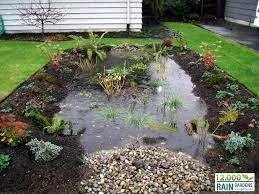
A rain garden is a depressed area in the landscape that collects rain water from a roof, driveway or street and allows it to soak into the ground. Planted with grasses and flowering perennials, rain gardens can be a cost effective and beautiful way to reduce runoff from your property. Rain gardens can also help filter out pollutants in runoff and provide food and shelter for butterflies, song birds and other wildlife.
More complex rain gardens with drainage systems and amended soils are often referred to as bioretention.
Since 70 percent of pollution in surface water comes from stormwater, this water filtration is vital to environmental protection. Rich in soil organic material, compost amended soil in the first few inches of topsoil increases soil infiltration, retains more water, and promotes plant growth. Organic rich mulch as a top layer keeps the soil moist and prevents unwanted weed growth.
Rain gardens are great for residential properties but also commercial sites and public spaces. Planted with grasses and flowering perennials, these beautiful landscapes are cost-effective and provide ecosystem benefits.
Where to Use Treatment
Ideally, use treatment in low-lying areas where water naturally drains or is diverted. Since stormwater should soak into the ground within 1 to 3 days, areas where the water table is naturally high, or land is often saturated, is not a good location.

Benefits
- Replenishes groundwater over time.
- Reduces property flooding risk.
- Creates habitat for butterflies, songbirds, and other wildlife.
- Naturally filters water and removes pollutants like phosphorus, nitrogen, and hydrocarbons. This prevents contaminated water from entering storm drains and local bodies of water.
- Reduces money spent on irrigating plants.
Design Considerations
- Should be located where the garden will receive runoff – check runoff flows and construct diversion measures if necessary.
- Natural depression or flat surface makes construction easier.
- An area with full or partial sunlight will be more conducive for plant growth.
- Avoid large tree roots.
- Locate at least 25 feet away from buildings with basements and at least 5 feet away from buildings without
- Locate 5 feet horizontally and 1 foot vertically from any utilities, including water, sewer, and electricity.
- Do not build over septic systems.

RAIN GARDEN PLANTS FOR FULL TO PARTIAL SUN

ROSE MALLOW (Hibiscus moschuetos)
Zones: 4-9 Habit: Upright bushy habit Height/Spread: 4 to 5 feet tall, 5 feet wide Bloom time: Mid-summer to early fall
Use this deciduous shrub in a mixed rain garden border, in containers, or as a stand-alone focal point.

FIBER OPTIC GRASS (Isolepis cernua)
Zones: 8-10 Habit: Mounding arching habit Height/Spread: 10 to 14 inches tall and wide Bloom time: Summer
Tiny brown flowers that appear along the stem tips in summer give the appearance of a fiber optic lamp, hence the name. Use this finely textured grass-like plant in mass plantings or containers. Grows at wetland margins in its native habitats.

BEE BALM (Monarda spp.)
Zones: 3-9 Habit: Upright spreading habit Height/Spread: 10 inches to 4 feet tall, 8 inches to 3 feet wide Bloom time: Late spring to early fall
Tubular flowers in colors of red, pink, purple, lavender, or white are attractive to butterflies and other insect pollinators. Foliage of this mint relative is pungently scented. This North American native perennial can be found growing in floodplain meadows and along streams and ponds.

BLAZING STAR (Liatris spp.)
Zones: 3-9 Habit: Upright habit Height/Spread: 1 to 5 feet tall, 6 inches to 2 feet wide Bloom time: Summer to fall
Known as gayfeather for the wispy flower plumes, the purple or white spikes attract bees and other insect pollinators. While some species of this North American native perennial prefer dry prairie conditions, others can be found growing in moist meadows and wet marshes.

BUTTON BUSH (Cephalanthus occidentalis)
Zones: 5-9 Habit: Upright bushy habit Height/Spread: 5 to 12 feet tall, 4 to 8 feet wide Bloom time: Early summer to early fall
Fragrant white flowers resemble rounded pincushions, creating a striking effect in the landscape. This moisture-loving deciduous shrub is native to eastern and southern regions of North America, as well as California and Arizona. It can be found growing along rivers, marsh edges, wet thickets, and swamps. Naturalize in a meadow or near a rain garden.
.

CHOKEBERRY (Aronia spp.)
Zones: 3-9 Habit: Upright bushy habit Height/Spread: 8 inches to 12 feet tall, 1-1/2 to 10 feet wide Bloom time: Spring
Native to eastern North America, chokeberry can be found growing in open woodlands, swamps and bogs. This deciduous shrub with multi-seasonal interest can be naturalized in wet areas where little else will grow. The edible blueberry-like fruits have a host of health benefits.

EGYPTIAN PAPYRUS GRASS (Cyperus papyrus)
Zones: 9-12 Habit: Upright habit Height/Spread: 5 to 12 feet tall, 2 to 5 feet wide Bloom time: Summer
This grasslike sedge, native to Egypt, is grown for the showy tall flower spikes that create a tropical effect in the landscape. Plant this water lover in containers or at the edge of a water feature such as a pond, stream, or rain garden. May be invasive in southern regions.

ELDERBERRY (Sambucus spp.)
Zones: 3-9 Habit: Upright bushy habit Height/Spread: 3 to 30 feet tall and wide Bloom time: Spring to summer
Named for the edible fruit, elderberry is a deciduous shrub that occurs naturally in open woodlands and along streams in the U.S. and Europe. The lacy or dissected foliage can be green, gold, black, or variegated. Flowers are white or pink, while berries are blue-black or red.

GOLDENROD (Solidago rugosa)
Zones: 3-10 Habit: Upright habit Height/Spread: 1 to 7 feet tall, 1 to 6 feet wide Bloom time: Late summer to fall
A quintessential fall bloomer, goldenrod is known for its bright yellow flower plumes that are attractive to butterflies and other insect pollinators. Species that prefer damp soil occur naturally in wet prairies, shore meadows, and roadside ditches. Use this reliable perennial as a background plant, or naturalize in a rain or meadow garden.

JOE PYE WEED (Eutrochium spp.)
Zones: 3-9 Habit: Upright habit Height/Spread: 3 to 8 feet tall, 1 to 5 feet wide Bloom time: Mid-summer to fall
Showy late season pink flower plumes are a favorite of butterflies and other insect pollinators. This North American native perennial grows naturally in roadside ditches, wet meadows, and moist thickets. Naturalize in a meadow or at the edge of a rain garden.

BUTTERFLY WEED / MILKWEED (Asclepias spp.)
Zones: 3-9 Habit: Upright habit Height/Spread: 1 to 6 feet tall, 1 to 3 feet wide Bloom time: Summer
A crucial food source for monarch butterfly larvae, milkweed is one of the best native pollinator plants. Swamp milkweed and other milkweed species thrive in swamps, sloughs, marshes, and roadside ditches. Use this reliable flowering perennial in a habitat rain garden

NEW ENGLAND ASTER (Symphyotrichum nova-angliae)
Zones: 4-8 Habit: Upright spreading habit Height/Spread: 2 to 6 feet tall, 1 to 3 feet wide Bloom time: Late summer to fall
Daisy-like flowers that occur in colors of pink, purple, lavender, or white are a favorite of butterflies and bees. This late blooming North American native grows naturally in moist prairies, along stream banks, ponds, lakes, and roadside ditches. Mass in a rain garden with other wildlife-friendly plants.

SUMMERSWEET (Clethra alnifolia)
Zones: 4-9 Habit: Upright bushy habit Height/Spread: 3 to 8 feet tall, 3 to 6 feet wide Bloom time: Mid to late summer
Summersweet is a deciduous shrub native to coastal swamps, woodlands and river shorelines of the eastern and southern U.S. Showy bottlebrush flowers that occur in shades of white or pink are sweetly fragrant. Use in a background plant in a rain garden.

SWITCHGRASS (Panicum virgatum)
Zones: 5-9 Habit: Upright habit Height/Spread: 3 to 6 feet tall, 2 to 3 feet wide Bloom time: Late summer to fall
This clumping native grass occurs naturally in wet soils along streams and creeks. Airy flower panicles bloom above wispy foliage that starts out green with red highlights, turning gold in fall, then tawny brown for winter interest. The deep root system helps to stem erosion and improve soil and water quality.

VIRGINIA SWEETSPIRE (Itea virginica)
Zones: 5-9 Habit: Mounding bushy habit Height/Spread: 3 to 5 feet tall and wide Bloom time: Late spring to early summer
Arching white flower spikes on this deciduous shrub create an elegant effect in the landscape. Foliage turns brilliant shades of red, orange, and gold in fall. Native to damp woodlands, swamps, and stream sides in the eastern U.S. Use this suckering deciduous shrub for erosion control or as a background plant.
RAIN GARDEN PLANTS FOR PARTIAL SHADE

ELEPHANT EAR (Colocasia esculenta)
Zones: 8-11 Habit: Upright vase-shaped habit Height/Spread: 3 to 8 feet tall and wide
Add an exotic touch to your rain garden with the bold foliage of elephant ears. The large heart-shaped leaves can reach up to 3 feet long and 2 feet wide. This tropical Asian native thrives in boggy soil or around water gardens. Can be invasive along the Gulf Coast.

HOSTA (Hosta spp. & hybrids)
Zones: 3-9 Habit: Spreading habit Height/Spread: 2 inches to 4 feet tall, 5 inches to 6 feet wide
One of the most popular shade plants, hosta is grown for the wide range of foliage colors, shapes, patterns, and sizes. In its native Asian habitat, this reliable perennial receives 50 to 60 inches of rain per year, making it a good choice to plant along streams, ponds, or in rain gardens.

JAPANESE PAINTED FERN (Athyrium nipponicum var. pictum)
Zones: 3-8 Habit: Arching spreading habit Height/Spread: 1 to 2 feet tall and wide
Striking silver patterned foliage of this perennial deciduous fern is useful for lighting up deeply shaded areas. This water lover thrives in mixed or woodland borders, along streams, ponds, or rain gardens. Plants are low maintenance and virtually free of pests and diseases.

LEOPARD PLANT (Ligularia spp.)
Zones: 3-8 Habit: Upright spreading habit Height/Spread: 3 to 4 feet tall, 2 to 3 feet wide
Grown for the bold green or burgundy leaves and stately yellow flower spikes, this Asian native grows naturally along stream banks or other water sources. Plant this herbaceous perennial in a shade border, near a water feature, in a rain or bog garden, or in containers.

SEDGE (Carex spp.)
Zones: 3-9 Habit: Mounding or upright habit Height/Spread: Most are 1 to 2 feet tall and wide; others 4 to 54 inches tall, 6 to 60 inches wide
This diverse genus, grown primarily for the foliage, includes thousands of grass-like species that can be grown in sun or shade, wet, or dry conditions. Most remain compact, with deciduous or evergreen foliage in shades of green, gold, orange, blue, brown, or variegation. Use in mass plantings, as edging, or in combination with other sedges and grasses.
Next time the rainy season ends, start planning your next rain garden. Send a picture.
