
Sub-Total: $0.00
Backyard Garden Ponds
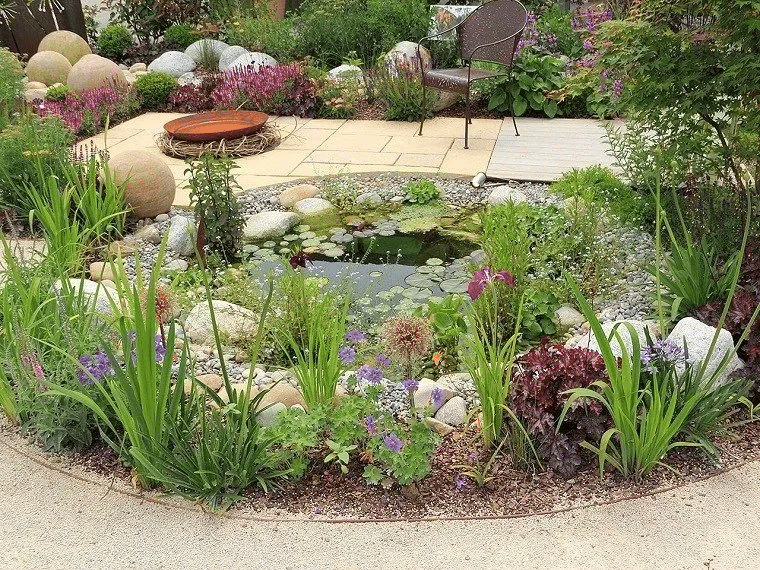
This small pond may be simple but it’s certainly effective
(Image credit: Ellen Rooney/Alamy Stock Photo)
Most backyard ponds are a type of man-made water feature that have a primary focus on aquatic plants, although many larger ponds may contain ornamental fish, like koi.
Not all plants are suitable for planting near or in a backyard pond, however. You’ll need to grow plants that are best adapted to shallow pools and ponds. The type of plant you add to your pond will depend entirely on how deep and large your pond is.
The types of plants best suited to pond life fall into three distinct categories: submerged plants marginal plants, and floating plants.
Submerged plants are those that live almost completely under the surface. Some of these plants have leaves or flowers that grow to the surface, like a water lily. These plants are also called oxygenators, because they create oxygen for any fish in a pond.
Marginal plants live with only their roots under the water. Examples of these are irises, lotus flowers, cattail reeds, or bulrushes.
Floating plantsFloating plants are not anchored into the soil at all, and are free-floating at the surface of the water. In a water garden, floating plants are used to reduce algae, as the shade they provide inhibits the growth of algae. Floating plants are usually fast-growing and multiply quickly.

The ‘Stop and Pause Garden’ by Dave Green for RHS Hampton Court Palace Flower Show 2019
(Image credit: Tim Sandall/RHS)
HOW DO YOU BUILD A MINI POND IN YOUR BACKYARD?
Fancy a bit of DIY action when it comes to your own small garden pond ideas? It’s really quite straightforward.
- Start by finding your container. ‘It could be a half-barrel, an old Belfast butler sink, or even a large washing-up bowl,’ the team says. Just make sure it’s strong to withstand frosts and other outdoor elements.
- You could use something that isn’t watertight but is strong, such as a large plant pot, but making sure that it doesn’t leak can be challenging,’ they continue. If you do use a pot, you may want to consider lining it with pond liner.’
- Put your container into place while it’s empty. Ideally, this will be somewhere that gets a good amount of light but isn’t in full sun all day. Also, decide whether you want to sink it into the ground or not – if the edges are level, then more creatures will be able to get in and out – worth considering if you’re interested in wildlife garden. If you do want to encourage visitors, make sure there is an easy access and escape route for them by using bricks, rocks or logs.
- Next you’ll need to seal any drainage holes. You can silicon the plughole of an old sink, or line a planter with butyl pond liner. Then add a layer of clean gravel.
- Then you can fill your pond. Rainwater is best due to the chemicals in tap water.
- Add in any of your chosen pond plants, then step back and admire your hard work.

HOW DEEP SHOULD A GARDEN POND BE?
The ideal pond water depth depends on what you want to put in it. Wildlife, goldfish, koi and pond plants all have different depth requirements to take into account.
As a general rule, a pond should be 2ft (60cm) deep if you want an ideal environment for both plants and fish. Water that’s too shallow can evaporate in warm weather and freeze in winter. If you want to grow marginal plants along the edge of the water, you need to add shelves for them to stand on.
Pond fish need a minimum water depth of 18in (45cm) to 24in (60cm) so they can hibernate at the bottom in winter. Larger Japanese koi need a depth of 4ft (120cm) to overwinter properly.
The depth of a wildlife pond without fish can be much shallower, around 12in (30cm), with wide, shallow areas for wildlife to climb in and out easily.
When it comes to pond plants, they vary greatly in their preferred water depth, from a few inches to a few feet. Water lilies like deep water, while marginal plants typically require a planting depth of between 6-12in (15-30cm).
So a design incorporating many different depths is ideal for the average pond containing both fish and plants.
SHOULD A GARDEN POND BE IN SUN OR SHADE
A sunny spot is essential to keep a pond healthy. Most water plants need full sun to flower well. If there isn’t enough light, water lilies will only grow leaves.
Sunlight keeps oxygenating plants working. These plants are essential as they stop pond water turning stagnant, and create a healthy environment for fish and plants.
Shade is fine for a water feature that does not support wildlife, but it’s not a good choice for a pond with plants and fish. However, some shade in very hot weather can be a good thing as it provides a refuge from the heat for fish.

HOW CAN I KEEP MY POND CLEAN?
To keep your pond clean and healthy introduce oxygenating plants, or consider water filters (electric, carbon, plant-based). Plan how and where these are to be powered and sited.
Ponds may also require electric or solar powered pumps, to circulate water. You may need to regularly save and change the water rather than resorting to chemical solutions.
Consider how to accommodate a range of attractive and beneficial aquatic and bog plants. Choose an appropriate pond, paying attention not just to aesthetics but to acoustics, a melodic burble is preferable to a water closet flush. Ensure your pond is entirely child and pet safe. Gradually sloping slides accommodate facilitate safe frequenting from a variety of wildlife.
Repurposed Plastic Storage Tote Garden Pond
You don’t have to spend a fortune on a premade backyard pond form. You can simply turn an old Rubbermaid plastic container into your garden pond and save that money for other things. This one is really easy and if you have a rather large plastic tote that you can use, it is also really cheap to build. Add a fountain, some river rock and something for the edges and you have a gorgeous garden pond on the cheap.

DIY Paver Pond with Fountain
Those patio pavers or river rocks are perfect for creating this DIY garden pond that has a handmade rock fountain at the top. This would be beautiful in the center of your flower garden, or you could place it anywhere that you want to add a bit of style and design. Add some water lilies when you’re finished and it’s a beautiful addition to any landscaping. A DIY Paver fountain is a beautiful way to decorate your outdoors.

Repurposed Stock Tank Garden Pond
To make a garden pond, you simply need something that will hold water. An old stock tank makes a wonderful choice. This one is so easy that you can have it set up in just a couple of hours. You can bury the tank so that it is ground level or just level it up and add water. Add some rocks and plants around it and you’ll have a quick and easy garden pond that costs just a fraction of one that is professionally designed.
DIY Recycled Tractor Tire Pond
If you have an old tractor tire, you can use that to create a lovely outdoor pond. This one is really easy to build and if you have the tire on hand, it doesn’t cost much at all to get it up and running. There are so many things that you can do with an old tractor tire. Recycled tire DIY projects are wonderful, and they help you to reuse those old tires and keep them out of the landfill. There are so many beautiful ways to upcycle old tire.
#pond #buildyourownpond #backyard
