
Sub-Total: $0.00
Ink that Grew on Trees- Part 2 Walnut Ink
Walnut Ink: Historical Overview
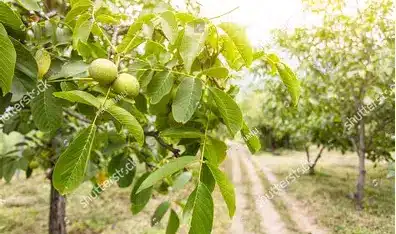
Walnuts are among the earliest cultivated tree foods, with evidence of use dating to approximately 7000 BCE in regions including Persia, Mesopotamia, and Neolithic Europe. Both black walnut (Juglans nigra) and Persian or English walnut (Juglans regia) were valued not only as food sources but also for their tannin-rich husks, which could be processed into a durable dark ink. Ancient Romans used walnut-based ink and dye for its strong color retention and resistance to fading. In some Romani communities, walnut ink was historically used as a permanent stain to mark criminals.
Early American Use
In North America, black walnut ink became widely used by early settlers, artists, and soldiers. Prior to the availability of commercial inks, settlers relied on walnut hulls to produce a deep brown-black ink suitable for letters, journals, and official records. Its permanence, archival stability, and minimal damage to paper made it preferable to iron gall ink, which was known to corrode parchment. Simple preservatives such as salt or vinegar were often added to extend its usability.
Medieval and Artistic Applications
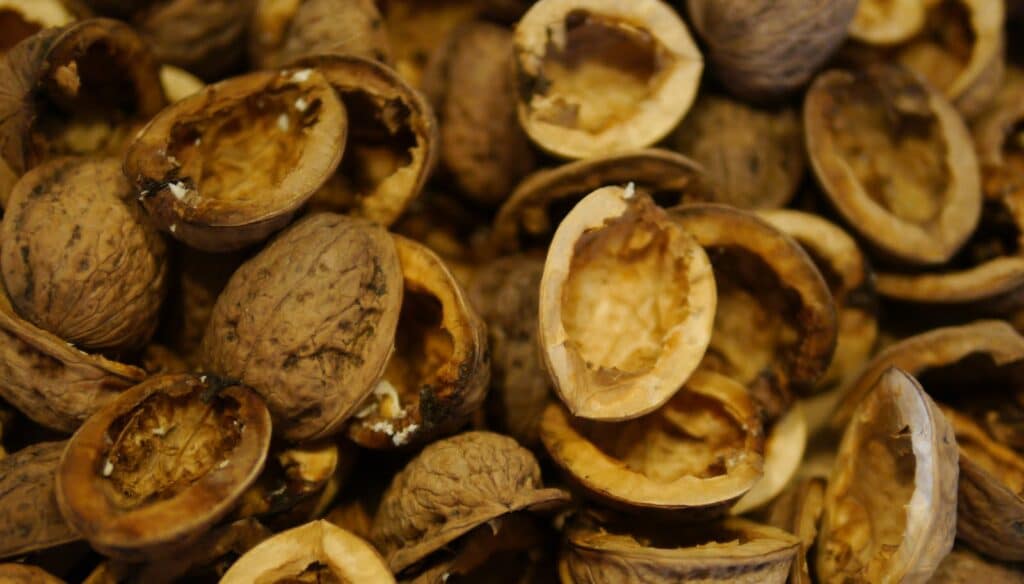
Throughout the Middle Ages, walnut ink was commonly used in manuscript production and visual art. The ink was typically prepared by aging walnut husks and simmering them in water to extract pigment. Some methods incorporated iron, such as cast-iron vessels or rusted nails, to deepen the color through iron-tannate reactions. The resulting ink produced warm, earthy tones that often darkened with age, contributing to the enduring character of historical documents and artworks.
Composition and Properties
Walnut ink derives its color primarily from juglone and tannic acid present in the husks. These compounds bind effectively to paper fibers, providing excellent resistance to fading and strong archival qualities. The ink may be prepared in liquid or crystalline form and has historically served both as a writing medium and as a stain for decorative or artistic purposes.
Modern Revival Today, walnut ink has seen renewed interest among calligraphers, artists, and historical reenactors. Its natural origins, durability, and distinctive aesthetic continue to make it a valued medium for both practical and artistic use
Traditional Process
Ingredients
- 1/2-1 cup black walnut extract (decoction)
- 1 teaspoon vinegar (natural preservative)
- A pinch of salt (for preservation and tone)
- Small jar or bottle with a tight lid
Instructions
- Mix the ink:
- Pour the black walnut extract into a clean glass jar
- Stir in the vinegar and salt until fully dissolved.
- Adjust colour and consistency (optional):
- For darker ink, allow the extract to evaporate slightly until it thickens.
- For lighter shades, add a small amount of water.
Store and use:
- Keep the ink sealed tightly when not in use.
- Shake gently before each use.
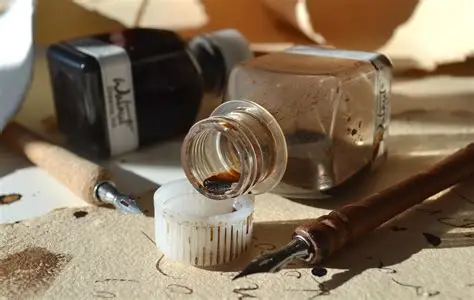
- Apply with dip pens, quills or brushes.
Tips & Notes
- Wear gloves when handling; black walnut ink stains skin and fabric.
- The ink darkens as it dries and oxidizes.
- For the smoothest results, strain through fine cloth or coffee filter before bottling.
- Store in a cool, dark place. Properly sealed, it can last for several months.
- 100 percent natural—no additives, binders, or synthetic chemicals.
Why This Ink Endures
The art of making black walnut ink endures because it represents more than a recipe—it’s a bond between craft, history and nature.
Each batch carries the character of the season, the soil, and the maker’s hand.
That’s what makes every drop of handcrafted ink a small piece of living history.
Conclusion
Black walnut ink is more than a writing fluid—it’s a piece of living history.
Each bottle holds the same earthy tones that once filled the pages of early American letters, journals, and maps. Whether used for art or writing, it carries forward the spirit of craftsmanship, simplicity, and connection to nature.
