
Sub-Total: $0.00
Plants for Natural Dyes
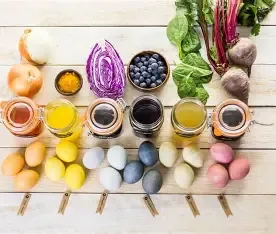
As an avid gardener I am always looking for other uses for my plants beyond appearance or just eating.
I came across an article written by the U.S Forest Service that had great information I want to share with you. Dyes
Also included in this blog is a great web site devoted to natural dyes from plants. Her site has how-To’s and details about how to use the plants for the colors you want.
About – Rosemary And Pines Fiber Arts
Plants have been used for natural dyeing since before recorded history. The staining properties of plants were noted by humans and have been used to obtain and retain these colors from plants throughout history. Native plants and their resultant dyes have been used to enhance people’s lives through decoration of animal skins, fabrics, crafts, hair, and even their bodies.

Types of Dyes
Natural dye materials that produce durable, strong colors and do not require the addition of other substances to obtain the desired outcome are called substantive or direct dyes. Sumac (Rhus spp.) and walnut (Juglans spp.) are native plant examples of direct dyes. Because these species are high in tannic acid, they do not require additional substances to be added for the dye to attach to fibers and form a durable bond. Dyes that need this type of assistance are called adjective or mordant dyes.
Mordants
Mordants are water-soluble chemicals, usually metallic salts, which create a bond between dye and fiber thus increasing the adherence of various dyes to the item being dyed. The actual color one gets from a natural dye depends not only on the source of the dye but also on the mordant, and the item being dyed.
Most mordant recipes also call for the addition of cream of tartar or tartaric acid. Use of this readily available spice is important because it reduces fiber stiffness that can occur because of mordanting. It can also increase brightness.
Table 1. – Mordants most commonly used with natural dyes.
Mordant Effect
Alum Brightens the colors obtained from a dye source
Iron/Coppers Darkens/saddens hues, produces blacks, brown, gray
Copper vitriol Improves likelihood of obtaining a green hue
Tin produces bright colors, especially yellows, oranges, and reds
Chrome Highly toxic – should not be used for dyeing at home
Plants Used for Dyes
Throughout the world, evidence of natural dyeing in many ancient cultures has been discovered. Textile fragments dyed red from roots of an old-world species of madder (Rubia tinctoria) have been found in Pakistan, dating around 2500 BC. Similar dyed fabrics were found in the tombs of Egypt.
- Tyrean purple dye was discovered in 1500 B.C. and was produced from the glandular secretions of a number of mollusk species.
- This purple dye was extremely expensive to produce as it required nearly 12,000 mollusks to produce 3.5 ounces of dye.
- Tyrean purple became the color of royalty.
- Lichens were used to produce ochril, a purple dye, which was called the “poor person’s purple”.
Native North American Plants Used for Dyes
European settlers in North America learned from Native Americans to use native plants to produce various colored dyes.
The 10 plants used most commonly by Native Americans for dyes and the number of uses.

Alnus alnobetula subsp. crispa
This small, riparian tree has been used by many native tribes to make a brown, red-brown, or orange-red dye to darken hides, stain bark used in basketry and dye porcupine quills. Inner bark was used to make yellow dye. Outer bark was used to make a flaming red hair dye. Some tribes mixed this species with grindstone dust or black earth to make a black dye. Bark was used to wash and restore the brown color to old moccasins.

Red Alder, Alnus rubra
In the western United States, various layers of red alder bark, Alnus rubra, yield red, red-brown, brown, orange, and yellow dyes. These colors have been used to stain baskets, hides, moccasins, hair, quills, fishnets, canoes, cloth, and other items.

Bloodroot ( Sanguinaria canadensis)
Bloodroot was used to produce red dyes. Green dyes were made from algae and yellow dyes were made from lichens. Early colonists discovered that colors produced by the Native Americans quickly faded, thus suggesting that mordants may not have been used.

Rubber Rabbitbrush (Ericameria nauseosa
Rubber rabbitbrush, a western native, can be used to create both green and yellow dyes. The bark produces green dye while flowers produce yellow dye.

Smooth sumac (Rhus glabra)
It is readily recognized by its thicket-forming habit, milky sap, compound leaves, and dense, terminal panicles of bright red drupes. A variety of dye colors can be obtained from different parts of the plant depending on the mordant used.
The leaves are rich in tannin and can be used as a direct dye. Leaves can be collected as they fall in the autumn and used as a brown dye. The twigs and root are also rich in tannin. A black and a red dye can be obtained from the fruit. A black dye is obtained from the leaves, bark, and roots. An orange or yellow dye is obtained from the roots harvested in spring. A light-yellow dye is obtained from the pulp of the stems.

Canaigre dock- Rumex hymenosepalus
The tissues of canaigre dock – a southwest desert native plant used to make yellow, gray or green dye, and widely noted for its medicinal, edible, and social uses – contain toxic oxalate. The needlelike crystals produce pain and edema when touched by lips, tongue or skin.

Eastern Cottonwood Populus deltoides,
Eastern cottonwood used to make a variety of dyes.
Leaf buds were used to make a green or yellow dye

Skunkbush Sumac – Rhus trilobata
The leaves yield both blue and black dyes, and the berries or ashes can be used as a mordant for setting dye colors.

Butternut (Juglans cinerea)
This tree native to the eastern United States was important as a food and dye source. Native Americans used the bark to make a brown dye and young roots to make a black dye. Using an iron mordant, brown dye can be changed to a charcoal or gray color.
- The famous gray coats that the Confederate Army wore during the Civil War were colored with dye made from butternuts.
- Confederate soldiers were called “butternuts” because of their dyed uniforms.
