
Sub-Total: $0.00
Poppies- Ancient Blooms
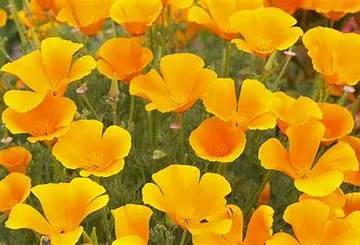
The poppy (Papaver rhoeas L.) is an ancient flowering plant, long desired by gardeners in a range of landscape situations. Learning how to grow poppies allows you to use their beauty in many flower beds and gardens. Planting poppies is simple and rewarding when their single and double blooms appear in cooler seasons.
I am blessed to live in California and have the opportunity to see hundreds of acres of poppies at a time. We have had the privilege to see “super bloom” springs in the last few years due to unusual rains. The beauty involved is amazing.
History of Planting Poppies
The poppy flower has a long history, dating back to 2700 BC when it was grown and cultivated in the Mediterranean Basin for its medicinal and recreational use. It was domesticated by the indigenous people of Western and Central Europe between 6000 and 3500 BC, and its origins may come from the Sumerian people. Poppies were already grown as ornamental plants since 5,000 BC in Mesopotamia and were found in Egyptian tombs. In Greek mythology, the poppy was associated with Demeter, goddess of fertility and agriculture.
Growing poppy flowers are said to spring up on ravaged battlefields, as long ago as the 12th century. White poppies appeared on battlefields left by Mogul warrior Genghis Khan and were sighted in war zones following some battles of World War I. Thus, they have come to symbolize death and rebirth. The red poppy symbolizes fallen warriors and commemorates Veteran’s Day in the United States. Growing poppy flowers have been used for medicinal and culinary purposes over the centuries. The seeds of the poppy are currently used in flavoring for breads and cakes and for the production of poppy seed oil.

How to Plant Poppies
Growing poppy flowers can be as simple as planting seeds or dividing roots of existing plants. Plant poppies from seed into poor to average soil in a sunny location for a good start to growing poppy flowers in your garden. Poppies grow from a taproot. When this taproot is disturbed in transplanting, a lost season of bloom may occur when planting poppies. Divide poppies in autumn to allow time for the taproot to restore itself. Planting poppies in either way can provide attractive foliage and large or diminutive flowers in your garden, flower bed or meadow.
How to Grow Poppies
Poppy plant care involves the deadheading of spent flowers, resulting in more prolific blooms of the poppy plant. Poppy flowers need limited watering once they have settled into their location. Too much water can result in tall, leggy, unattractive growth of the growing poppy flower. Choosing the variety of poppy best suited for your garden is an intriguing garden chore. The Armenian poppy is among the smaller and more delicate offerings. Oriental poppies offer the largest and showiest blooms but may die back during summer heat. California poppies self-seed abundantly and should be planted where more poppies are desirable. Learning how to plant poppies correctly provides you with a striking choice for many sunny locations where soil has not been enriched or amended.
Alpine Poppy (Papaver alpinum)

Those cultivating rock gardens in moderate climates should not pass up the chance to grow this hardy little wildflower in the landscape. Papaver alpinum is a short-lived perennial, but it will self-seed readily in areas with good drainage, producing late spring flowers in red, orange, yellow, and white shades. These poppies are much more compact than others, rarely exceeding 1 foot in size.
Native Area: Alps, Carpathians, Pyrenees USDA Growing Zones: 4–6 Height: 6–12 inches Sun Exposure: Full sun
Arctic Poppy (Papaver radicatum)

The yellow arctic poppy, like the alpine poppy, has evolved to be a short plant that can survive blasting winds. Less commonly, pink or white flowers may be seen. The poppies grow wild across northern regions in rocky soils. Although rare in comparison to other poppies, their hardiness endears them to residents of these arctic zones, where few other plants thrive.
Native Area: Arctic regions of Northern Hemisphere USDA Growing Zones: 2–6 Height: 3–6 inches Sun Exposure: Full sun
Breadseed Poppy (Papaver somniferum)

The same Papaver somniferum that yields the tiny gray seeds that adorn our muffins and bagels also happens to be a lovely annual garden flower. The flowers grow in shades of pink, purple, and red on 2- to 4-foot-tall stalks. Rake the seeds lightly into the soil in the fall for early summer blooms. If you wish to save seeds from the dried pods, try ‘Elka,’ an heirloom variety that produces white seeds completely free of bitterness.
Native Area: Eastern Mediterranean; now naturalized widely across Europe and Asia USDA Growing Zones: 3–8 Height: 2–4 feet Sun Exposure: Full sun
Carnation Poppy (Papaver laciniatum)

The shaggy petals of Papaver laciniatum add texture and personality to the vase and the border. Known as carnation poppies or feathery poppies, these frilly cool-weather annuals should be grown from seed in a sunny area with rich, loose soil to encourage the tap roots to develop. Some authorities consider this plant a subspecies of the breadseed/opium poppy, assigning it the formal name of P. somniferum var. laciniatum. Sow outdoors two weeks before the last frost, and press the seeds lightly into the soil, as light enhances germination. Expect to see germination in about five days, and blooming in late June. Leave seed heads in place to allow flowers to self-sow, or add the attractive seedpods to your floral arrangements.
Native Area: Eastern Mediterranean USDA Growing Zones: 3–8 Height: 2–4 feet Sun Exposure: Full sun
Peony Poppy (Papaver paeoniflorum)

Named for their fluffy, peony-like blooms, Papaver paeoniflorum plants are a variety of breadseed poppies, sometimes categorized as Papaver somniferum var. paeoniflorum. Unlike true peonies, which can take a few seasons to get going, peony poppies will bloom the summer after a fall or winter sowing. The bluish-green foliage and giant seedpods add to the plant’s interest.
Native Area: Eastern Mediterranean USDA Growing Zone s: 3–8 Height: 2–3 feet Sun Exposure: Full sun
California Poppy (Eschscholzia californica)

The California poppy, Eschscholzia californica, was named in honor of J.F. Eschscholtz, a surgeon aboard an exploratory ship that made note of the cheerful golden flower when spotted in 1816. The plants grow happily on roadsides in the southwest U.S., and they also make a statement in water-wise flower gardens anywhere. Most gardeners grow California poppies as annuals, relying on self-seeding for future blooms, but the plant may come back as a perennial in frost-free areas
Flanders Poppy (Papaver rhoeas)

A European native that was once considered a weed, the Papaver rhoeas now symbolizes Remembrance Day, which recognizes the fallen soldiers of World War I. Sow this annual poppy thickly for the most brilliant spring show of red flowers. Seeds will germinate at 60 degrees Fahrenheit, and blooming occurs most heavily in April and June. This annual plant will readily self-seed, creating a sustaining bed of flowers. Native Area: Europe and Asia USDA Growing Zones: 3–10 Height: 9–18 inches Sun Exposure: Full sun
Iceland Poppy (Papaver nudicaule)

Like P. radicatum, the Iceland poppy, (P. nudicaule) sometimes carries the common name “arctic poppy” thanks to its tolerance for extremely cold temperatures. The plants are actually short-lived perennials, but may self-seed enough to keep a modest colony going. The frost tolerant flowers require full sun and moist soil, and in return will reward you with delicate blooms in sherbet hues of peach, gold, white, and salmon. Blooms and plants are on the petite side for poppies. Although it is a native perennial in sub-polar regions, you can grow Papaver nudicaule as a cool-season annual in zones 2 to 7. The variation croceum produces orange-red flowers. Native Area: Sub-polar regions of Northern Hemisphere USDA Growing Zones: 2–7 Height: 1–2 feet Sun Exposure: Full sunContinue to 9 of 11 below.
Meconopsis Poppy (Meconopsis spp.)

Not all poppies fall into the Papaver genus of the Papaveraceae family. Another genus is Meconopsis, which includes the beloved Himalayan blue poppy (Meconopsis baileyi), Meconopsis cambrica (Welch poppy), and Meconopsis betonicifolia (blue poppy). These short-lived perennials will readily self-seed and establish themselves as an ongoing presence in the garden. All Meconopsis poppies grow best in cool, moist climates; conditions that we would consider downright dreary are ideal for blue poppies. Think foggy, cold, and damp—i.e., Scotland, Great Britain, and the Pacific Northwest. Hot, dry gardens spell death to these plants. This genus also prefers part shade conditions, not the full sun preferred by most poppies. Native Area: Himalayas USDA Growing Zones: Hardy in zones 6–8 (depends on species); grown as annuals elsewhere. Height: 1–4 feet (depends on species) Sun Exposure: Part shade
Oriental Poppy (Papaver orientale)

Papaver orientale plants like the ‘Patty’s Plum’ variety will come back each year in the garden if you provide them with excellent drainage, full, sun, and adequate moisture. The black centers of the blooms give them an avant-garde appearance as cut flowers. The plants produce a taproot that makes transplanting tricky, so direct sow the seeds in your garden. These are short-lived perennials, but a frequent division of the root clumps will keep them producing indefinitely. Native Area: Caucasus, northeastern Turkey, northern Iran USDA Growing Zones: 3–8 Height: 2–3 feet Sun Exposure: Full sun
Spanish Poppy (Papaver rupifragum)

A later bloomer than some others, the bright orange flowers of Papaver rupifragum will attract butterflies and bees to your garden from May through August. The double flowers grow 1 to 2 feet in height and are resistant to deer, like all poppies. Like many poppies, this is a short-lived perennial that freely self-seeds to establish itself in the garden. Native Area: Morocco, Spain USDA Growing Zones: Hardy in zones 6–10; grown as annuals elsewhere. Height: 1–2 feet Sun Exposure: Full sun
As one of the most versatile plants for growing, the poppy flower is an excellent choice for gardeners of all skill levels. In addition to being extremely hardy and vibrant, these wildflowers attract bees and butterflies, two of their most important pollinators.

Do Poppies Attract Butterflies?
Its primary source of food is beetles, which pollinate a variety of bees, including bumblebees, honeybees, and sweat bees. This nectar is also popular among butterflies. The long, slender seed pods explode as soon as they are ripe, flinging the seeds several feet away.
To grow a hummingbird garden, plant poppy seeds. Hummingbirds will enjoy the flowers and will be drawn to your garden..
Do Poppies Attract Birds?
Because of their poppy seeds, some birds can be drawn to these wildflowers that grow near your house or in your garden. There will be other animals that will notice the flower and the plant, but hummingbirds will not, despite the plant’s inability to produce any nectar.

Poppy Power: How This Flower Attracts And Helps Bees
Poppies are a popular flower for bees because they provide a lot of pollen. This allows the bees to reproduce and feed on its own. Some bee species, such as bumblebees, honeybees, and solitary bees, are drawn to the bright colors of poppy flowers, which come in red, pink, yellow, and orange shades. Birds eat poppy seeds after they have been pollinated.
