
Sub-Total: $0.00
Bats- How to Welcome Them into Your Garden
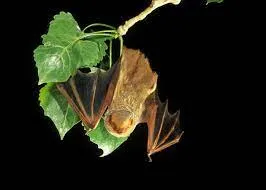
Many people enjoy spending long summer evenings sitting in their gardens, watching as daylight turns to dusk and bats begin to fill the night sky.
These small and fascinating creatures often live in close proximity to us, using our gardens as an important source of food, water and shelter. As their natural habitats become scarcer, our gardens are playing a more important role in securing a future for bats.
Bats are a sign of a green and healthy environment, so creating a garden that’s good for bats will also be good for people.
Turn your garden into a bat haven.
Plant night-scented flowers.
Bats need insects and flying uses a lot of energy, so bats have huge appetites! For example, a tiny common pipistrelle can eat around 3,000 midges, mosquitoes and other small flies in a single night. Moths, beetles and craneflies (daddy-long-legs) are popular with other species, but flies are the main food for most bats. Most plants depend on insects We grow flowers in our gardens for our own enjoyment, but their color and perfume are really the plants’ way of advertising themselves to insects. Sweet nectar and protein-rich pollen are bait to encourage insects to visit. In return, the insects carry pollen on their bodies from one flower to another, so the flowers are fertilized. The key to a successful wildlife garden is to include plenty of plants that will attract insects, and to ensure that your garden has a good supply of insects from spring through to autumn. Choose the right plants Grow a wide range of plants to attract insects, and by planting a mixture of flowering plants, vegetables, trees and shrubs, you can encourage a diversity of insects to drop in and refuel from spring to autumn. Native plants tend to support bats.
Build a pond.
Create a wet area No wildlife garden would be complete without a water feature. Not only will a small pond, marshy area or even a bog garden provide bats with somewhere to drink, but they will also attract insects, as many of the tiny flies favored by bats start life in water as aquatic larvae. Marginal plants can be planted around the pond to create soft edges and encourage insects further. Goldfish should definitely be avoided as they eat the insect larvae.
Let your garden go a little wild.
Make a compost heap or log pile Recycle kitchen and garden waste – such as fruit and vegetable trimmings, annual weeds and lawn clippings – to produce useful garden compost, as well as an ideal habitat for insects. A log pile in a damp, shady spot will also encourage insects, particularly beetles.
Encourage natural predators Hoverflies, wasps, ladybirds, lacewings, ground beetles and centipedes are the gardener’s friends, and natural pest controllers. Follow these suggestions to help maintain a natural balance: m Allow some weeds to grow to provide ground cover for natural predators. m Leave hollow-stemmed plants to overwinter as shelter for ladybirds. m Leave heaps of dead leaves and brushwood undisturbed for hedgehogs. Provide regular food and water for garden birds, as they are also effective predators.

Put up a bat box.
Bat boxes are artificial roosts designed to encourage bats into areas where there are few roosting sites, such as holes in trees or buildings. There are various designs of bat box, some that can be made at home and some that are available commercially. Different bat species also need different spaces. Wooden boxes are usually cubic or wedge-shaped, with a grooved ‘bat ladder’ and a narrow entrance slit at the bottom. They can be nailed to trees or walls.
Wood Crete boxes are usually of two basic types: #1 cylindrical with an access hole in the front and designed to be hung on tree branches with a wire loop; or #2 brick-shaped, usually with narrow roosting crevices inside and an entry slit at the bottom, designed to be fixed to flat surfaces such as walls of buildings.
Making your own box. Bats do not like draughts and prefer well insulated boxes where temperature and humidity remain constant. They also need a rough textured wood to cling to. The wood should not be treated because bats are very sensitive to chemicals.
A ‘bat ladder’ or other landing area that leads to an entry slit wide enough to admit bats, but narrow enough to keep out predators is also essential (15 – 20 mm).
Things to remember:
1. Make sure joints are well sealed and avoid large, loose-fitting front panels.
2. All timber used in bat boxes should be rough sawn (unplanned) and untreated from sustainable sources.
3. Keep entrance slits small (15 -20mm)
4. Removable lids should not be used, and the box should not be opened
Putting up your box Boxes are more likely to be used if they are located where bats are known to feed. Ideally, several boxes should be put up facing in different directions to provide a range of conditions. Some bats use a tree line or hedgerow for navigation. Putting boxes near these features may help the bats find the box. Boxes should be put as high as possible in sheltered sunny places. On buildings, boxes should be placed as close to the eaves as possible, sheltered from strong winds and exposed to the sun for part of the day. Bats need time to find and explore new homes, and it may be several years before boxes have residents – be patient! Droppings on the landing area, urine stains around the lower parts of the box and chittering noises from inside on warm afternoons and evenings are signs of occupation.
Reduce or remove artificial lighting.
Unfortunately, these light-avoiding species include many species. Some may opportunistically feed under certain streetlamps, as insects are frequently attracted to the short wavelength light (UV) some emit, but this leaves them in danger of predation, peregrine falcons have been recorded hunting bats in our lit cities.
It is very important that bats are taken into account when considering the need to light an area if bats are known or suspected to use the area. There are a number of factors that will need to be considered under expert guidance, such as:
- Which species are present?
- How are they using the habitat – roosting, commuting, foraging?
- What are the existing light levels?
- Keep cats indoors at night

Which plants should I choose?
Bat-friendly gardeners should aim to plant a mixture of flowering plants, vegetables, trees and shrubs to encourage a diversity of insects, which in turn may attract different bat species. Flowers that bloom throughout the year, including both annuals and herbaceous perennials, are a good idea: night flowering blossoms attract night-flying insects. Trees and shrubs provide food for insects and roosting opportunities for bats. Approximate flowering periods are listed below, although they may vary according to area and weather conditions!
Flowers for borders
Aubretia (spring to early summer)
Candytuft (summer to autumn)
Cherry pie (summer to autumn)
Corncockle Cornflower
Corn marigold
Corn poppy
Echinacea English Bluebell (spring)
Evening primrose (summer to autumn)
Field poppies (summer)
Honesty (spring)
Ice plant ‘Pink lady’ (early autumn)
Knapweed (summer to autumn)
Mallow (summer to autumn)
Mexican aster (summer to autumn)
Michaelmas daisy (summer to autumn)
Night-scented stock (summer)

Ox-eye daisy (summer)
Phacelia (summer to autumn)
Poached egg plant (summer)
Primrose (spring)
Red campion (spring)
Red valerian (summer to autumn)
Scabious (summer)
St John’s wort (spring)
Sweet William (summer)
Tobacco plant *
Verbena (summer to autumn)
Wallflowers (spring to early summer)
Wood forget-me-not (spring)
Yarrow (early summer)
Trees and Shrubs
Bramble (climber)
Buddleia (shrub)
Common alder (suitable for coppicing)
Dog rose (climber)
Elder (small)
English oak (large gardens only)
Gorse (shrub)

Guelder rose (shrub)
Hawthorn (suitable for coppicing)
Hazel (suitable for coppicing)
Honeysuckle (native honeysuckle)
Hornbeam Ivy (climber)
Jasmine (night-scented)
Pussy willow (suitable for coppicing)
Rowan Silver birch
Wildflowers for ponds and marsh areas
Bog bean Bugle
Creeping Jenny (spring to summer)
Flag iris Hemp agrimony (summer)
Lady’s smock (spring to summer)
Marsh mallow

Marsh marigold (spring)
Marsh woundwort
Meadowsweet (summer to early autumn)
Purple loosestrife (summer)
Water avens
Water forget-me-not (summer to autumn)
Water mint (summer to autumn)
Bats have been given a horrid reputation due to TV and Movies. They are actually amazing creatures. They have massive benefits to your yard and to maintaining pests in your yard. We have many that nest in the eve of our porch and we have zero mosquitoes even though we live beside a creek.
